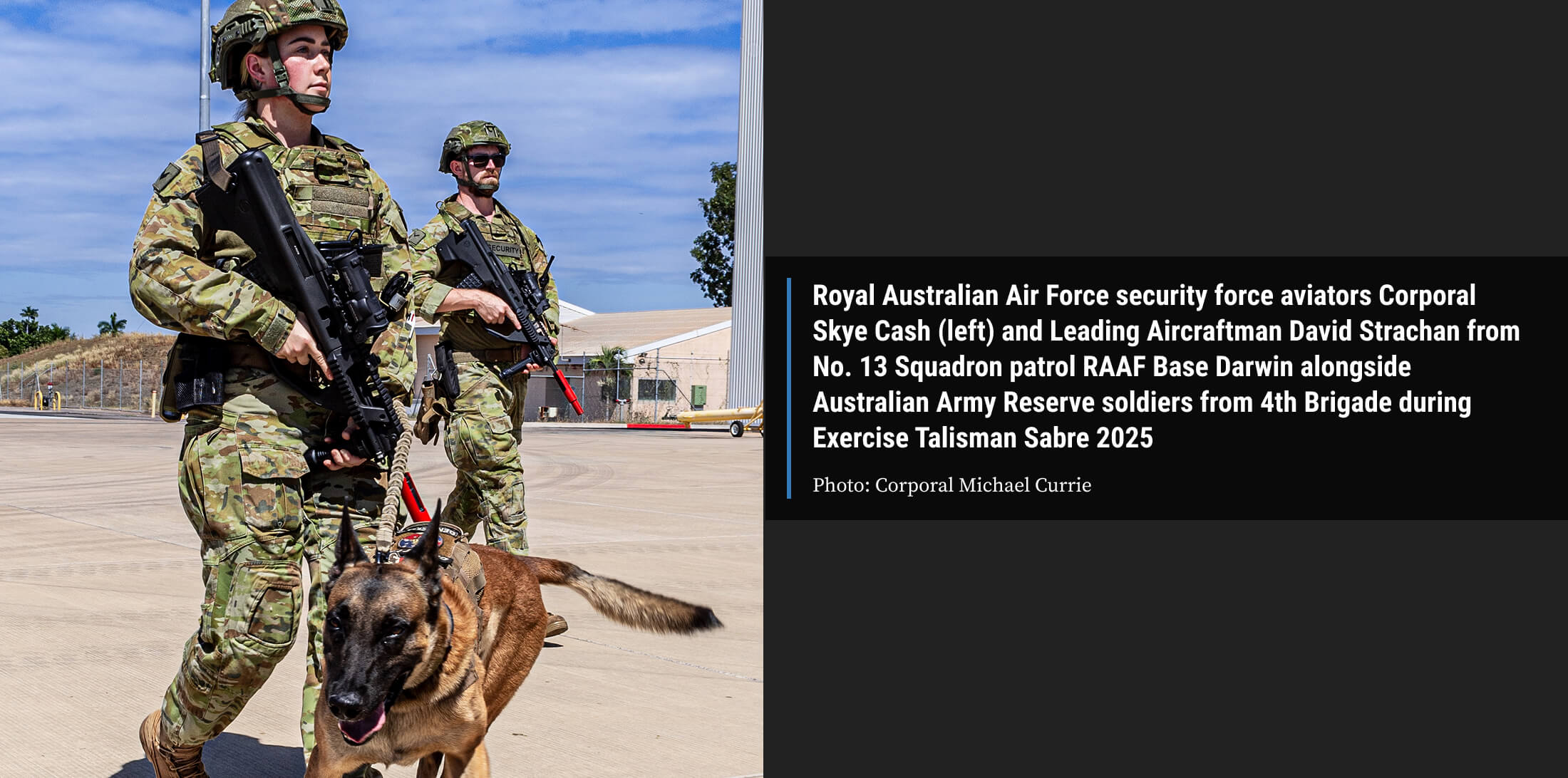


In recent times, drone incursions have raised questions among the public, media and industry about how the country can protect its most sensitive Defence bases during a conflict or even from drone-equipped terrorism attacks.
The most recent concerning incursion into Defence bases occurred earlier this year with several unidentified drones reportedly seen flying over Royal Australian Air Force Base Williamtown and Newcastle Airport in early July. The drones were not intercepted and military personnel were allegedly directed to close all blinds to prevent any leaks of classified information during the incident.
In direct alignment there is also a military arms race occurring around the world to develop faster and smarter but cost-effective drones designed to beat traditional air defence and directly attack defence bases.
As a real-world example in the current Ukraine–Russia conflict, we look at Russia’s Geran-5 long-range, jet-powered one-way attack drones which are designed to strike fixed target infrastructure. These drones can allegedly reach speeds of 600km/h, with ranges exceeding 1,000 kilometres and operating altitudes of 6,000 metres while there is even speculation of anti-jamming or terrain-following features.
To sort the fact from fiction about Australian base defence preparedness, Defence Connect has approached drone warfare expert and University of NSW Canberra senior lecturer in aviation Dr Oleksandra Molloy.
Molloy has previously authored the Australian Army Research Centre paper Drones in modern warfare (2024–2026): Lessons Learnt From the War in Ukraine published on 3 August this year.
In addition, she was recognised as the winner of the 2026 Academic/Researcher of the Year and Excellence Award of the Year at the eighth annual Australian Defence Industry Awards held at the National Convention Centre Canberra on 17 July this year.
Defence Connect: It’s been speculated that the modern Geran-5 drones may have ranges exceeding 1, 000km, operating altitudes of 6,000 metres, anti-jamming or terrain following features and top speeds reaching 600km/h – is that an accurate assessment of their capability?
Molloy: The publicly available Ukrainian assessment broadly supports those figures, with Ukrainian Defence Intelligence assessing the Geran-5 at up to approximately 950 kilometres range, 450–600 km/h and an altitude of up to 6,000 metres.
It also incorporates a more resilient satellite-navigation system designed to improve resistance to jamming. I would be more cautious about claims of autonomous terrain following, as there is not yet sufficient authoritative open-source evidence to confirm this as a standard capability.
The more significant development is the continued evolution of the Geran family in response to Ukrainian countermeasures, particularly increased speed, improved navigation and greater resistance to electronic warfare.
(Regarding the) trajectory of the Geran family. Russia has repeatedly upgraded navigation, communications, propulsion and payloads in response to Ukrainian countermeasures.
Defence Connect: In general, what is the current assessment of how these drones are intercepted and destroyed in Ukraine? Success-rates and what equipment is required?
Molloy: Intercepting Geran-5 drones has become more difficult with the increased speed, altitude and manoeuvres. In addition, intercepting a single Geran 5 drone may not be challenging; however, the lower rate of interception comes with large numbers, approximately 2,850 in August.
Ukraine’s experience demonstrates that there is no single countermeasure. Its defence has evolved into layers of electronic warfare, mobile air-defence guns, MANPADS, interceptor drones, short- and medium-range SAMs and fighter aircraft. There is no single reliable interception rate for Geran-5 because performance varies with the variant, altitude, route, attack profile and available defences.
However, the arrival of faster jet-powered Gerans is creating a significant new challenge. In September 2026, Ukrainian reporting indicated that jet-powered drones were being intercepted at rates above 60 per cent in some engagements, while on 28 September, President Zelenskyy reported that only 57 per cent of the jet-powered drones in that particular attack were intercepted (compared to 90 per cent of propeller-driven models). Rates vary considerably according to the drone variant, attack profile, route, altitude, electronic-warfare environment and available air-defence assets.
A Geran-5 at 450 to 600 km/h crosses any fixed engagement zone in 31 to 41 per cent of the time a Geran-2 takes. A gun team with a 2km reach engaging a drone that passes directly overhead has a 4km arc to work with. A Geran-2 at 185 km/h crosses it in about 78 seconds and a Geran-5 in 24 to 32, and the crew must acquire and track the target within that time. Altitude removes the gun team entirely during the cruise leg, and routing, timing and concentration also shape the rate.
Currently, the Wild Hornets STING S jet-powered interceptors demonstrated the success in destroying Geran-4 and Geran-5 drones, WIY Drones SPYS, the Alexa Spatium jet-powered interceptor and other means that are not disclosed.
In addition, Ukraine relies on fighters and missiles in the meantime. The Ukrainian officials described “very intensive use” fighter aircraft since the Geran-5’s scaled use began, with observed F-16 destroying a Geran-5 over Kyiv region with its Vulcan cannon.
A cannon kill spends little ammunition but ties up a fighter sortie, which does not scale to hundreds of launches a night. F-16s is firing APKWS rockets as the only economically feasible means of reaching jet Gerans at 7km, with Buk and IRIS-T SLM as the more expensive option.
Ukraine is developing aircraft-type platforms that will also carry weapons on board, allowing them to manoeuvre at speeds ranging from 300 to 800km per hour. However, there is no effective means that can intercept them on a large scale and with certainty.
The broader Ukrainian experience demonstrates an important principle: an air-defence system designed around slower, relatively inexpensive Shahed-type drones can become less effective when the attacker increases speed and altitude. Ukraine is consequently moving towards faster and more specialised interceptor systems.
Defence Connect: How could the Australian Defence Force combat such a drone with its current level of technology?
Molloy: According to the Ukrainian officials, there is no effective means that can intercept such drones on a large scale and with certainty at the moment.
Any effective counter-drone solution needs three basic elements: the ability to detect; the ability to understand, categorise and co-ordinate a response; and the ability to interdict. Australia has many companies with strong capabilities that address each of these elements.
However, none of them have had an experience fighting Geran-5 days and nights in hundreds and thousands that are rapidly changing their technical specifications and tactics of operation.
Australia needs to further accelerate its efforts in the counter-drone program at a faster speed. There are needs for continuous experimentation of defending against the threats of today and prepare to defeat the threats of tomorrow with the capability, agility, trained workforce.
Australia needs to further accelerate its efforts in the counter-drone program at a faster speed. There are needs for continuous experimentation of defending against the threats of today and prepare to defeat the threats of tomorrow with the capability, agility, trained workforce.”
- Dr Oleksandra Molloy
I think Australia has been extraordinarily slow in this process, although some initiatives are underway, it is alone not sufficient to keep up with the rapidly changing realities of these threats to critical infrastructure, defence bases and other areas to protect assets and people.
Detecting and tracking drones flying at low altitude against complex background clutter and then defeating them safely presents a significant challenge for conventional air defence systems designed primarily to counter helicopters, low-flying aircraft and cruise missiles.
The challenge is compounded by the cost asymmetry: an air-defence interceptor can cost up to 20 times more than a commercial drone or loitering munition that may cost only a few thousand dollars.
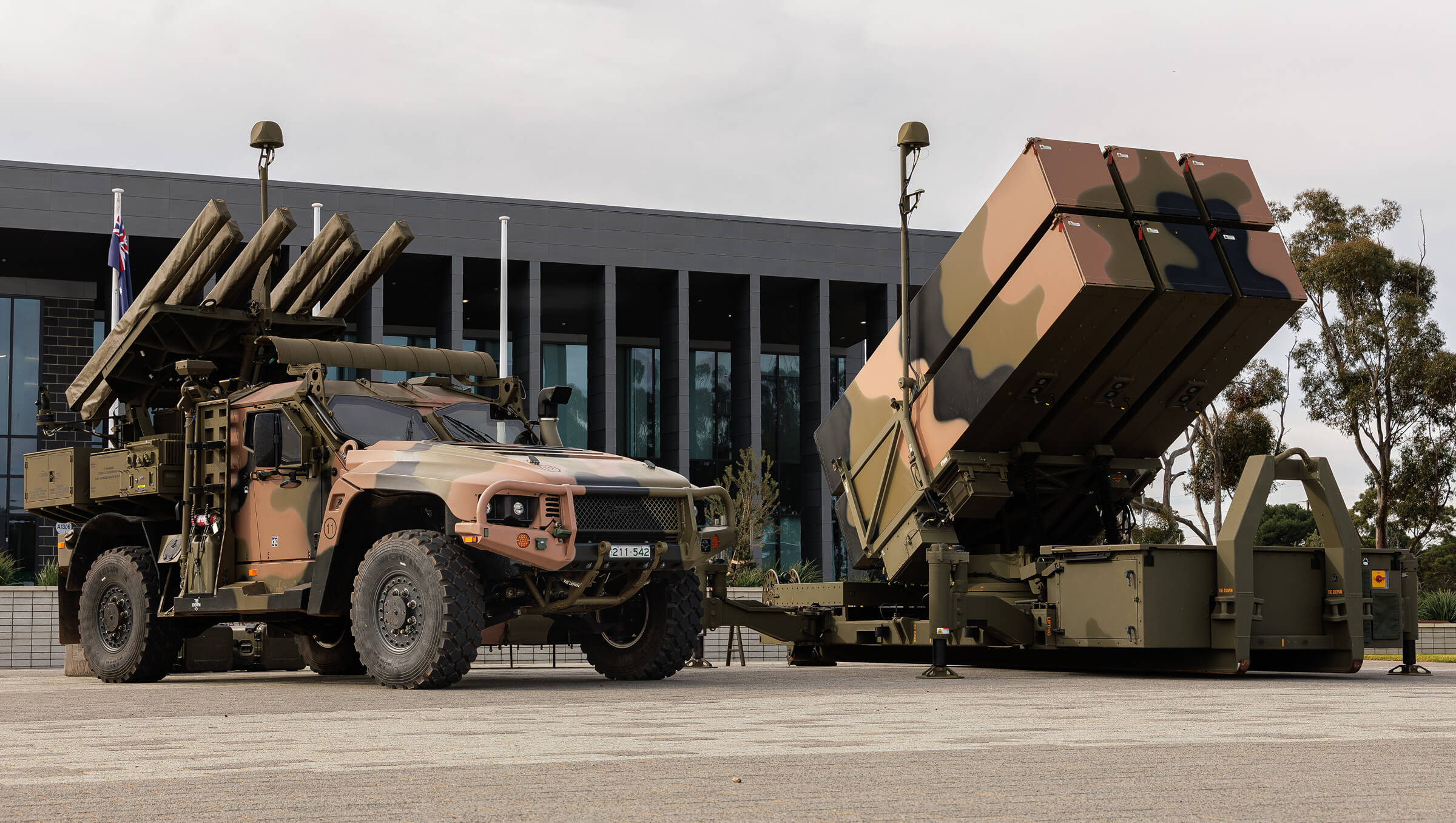
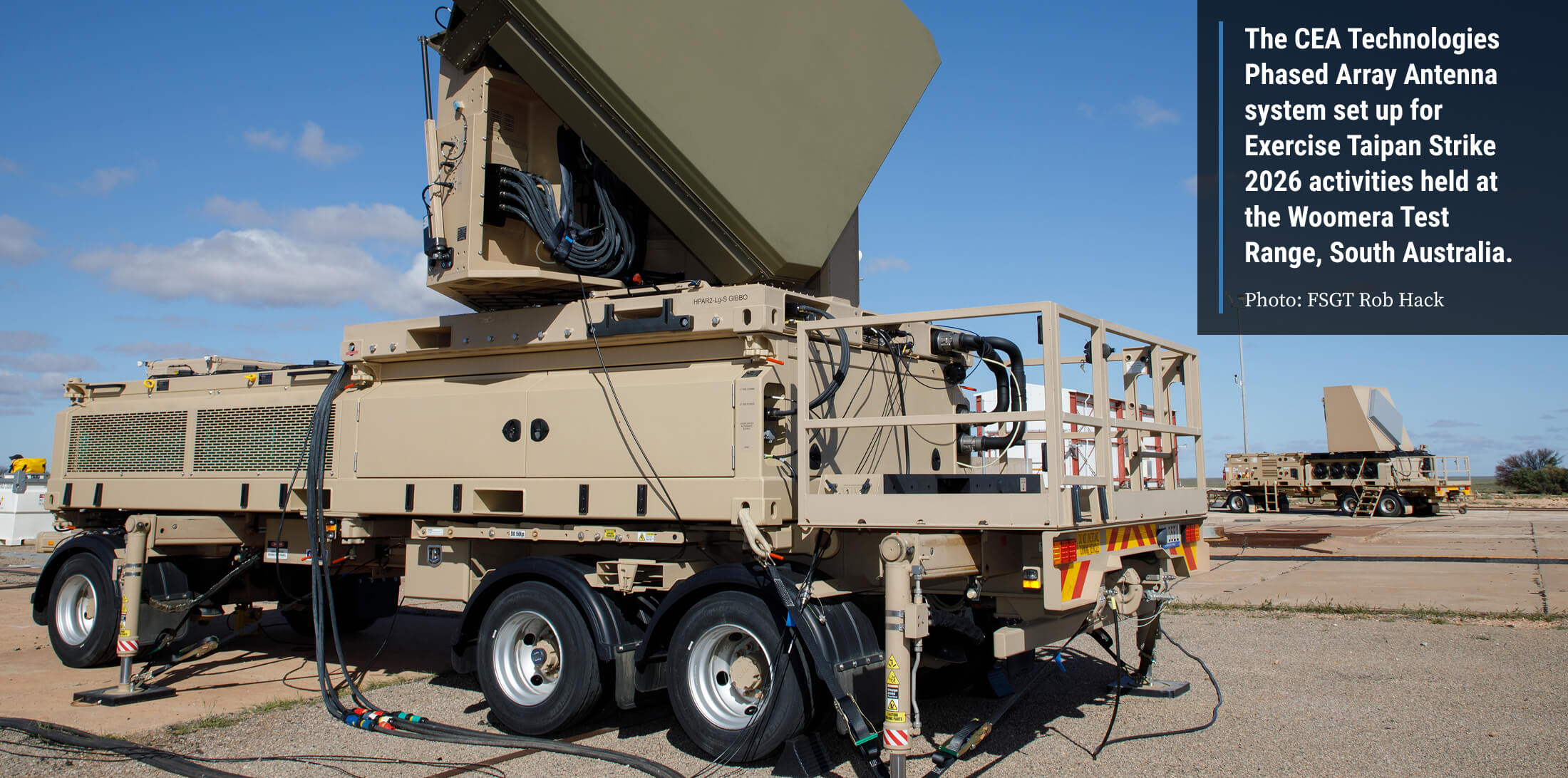
Australia has meaningful building blocks. NASAMS achieved final operational capability in September 2026 and is designed to detect, track and defeat aircraft, cruise missiles and drones. It forms the inner layer of Australia’s integrated air and missile defence architecture and incorporates Australian CEA radar technology.
Australia also has advanced fighter and electronic-warfare capabilities and is rapidly expanding dedicated counter-UAS systems. LAND 156 includes RF detection, identification, bearing determination, jamming and protocol disruption, while the ADF is introducing systems ranging from portable sensors and jammers to larger counter-UAS capabilities.
However, Australia should not assume that having these individual capabilities automatically equates to a dedicated, demonstrated solution against a mass attack by fast jet-powered, one-way attack UAVs.
The challenge is integrating detection, electronic warfare and kinetic interception into a system that can respond at scale.
Hence, whether Australia can detect, track and defeat a large, coordinated attack without exhausting its high-value air-defence assets remains unknown, but most likely the answer is close to ‘No’.
Defence Connect: How can Australian defence bases combat such attacks?
Molloy: Australia has a vast territory, and it is important to have the processes, mechanisms, capability and dedicated workforce in place that will allow to combat such attacks.
A base should combine persistent radar and passive sensing, electronic warfare, short-range kinetic systems, interceptor drones and higher-end air defence. The layers need to be connected through a common command-and-control architecture so that the cheapest appropriate effect is used against each target.
A base should combine persistent radar and passive sensing, electronic warfare, short-range kinetic systems, interceptor drones and higher-end air defence. The layers need to be connected through a common command-and-control architecture so that the cheapest appropriate effect is used against each target.”
- Dr Oleksandra Molloy
There is also a critical second layer – resilience. Bases need hardened and dispersed critical functions, redundancy in power and communications, protected fuel and ammunition infrastructure, and rapid repair capabilities.
This matters because Ukraine demonstrates that some weapons will penetrate even sophisticated defensive systems. Defence therefore needs to measure success not only by interception rates but by whether an attack can actually disable the base’s mission.
Defence Connect: How should Defence most effectively reprioritise to meet the threat?
Molloy: This is a complex but important question. I have extensively worked in this area and researched what Australia can do to keep up with this area of threat, providing recommendations to Defence: Drones in Modern Warfare (2024-2026), Australian Army Research Centre (AARC).
I believe this should start from top-down.
Defence must have a champion and a dedicated UAS/C-UAS Command (maybe similar to the recently established Space Command) – or an organisational equivalent, providing unified senior leadership, strategic prioritisation, central direction and coordination, doctrine development, and guidance for investment in both uncrewed systems and counter-drone capability, training and sustainment.
Current efforts remain fragmented, bottom-up and dependent on individual initiative; these must be replaced by top-down, accountable institutional leadership with the authority and resources to drive change across all services.
Modern warfare is defined by the contest for EMS dominance, yet the ADF continues to treat EW as a niche signals corps capability rather than a foundational combat skill. This must change. Every soldier in the ADF – not only signals and EW specialists – must possess a working understanding of their own EMS signature – the signatures emitted by their equipment – and the implications of those signatures for survivability and operational security.
The evidence argues for investment in the architecture rather than simply buying more high-end missiles. Australia should accelerate high-speed interceptor drones, integrated sensors, electronic warfare, low-cost kinetic defeat mechanisms and sufficient stocks of interceptors for sustained operations. It should also invest in rapid adaptation – the ability to test a new countermeasure, validate it operationally and field it quickly.
This is already moving in the right direction. Australia has allocated up to $7 billion over the decade to counter-drone defence, including an Australian-developed interceptor drone through ASCA’s Mission Syracuse, and up to $22 billion across drone, counter-drone and autonomous-system technologies.
Hence, Australia can work with the Australian industry to address the threat. The answer is not in acquiring individual counter-UAS products but in building an integrated, scalable system.
The Ukrainian lesson is that procurement cannot finish the moment a system enters service. The counter-UAS system needs to remain in continuous development because the adversary will adapt to it.
Just as importantly, Defence needs much faster mechanisms to test, modify and field countermeasures as the threat evolves. Ukraine demonstrates that the innovation cycle is now measured in months and sometimes weeks, while traditional capability-development cycles can take years. Interceptors need to evolve at the speed with its threat.
Defence Connect: How significant a problem does these drones present to attacks against Australian bases and fixed infrastructure targets if used by a future adversary?
Molloy: The significance they pose could be observed from the examples in Ukraine and the Middle East. In addition, the US, China and other countries are creating copies of Shahed-type drones due to its impact of attacks and cost-effectiveness.
However, these drones are just becoming deadlier with heavier payloads, flying over further distances and are capable of manoeuvring, changing the trajectory, changing the targets, loiter in the air, operating via mesh network, relay to other drones.
This creates a significant concern. A recent example of a day attack, on the National Academy of Sciences in Kyiv, where I used to study, a historical, cultural and scientific hub in Ukraine highlight the threat that it represents not only to military assets.
Specifically, these drones become a significant threat if employed at scale, particularly as part of a broader attack involving missiles, cyber operations, electronic warfare and other uncrewed systems.
The greatest concern is not a single Geran-5 penetrating Australian airspace, it is the potential for large numbers of relatively inexpensive systems to saturate sensors, operators and interceptor stocks while targeting runways, fuel, communications, logistics and other critical infrastructure. That creates both an operational and an economic challenge.
In May alone, Russia sent over 8,000 Geran drones in Ukraine. Australia therefore needs a defence architecture where the response is matched to the threat, combining electronic warfare, low-cost interceptors, conventional air defence and higher-end systems rather than relying on any single layer.