






Protection and resilience: Australia’s defence bases face a mix of new threats and old challenges
For Australia, protecting defence bases is becoming an increasingly urgent national security challenge.
Australia’s bases are a key staging and storage area for its most sophisticated equipment, fighter jets, cargo and monitoring aircraft, command nodes and air defence systems.
These assets have never been at so much risk from increasingly sophisticated, inexpensive attack drones designed to overwhelm conventional air defences.
The war in Ukraine has demonstrated how rapidly uncrewed aerial systems are evolving, bringing airfields, fuel depots, communications networks and logistics infrastructure into the main conflict.
Australia must ensure its defence bases can detect, defeat and withstand attacks while maintaining operational capability.
Feathers ruffled
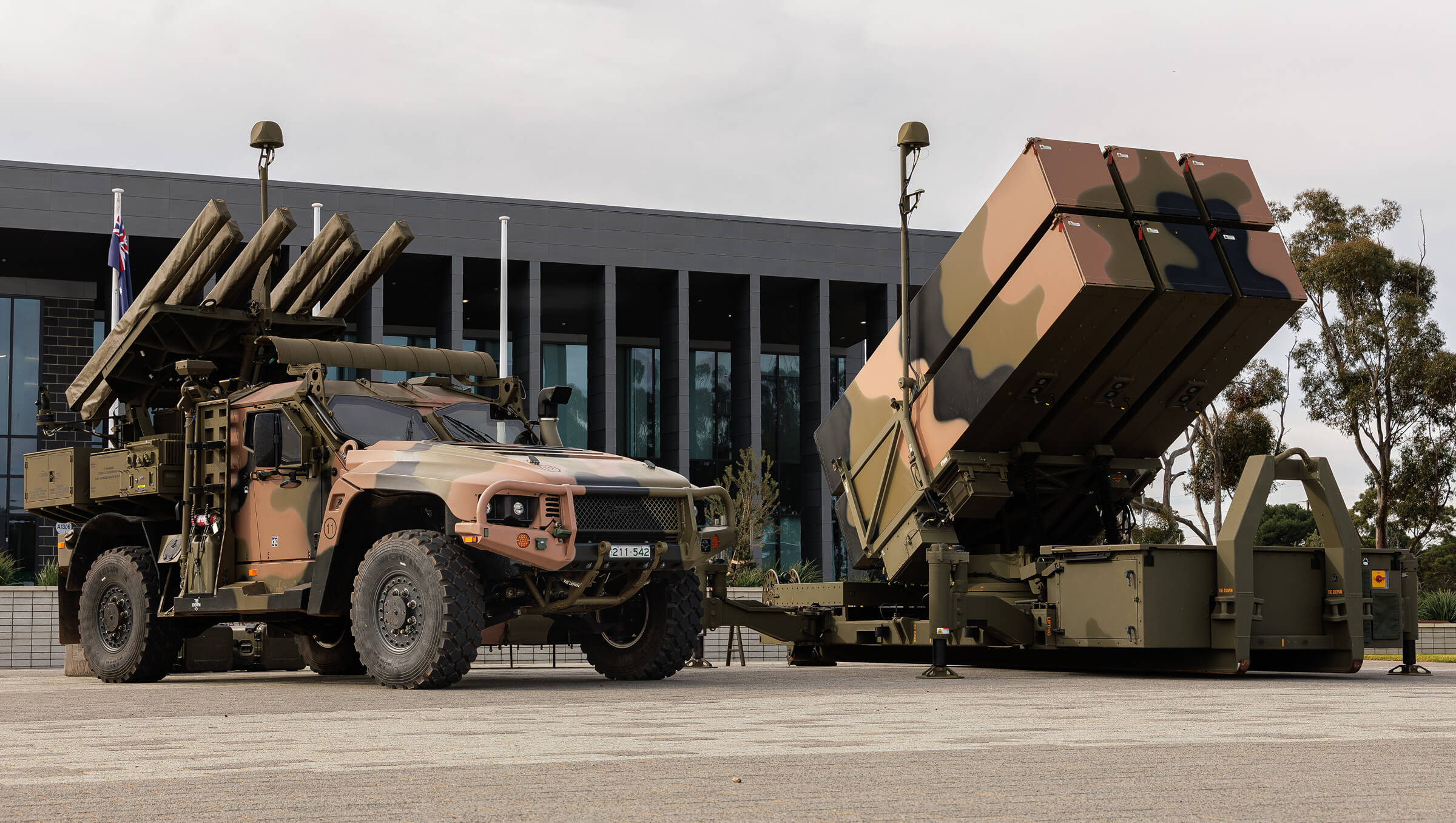
Australia has important building blocks, including NASAMS, advanced fighter aircraft and emerging counter-drone technologies under LAND 156.
However, individual capabilities do not automatically translate into an integrated defence against large-scale attacks.
Recent drone incursions have raised questions about the protection of Australian defence bases, in particular, reported drone sightings over RAAF Base Williamtown and Newcastle Airport in July this year.
The bases themselves are fixed infrastructure and need to be protected as such, but civilian centres in Australia also occupy a similar space. The result of an attack by first-person-view explosive drone could be potentially devastating at the airport, water plant, power station or train station of any major city.
A layered network
After industry attended the Land Forces International Land Defence Exposition 2026 earlier this month, it has become increasingly clear that Australia must combine electronic warfare, lower-cost interceptors, kinetic systems and conventional air defence into a layered defence network to effectively handle such drone threats.
The government has allocated up to $7 billion over the decade to counter-drone defence, alongside broader investment of up to $22 billion across drone, counter-drone and autonomous-system technologies.
These investments provide a foundation, but their value will depend on how quickly they translate into operational capability.
Defence must work with Australian industry to test systems against realistic threats, accelerate experimentation and introduce improvements as adversaries adapt. Crucially, technology does not stand still, and counter-drone procurement cannot end when a system enters service.
Final thoughts
Drone defence is no longer a question of “if”, but “when”. A drone will eventually get through, and Australian defence bases must be designed to absorb attacks, recover quickly and continue supporting military operations.
This means protecting runways, fuel supplies, ammunition storage, power generation, communications and logistics networks while establishing redundancy and rapid repair capabilities.
The objective is not simply to intercept each drone but to ensure attacks cannot readily disable a base’s operational mission and impact the Australian Defence Force’s own strategic plans.
Australia's defence bases are critical national assets and their protection must evolve alongside the threats confronting them. Adversaries will continue adapting their systems and tactics, often faster than traditional procurement cycles can accommodate.
The question is whether Australia can deliver the capability, workforce and infrastructure needed to protect its defence bases before those vulnerabilities are tested.