






From rhetoric to delivery: Australian defence industry stands at the precipice
For many, the Australian defence industry now stands at a critical junction.
The industry must move past questioning whether Australia is spending enough on defence and answer a more central challenge to deliver industrial capability and defence innovation from the current investment reality.
Australia is moving beyond the language of plans, strategies and capability priorities into a far more difficult delivery phase.
The 2026 National Defence Strategy and Defence Industry Development Strategy have established the direction towards AUKUS, guided weapons and explosive ordnance, autonomous systems, artificial intelligence, uncrewed aerial systems and shipbuilding.
Factories must be built, engineers and technicians must be trained, supply chains must be secured and technology advanced from the laboratory into deployment, regardless of actual rather than forecast funding.
It’s a challenge not unfamiliar to Australian defence industry.
The gap between forecast and actual funding
The cards are now on the table that Australia will retain a defence spend of around 2.3 per cent of gross domestic product for the foreseeable future with a target of 3 per cent by 2033. That discussion appears to be all but over.
Although we now know that the 2033 target will likely be further blurred by incorporation of the NATO approach, which uses a broader collection of spending on the armed forces and military equipment but also aspects of personnel, operations and maintenance, infrastructure and defence-related activities. As of 2025, NATO nations themselves have begun breaking down their spending into core defence requirements with security-related spending, such as infrastructure, civil preparedness and industrial base to avoid the wrath of an uncompromising US government.
We can also expect the Australian 2033 figure to be further watered-down by already committed funding to large AUKUS and 2026 Integrated Investment Program priorities, such as nuclear-powered submarines, large autonomous platforms, naval ships, guided weapons, integrated air and missile defence platforms.
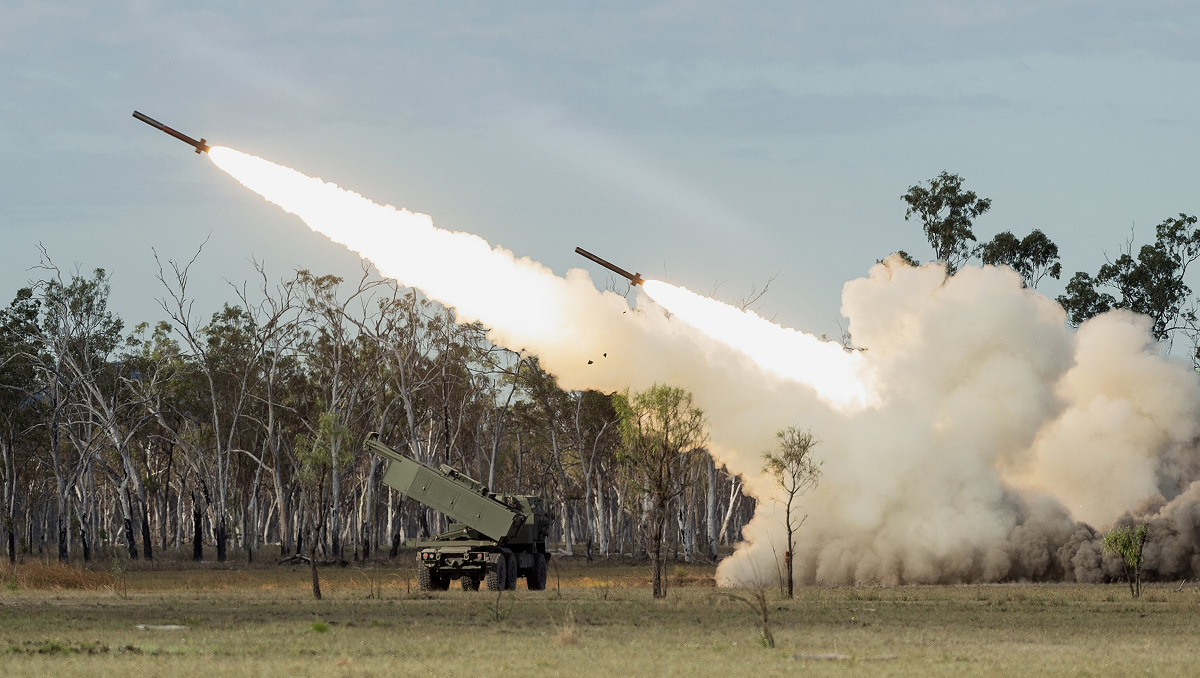
Some of the main purchases this year include the $2.4 billion announced earlier this month for the second tranche of AIR 6500, $2.3 billion over the decade towards High Mobility Artillery Rocket Systems and Precision Strike Missiles under a second Australian Army long‑range fires regiment and nearly $736 million to equip the Royal Australian Air Force with new high speed, long-range air-to-air AIM-260 Joint Advanced Tactical Missiles.
As always, clear intent and prioritised investment will determine the speed to capability. Without funding, however, intent is merely wishful thinking.
Australia’s most important resource
Alongside investment, Australia must also address gaps in its most important resources – people. Workforce development will remain a crucial concern into the future for industry as well as the Australian Defence Force.
Both the ADF and defence industry must become better at attracting and retaining talented personnel, while government, universities, vocational institutions and industry work together to build the workforce required for the next generation of capability.
This task as yet remains largely unsolved.
Make it work
Australia has no shortage of innovative companies, and those companies are no stranger to making the best of unfavourable conditions. There is a diverse ecosystem of small- to medium-sized businesses feeding Australian subsidiaries of international primes with counter-drone technology, advanced manufacturing products, unique autonomous systems, sensors and other critical technology.
As many CEOS have already realised, Australian industry must balance priorities to look outward in seeking international export opportunities while keeping a hand in for small orders under Australian Defence Force domestic trials.
Defence spending is trending sharply upward on the world stage and domestic industry must be ready to move from prototype to production when the Australian government catches up with large equipment orders and ADF adoption.
Adaptability and industrial capability
The experience of Ukraine has reinforced a lesson that possessing sophisticated platforms for years or decades on end is not enough. Countries under conflict should have the ability to replace components, manufacture munitions, repair equipment, adjust systems and replenish stocks under pressure.
Never before has the domestic industrial base been such a strategic asset to national defence capability during prolonged conflict, rather than a purely economic asset. Industrial resilience has become inseparable from military resilience, and Australia has more work to do in this regard than many countries with existing dual-purpose manufacturing.
Important questions are being asked about how Australia can sustain its military capability during a crisis, replace what it loses, how it can adapt faster than an adversary and maintain the technological and industrial advantages necessary for deterrence.
Final thoughts
Australia enters a new era focusing on what it is capable of producing, sustaining and adapting to maintain its sovereignty and be a competent ally with a credible defence strategy.
As the world appears to circle the drain on multipolar war, history offers a stark reminder that nations caught unprepared can quickly become easy prey.