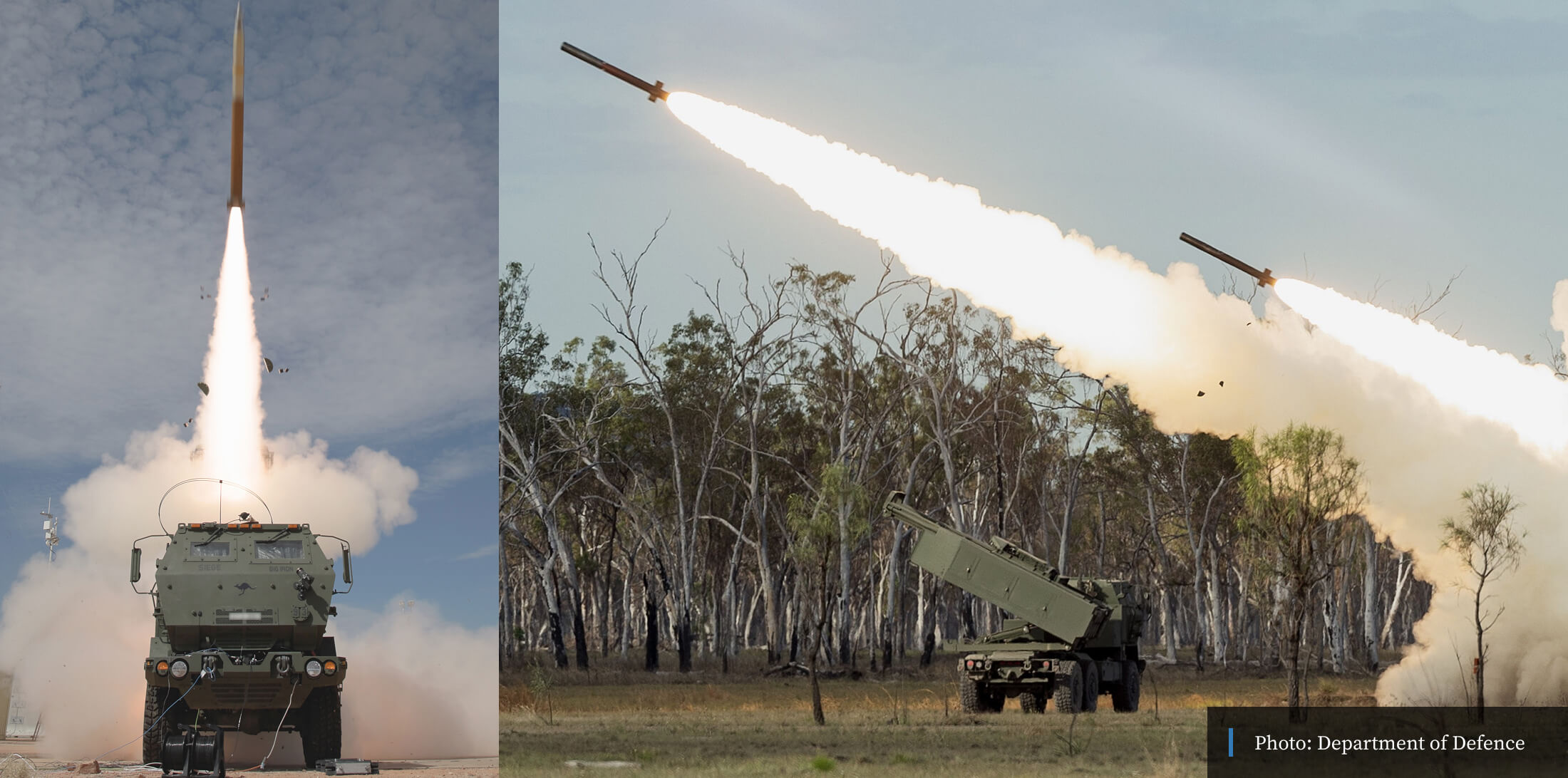


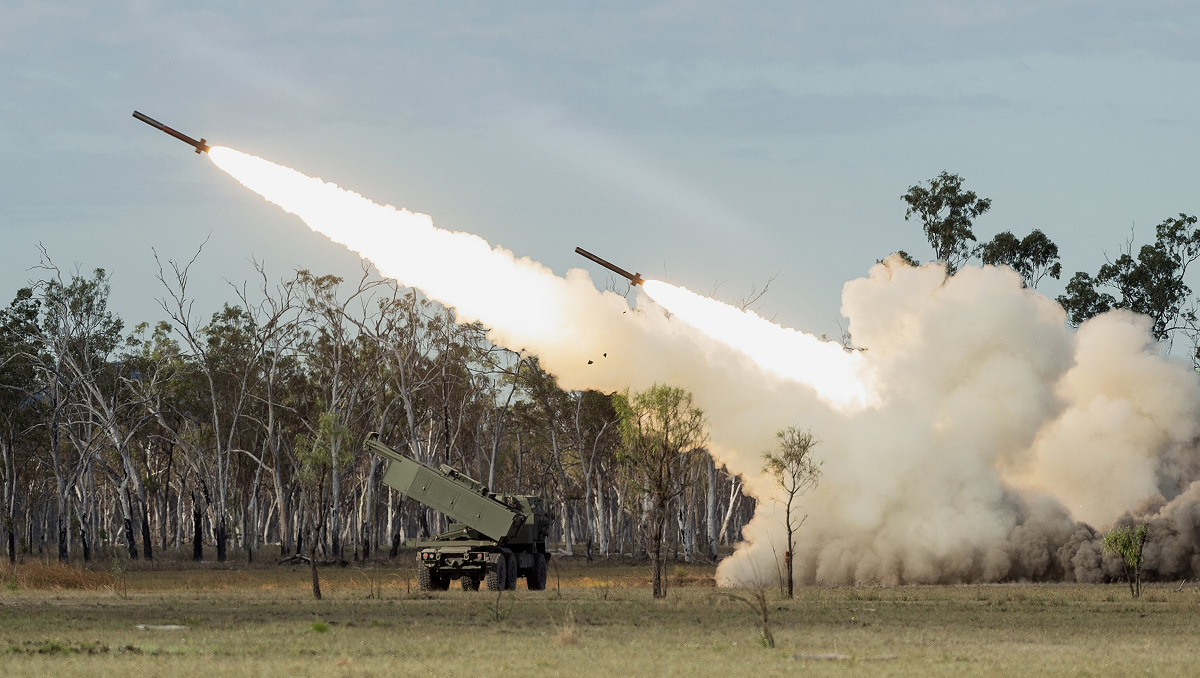
Australia’s missile manufacturing ambition has moved past rhetoric into operational reality. In April 2026, Lockheed Martin Australia completed the production and delivery of Guided Multiple Launch Rocket Systems (GMLRS) Rocket Pod Containers to the Australian Army’s 10th Brigade for two live-fire demonstrations at Woomera, South Australia – demonstrating not just assembly capability, but the precursor conditions for domestically controlled production of guided weapons.
Yet this moment represents less a destination than an inflection point. Between current operations and the sovereign missile manufacturing capability Australia is building lies a series of critical industrial, regulatory and institutional challenges that successive governments have underestimated.
Speaking with James Heading, director and general manager for missiles and fire control at Lockheed Martin Australia, we get an inside look into both the technical pathway forward and the sobering complexity of translating advanced manufacturing science into operational independence.
The assembly-to-manufacturing continuum
The most persistent mischaracterisation of Australia’s current position is the dismissal of Port Wakefield operations as mere assembly.
Heading addresses this directly: the first production rounds were assembled under what Defence calls a risk reduction activity, employing kits manufactured in Camden, Arkansas, shipped to Australia, and then integrated at the new facility. This methodological sequencing is often criticised as insufficient sovereignty.
That criticism fundamentally misreads the engineering reality. Assembly of guided weapons is not the IKEA equivalent some commentators suggest. It demands precision calibration of complex machinery, mastery of specialised manufacturing processes, and the ability to diagnose and resolve problems in real time within safety margins that have zero tolerance for error.
What transforms assembly from a supervisory exercise into substantive manufacturing capability is the knowledge and technology transfer that makes assembly replicable and scalable without constant reliance on external expertise.
What transforms assembly from a supervisory exercise into substantive manufacturing capability is the knowledge and technology transfer that makes assembly replicable and scalable without constant reliance on external expertise.”
This is where Heading’s emphasis on workforce qualification becomes strategically decisive.
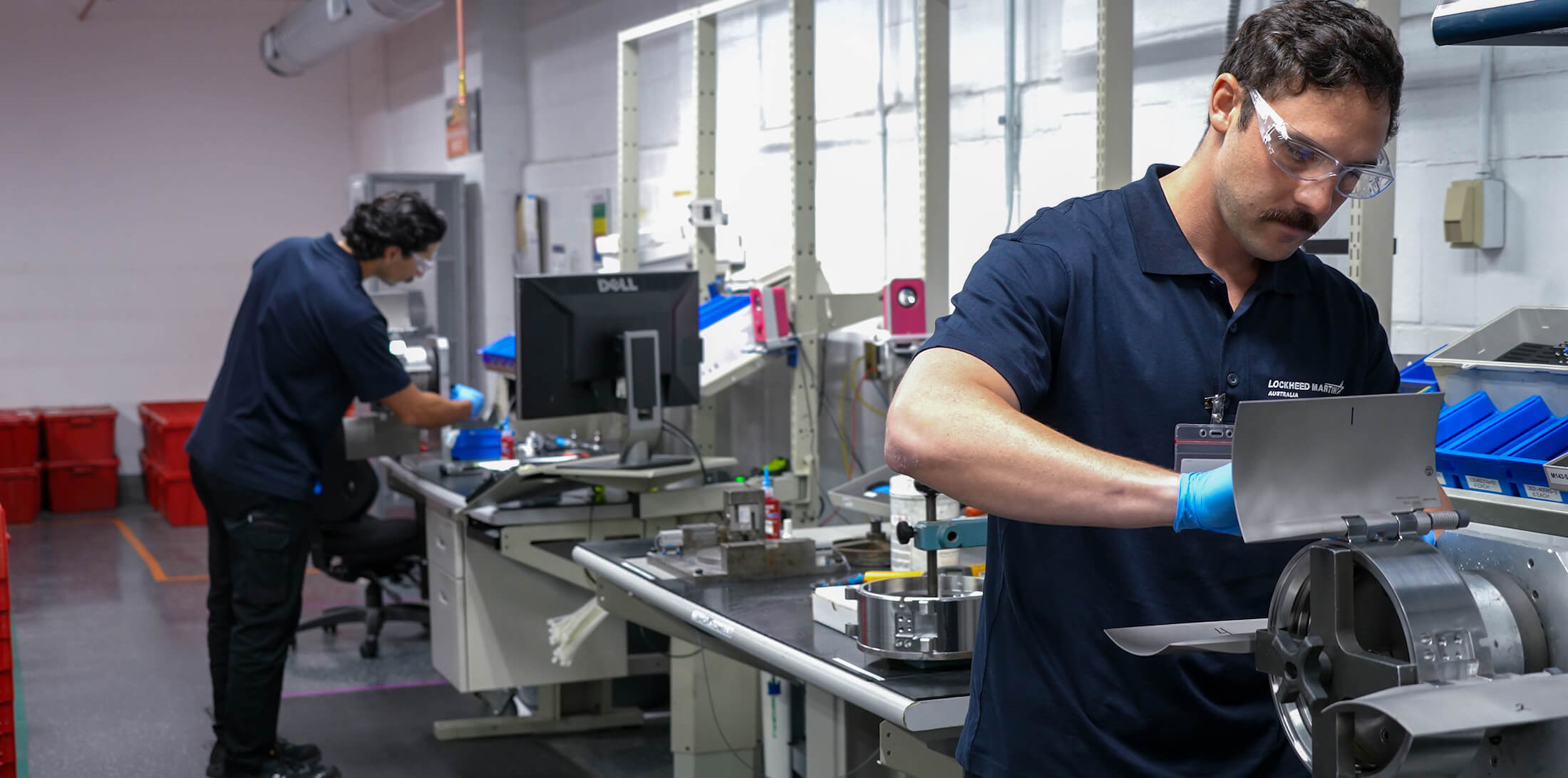
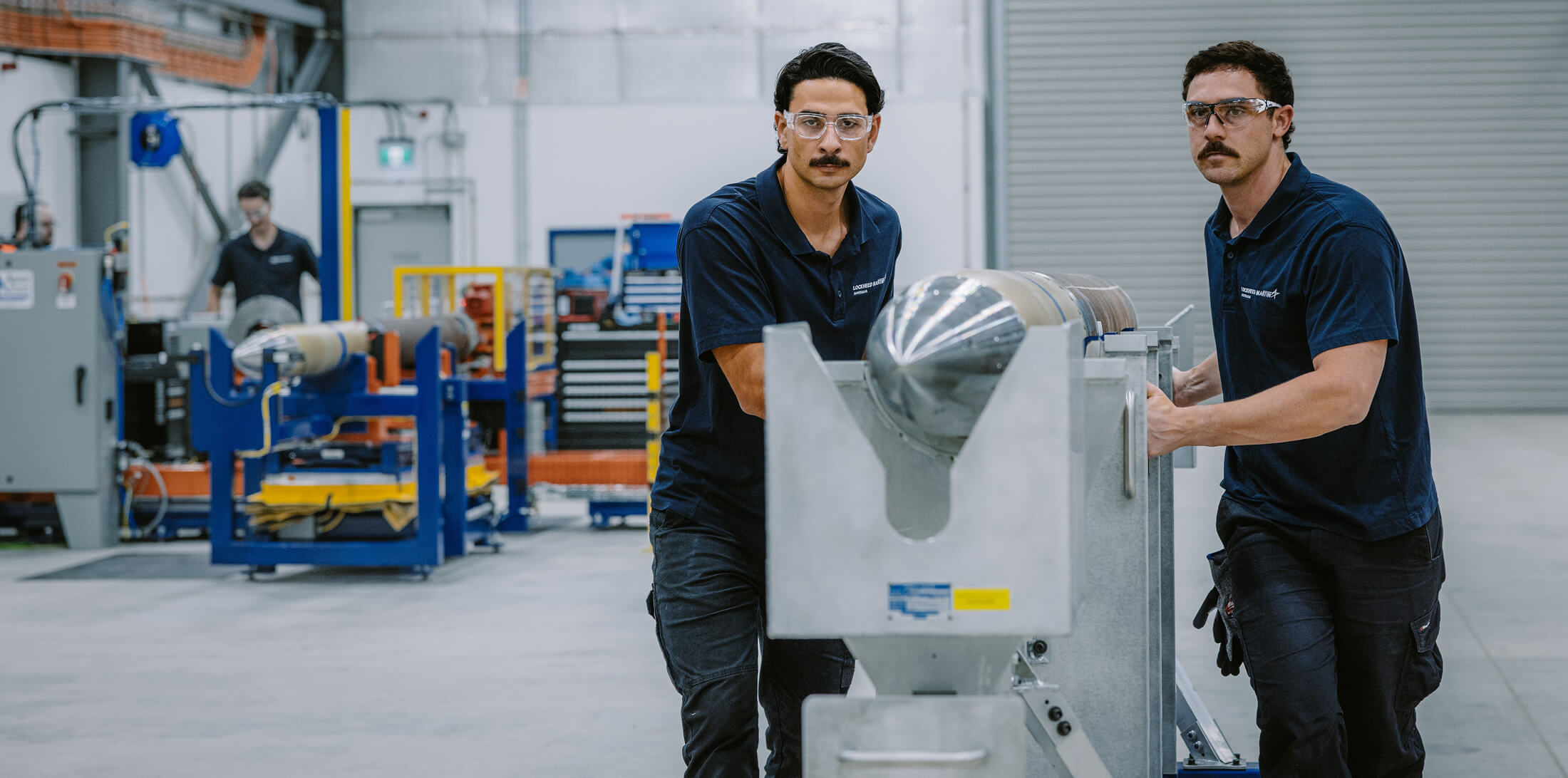
The machinery bolted to the Port Wakefield factory floor is complex. Understanding what happens when “this red light comes on, when this amber light comes on, when this machine says ping” is not intuitive knowledge derived from instruction manuals. It requires hands-on tutelage from personnel who have operated these systems across thousands of production cycles. That knowledge transfer is now underway.
The workforce and skills challenge
Lockheed Martin Australia’s headcount has expanded from three personnel four years ago to over 50. This is not mere scale expansion. It reflects a fundamental restructuring of the organisation’s technical capacity.
Initial cadre engineers have now been joined by technicians, quality control specialists, and environmental health and safety personnel. Yet 50 people operating a nascent production facility is not the same as 50 people sustaining accelerating production rates. Heading acknowledges this implicitly when discussing the transition from degree-qualified engineers through to TAFE-sourced technicians with hand skills.
The infrastructure of knowledge is not self-sustaining. Australia needs deliberate investment in pathways that feed entry-level manufacturing skills into complex weapon production environments.
This is a 25-year franchise, Heading emphasises. Defence planning operates on a strategic timeline that extends decades beyond electoral cycles. Yet Australian policy has historically treated manufacturing capability as a discrete project rather than an ecosystem requiring sustained investment in training, certification and career pathways.
The Port Wakefield facility and the planned Australian Weapons Manufacturing Complex represent opportunities to break that pattern, but only if government and industry create the institutional scaffolding that keeps the pipeline flowing.
TAFE and university partnerships are one approach. Direct industry investment in apprenticeships and graduate programs by Lockheed Martin and its tier-one suppliers offers another. Neither will succeed without explicit commitment to domestic workforce development as a strategic asset.
The bidirectional knowledge flow
One of Heading’s more subtle but strategically significant observations is that knowledge transfer is not unidirectional. Camden, Arkansas, has produced over 70,000 GMLRS rounds across decades. Operators and engineers there have accumulated tacit knowledge that is deeply embedded in process.
Yet that accumulated practice can become constraining. When Australian engineers encounter ambiguous processes and ask fundamental questions – ‘Why perform an interference fit precisely this way? Why separate that operation by 70 metres?, Could the thermal treatment happen closer to the action?’ – they generate insights that feed back to the US production line.
This bidirectional exchange is not incidental to the relationship. It is the mechanism by which Australia gains status as a valued component of a global manufacturing ecosystem rather than simply a recipient of transferred capability.
American counterparts encountering these questions “as Australians tend to do” have reportedly responded with process improvements and refinements that enhance both production efficiency and workforce onboarding for future personnel. This dynamic creates a strategic incentive for the US to maintain and deepen Australian involvement rather than treating the Australian facility as a back-up production line to be activated only in emergency scenarios.
Regulatory and licensing complexity
Heading identifies explosive licensing and technical data release protocols as the most significant early challenges, and this assessment warrants particular attention. Australian explosive safety standards differ materially from US standards.
The publication used in Australia is the Defence Explosive Ordnance Publication 101, while the US operates under the Department of Defence Contractor’s Safety Manual for Ammunition and Explosives, the “4145 manual”.
The difference is not one of substance alone; it reflects divergent interpretations of how explosive hazards are managed, how safety margins are calculated, and what risk profiles are considered acceptable.
Getting Lockheed Martin’s corporate risk management to operate within Australia’s framework has required sustained engagement by specialists who can translate between these regulatory regimes.
Technical data release has presented a parallel constraint. Providing manufacturing drawings to Australian personnel was always going to occur under a manufacturing licensing agreement.
Yet the pathway to that agreement required multiple intermediate steps: technical assistance agreements first, followed by staged knowledge transfer, then gradual migration towards the manufacturing-level access needed to genuinely replicate production without US oversight.
These mechanisms exist for legitimate security reasons. Proliferation risks are real. Yet navigating them at speed while maintaining security integrity demands expertise that sits outside traditional defence acquisition structures.
AUKUS has reportedly accelerated approvals that previously took three to six months down to weeks. This is significant progress, but it also reveals the structural impediment: regulatory burden was the binding constraint, not technical capacity.
Supply chain participation and industrial uplift
The industrial strategy underpinning Australian missile manufacturing is not monolithic production. Rather, it involves deliberate seeding of high-value components and subsystems into Australian supply chains. AW Bell manufactures canards for GMLRS rounds.
These are not trivial items; they are high-precision components that must withstand significant stress-strain environments and embody advanced material science capabilities.
Moog Australia produces the GMLRS control actuation system. This one contract item generates cascading demand through sub-tier suppliers, creating a multiplier effect across the industrial base. The strategic lesson here is that sovereignty does not require Australia to manufacture the entire weapon.
It requires Australian control over the supply pipeline for critical items and Australian participation in subsystems that cannot be readily interrupted or substituted.
This approach is deliberately constrained to avoid overwhelming supply chains that lack capacity to absorb immediate scale-up demands. Yet it is also scalable. As Port Wakefield production matures and demand increases, the surface area of Australian manufacturing participation expands. What begins as canards and control actuation systems could evolve into more complex assemblies, propulsion components and eventually to systems like the Precision Strike Missile (PrSM) when that production pathway is formalised.
The limitation of this strategy is that it assumes sustained demand signals from Defence. Heading’s closing emphasis on demand certainty is not tangential; it is central to whether Australian industry will commit capital to capacity expansion or instead treat defence manufacturing as a secondary market with limited upside.
The future weapons manufacturing complex
Port Wakefield is explicitly designated as a temporary site. The larger weapons manufacturing complex now being designed represents the actual ambition: a facility capable of accommodating multiple weapon types, flexible reconfiguration as demand shifts, and production rates sufficient to support both domestic requirements and global supply chain participation.
The design process is considering GMLRS and the path to PrSM as the initial mission. Future capability might extend to hypersonic systems as they mature. But the architectural question is really about flexibility: designing a facility that remains capable of adaptation across a two to three-decade life cycle.
Lessons from global supply shortages – particularly the 2024 Middle East conflict, which reportedly has consumed a large number of global interceptor stockpiles – demonstrate that production bottlenecks often reside not in final assembly but in constrained global supplies of specific components. Australia’s role is not necessarily to manufacture every component domestically, but to secure participation in the global supply pipeline for critical items and to maintain flexible capacity that can absorb surge demand as required.
This is where Heading’s emphasis on understanding component criticality becomes decisive: “The answer to how many components does it take to build a missile is all of them. If you don’t have a plan for all of them, you don’t get a missile.”
Australia’s strategic positioning depends on Defence providing explicit demand signals that give industry confidence to invest in capacity expansion. Procurement of medium-range ground-based air defence under LAND 6504 presents an opportunity to establish those signals.
Yet as Heading notes, “soul searching” is still underway within Defence about 6504 requirements. Until Defence can articulate with specificity what quantities are needed, at what timelines, and what technological evolution is expected, Australian industry cannot plan with confidence.
The cost of that ambiguity is measured in forgone investments and reduced sovereign capability at the precise moment when geopolitical conditions are arguing for acceleration.
The inflection point
Australia’s missile manufacturing capability has reached a critical juncture. Port Wakefield has demonstrated that production is operationally feasible. Knowledge and technology transfer mechanisms are functioning.
Supply chain participation is occurring. Workforce development is advancing. What remains unresolved is whether Defence will provide the demand clarity and long-term commitment necessary to induce industry to treat these capabilities as core investments rather than marginal activities.
The interview with Heading reveals an organisation confident in technical execution and frustrated by regulatory delay. What it does not address is whether the Australian government will provide the strategic demand signal that transforms missile manufacturing from a defensive necessity into a credible global capability.
That decision lies outside manufacturing floors and engineering teams. It rests with strategic planners willing to commit to the numbers that Australian industry needs to hear.