


As modern conflicts place increasing pressure on exquisite weapons stocks, loitering munitions are evolving with increased range, speed, autonomy, and affordability to deliver potent effects at scale.
The experience of Ukraine and other recent conflicts has demonstrated a fundamental shift in the character of warfare: mass is returning as a decisive factor.
This change is effectively challenging decades of Western defence investment in increasingly sophisticated and expensive exquisite weapons, which are used rapidly but replenished slowly.
For Australia, the challenge is no longer simply developing a capable drone or loitering munition. It’s establishing the industrial capacity to manufacture systems at the scale and speed required during a prolonged conflict.
“Real capability is having the ability to manufacture reliably at scale, at the rate that you need when you’re in a conflict,” says Innovaero chief executive Gregory Tunny, speaking to Defence Connect.
“The biggest change I see is not simply the rise of drones of all types, whether they be aerial drones or ones in water. What I see is the return of mass as being very important.”
“For many years now, the Western world has produced better and better, more sophisticated, exquisite weapons. But as we’re seeing recently in Ukraine and seen again in the Gulf, those exquisite munitions are consumed very rapidly.
“(Exquisite munitions) they’re extremely capable, but I think in the first month (of the Iran conflict), the US fired off over one year’s resupply of Tomahawks (missiles). That’s not sustainable for any nation.
On 27 March, four weeks into the war, CSIS published a dedicated note titled, The 850 Tomahawks Launched in Operation Epic Fury Is the Most Fired in a Single Campaign.
The Iran conflict demonstrated the industrial problem starkly. The United States reportedly fired 850 Tomahawks in the first month alone – several years’ worth of recent production.
In February 2026, RTX and the US Department of Defense announced a framework agreement to increase annual Tomahawk production to more than 1,000 missiles per year.
“And as such, large quantities of drone-based weapons are being used both in the Middle East and in vast numbers in Ukraine – reportedly Shahed/Geran type at about 1,200 per week in February 2026.”
Tunny explains that the experience of Ukraine has demonstrated how quickly expensive precision weapons can be consumed, while comparatively affordable drones can be produced and employed in enormous numbers.
Russia’s evolution of the Iranian Shahed-derived Geran kamikaze drone has demonstrated this transition clearly. What began as relatively simple, propeller-driven systems has evolved towards faster, turbojet-powered strike drones designed to operate with greater resilience in contested environments.
“We can talk about how that evolution is occurring. If you look at what the Russians have done, if you go back to 2023, they were using cruise and ballistic missiles, then early in 2023, very few large strike drones like the Shahed,” he says.
“They introduced the Shahed 136 (designated Geran-2 for Russian service) with a propeller version, and slowly over the years, from that small beginning, the curve has grown exponentially.
“We’ve seen them change from having a moped engine and a propeller to having a sophisticated turbojet engine, travelling at several times the speed. And that change has seen them improve from very large attrition rates, air defence was taking them out extremely successfully, to much more concerning numbers getting through of recent times.
“So, the world is changing. That combination of mass and speed and sophistication, but still at far, far lower prices and costs than the exquisite cruise missiles, is really changing the world.”
When you are going to produce in great scale with affordable mass … you’re going to want to conduct a range of missions, and no one drone is going to do all of the missions. So, the best approach to achieve maximum economies of scale and thus cost reduction, while achieving economies of scope of being able to do multiple things well, is to develop a family solution.”
– Gregory Tunny
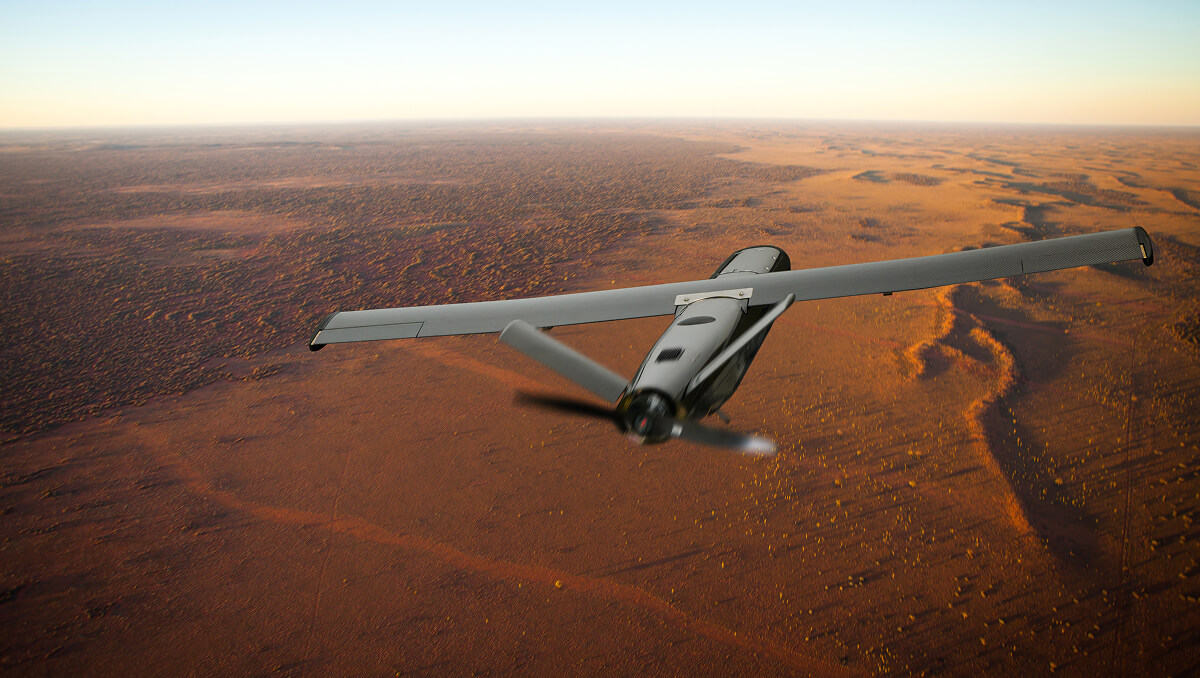
Innovaero offers a family of OWL (One Way Loitering) autonomous munitions across kinetic strike and electronic warfare roles.
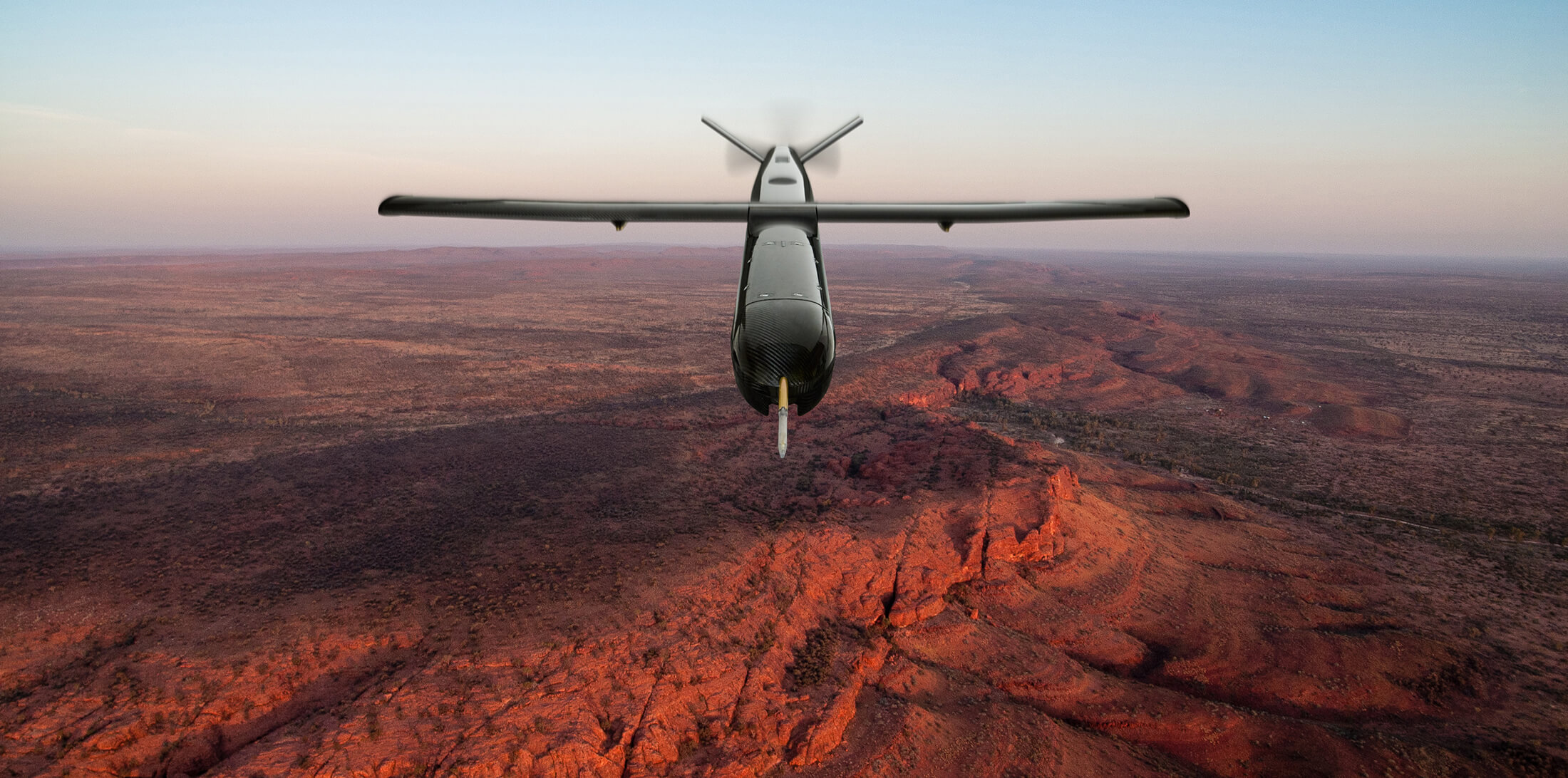
These include the OWL-B electric loitering munition, providing medium-range loiter and strike; the OWL-X jet-powered munition, providing both high-speed, medium-range strike and counter-drone interception; and the OWL-C long-range, high-speed strike missile alternative being developed for maritime and land domains.
“When you are going to produce in great scale with affordable mass … you’re going to want to conduct a range of missions, and no one drone is going to do all of the missions. So, the best approach to achieve maximum economies of scale and thus cost reduction, while achieving economies of scope of being able to do multiple things well, is to develop a family solution,” says Tunny.
“At the moment, we have the OWL-B, which is the lead product and the most developed. But we also have OWL-X (which has a turbojet) and goes several times the speed.
“What’s inside the airframe is common between the two. A common mission system, the common electronic systems, the integration thereof and the software involved are all common … You’re gaining the economies of scale on any member of the family, but also, each subsequent OWL becomes faster to develop because the heart of the system and the cost driver just keeps being evolved, inheriting from the previous.
“We work very closely with Defence in the development of the OWL-B to make sure it’s aligned with the needs of the Australian Defence Force and the areas of operation that the ADF is focused on … (particularly) what the ADF believes will be needed for the conduct of distributed littoral operations in the Indo-Pacific.”
For Australia, one of the persistent challenges facing emerging defence technologies is the “valley of death” between a successful prototype and an operational capability.
The Advanced Strategic Capabilities Accelerator’s (ASCA’s) Mission Talon Strike is designed to address precisely this problem, taking promising prototypes through the final stages of development and certification through to service.
For Innovaero, Talon Strike is supporting the OWL’s progression towards technical readiness level 9 and certification.
That certification is particularly significant for weaponised drones, which Tunny says have generally operated under waivers rather than the certification frameworks applied to missiles and aircraft.
“That certification is pretty important, because most, to our knowledge, loitering munitions used anywhere in the world at the moment are operating under waivers, not certified. With ASCA, we are pioneering, I guess you’d call it, a certification process for drone-based winged munitions,” says Tunny.
“Missiles are certified, aircraft are certified, but weaponised drones tend not to be certified at the moment, and that has significant impacts on training and exercise conduct.
“(Talon Strike itself) provides a number of things. It provides clear access to Defence personnel to go through the final refinements of the product. It provides the funding to evolve the OWL for manufacture at scale, which has been progressively happening through the prototypes, but it gives us a clear run at that.
“And we go through the verification and validation process leading up to the certification, whereby we’ve proven all of the performance requirements, we’ve proven reliability, the accuracy, all of those things. So that when you take the OWL out of the box, so to speak, and use it in accordance with the user instructions, it reliably and accurately does what it says it will do, which is pretty important to an operator in the field.”
Affordable precision mass does not exist simply because a company has designed a capable loitering munition. It exists when that system can be manufactured reliably and rapidly in quantities sufficient to sustainably influence a conflict.
For Australia, sovereign manufacturing becomes part of national security capability itself.
Because in a high-intensity conflict, having the weapon is only the beginning. The capability is being able to keep producing it.