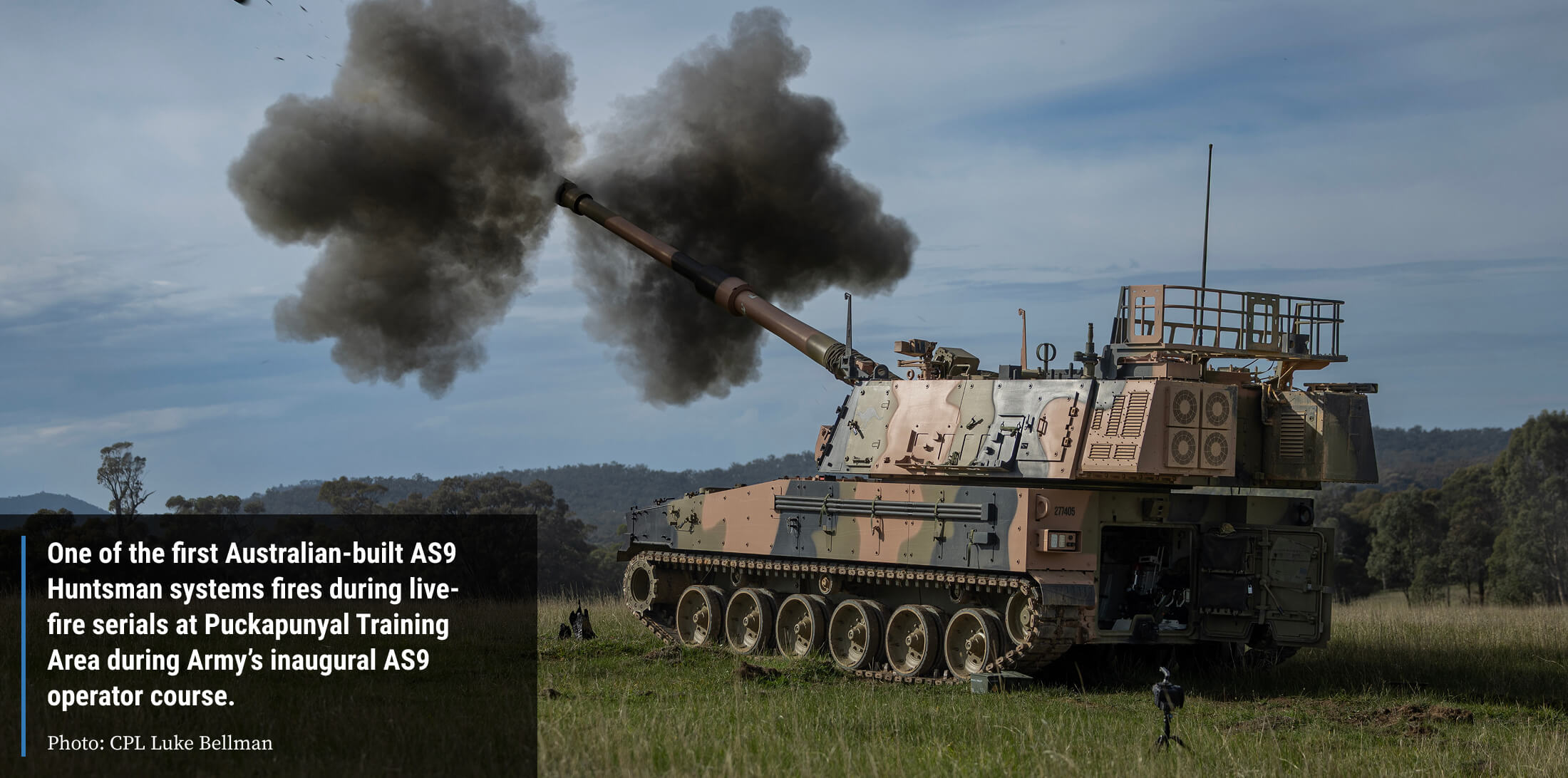


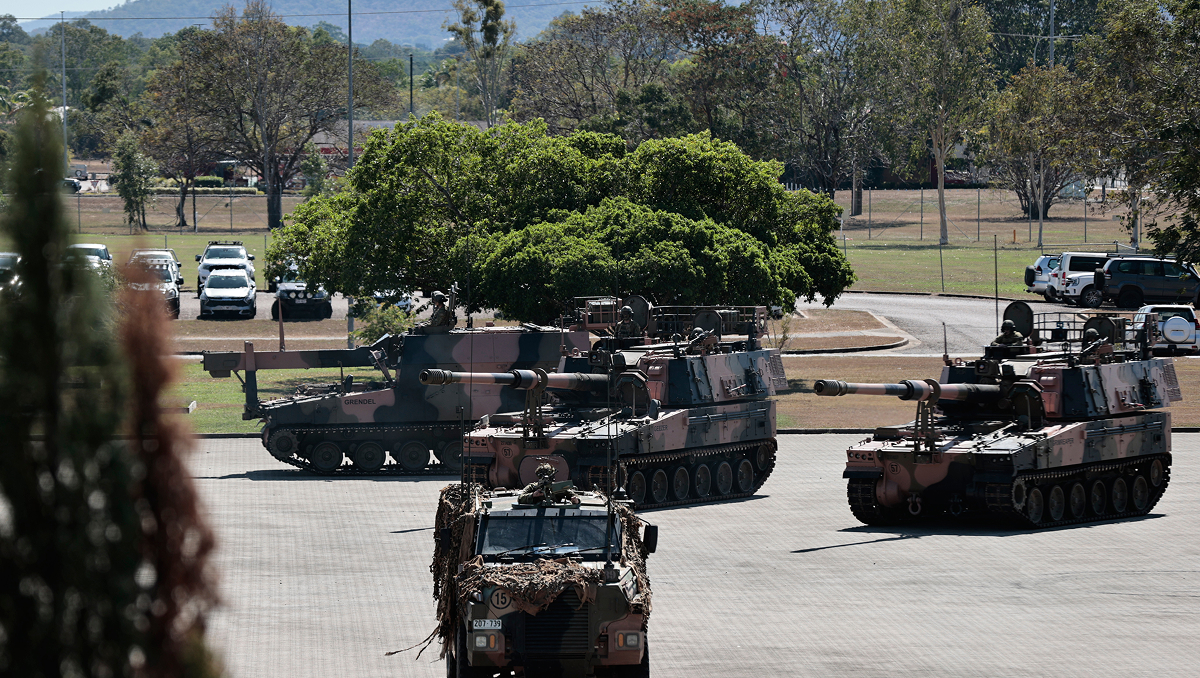
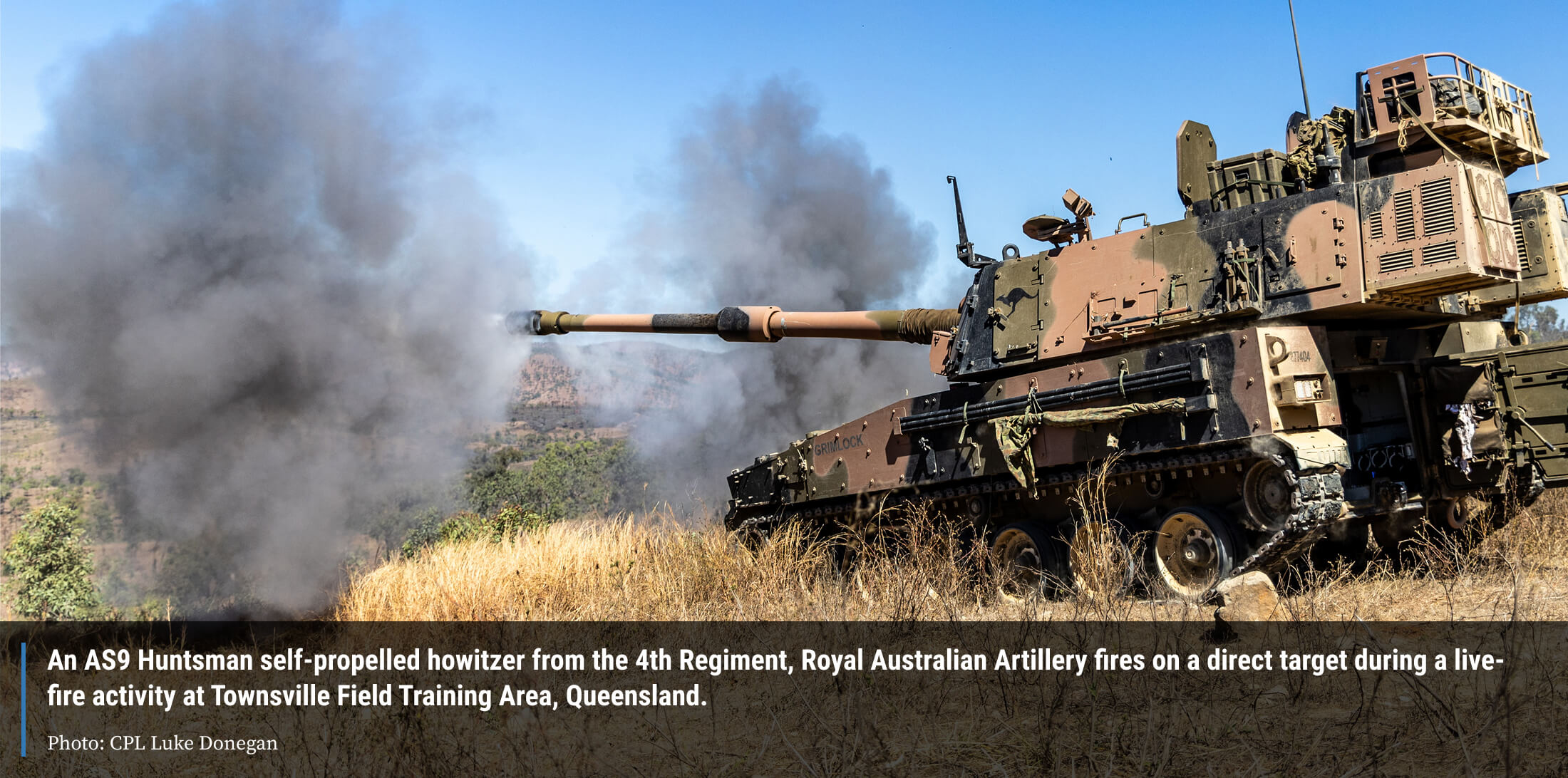
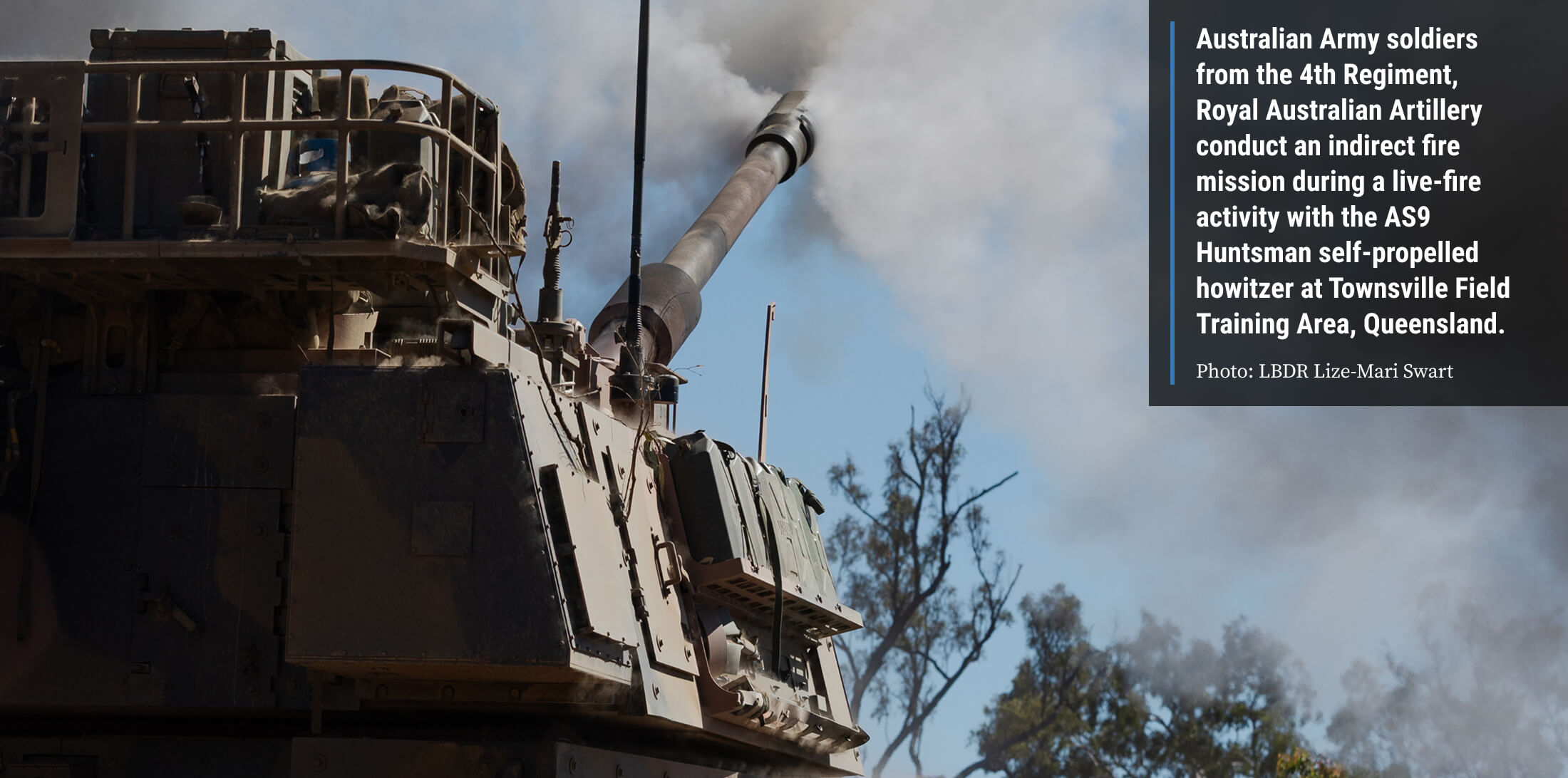
The mobile artillery system had its battlefield debut after being deployed for the 1st (Australian) Division’s Exercise Pozieres Run at Townsville Field Training Area in August this year. Crews from the Australian Army 3rd Brigade have tested the warfighting capability of the self-propelled howitzer in a series of realistic integrated activities.
AS9 Huntsman self-propelled howitzers, an Australian-focused variant of the K9 artillery platform, and AS10 armoured ammunition resupply vehicles were selected for LAND 8116 Phase 1 under manufacturer Hanwha Defence Australia, a subsidiary of South Korean defence prime Hanwha Aerospace.
Thirty AS9s and 15 AS10s are scheduled to enter service with the Australian Army before 2028 and will be primarily operated by the 4th Regiment, Royal Australian Artillery in Townsville. An entry-into-service ceremony for the Australian Army’s first protected mobile fires battery was held on 31 July at Lavarack Barracks, Townsville.
“(The introduction into service of the first protected mobile fires battery to Army) marks the arrival of one of the most significant advances in Army’s artillery capability in generations,” says Major General Ash Collingburn, commander of the 1st Australian Division, speaking at the ceremony.
“They represent Army’s modernisation, a major investment in fires, and years of effort across Defence, Army, industry and government… But today is not simply about new equipment. It is about warfighting advantage. It is about making our soldiers more lethal, more mobile and more survivable on the battlefield.
“That matters because the strategic environment is becoming more contested, more uncertain and less forgiving. Make no mistake, I am preparing our expeditionary division for war. We do not choose the circumstances in which the nation may ask us to serve, but we absolutely have a responsibility to be ready. That is our duty.
“Readiness is not created after a crisis begins. It is built over time through hard training, technical mastery, disciplined leadership and a relentless focus on warfighting. That is why today’s parade is so significant. It recognises not only the arrival of a new capability, but also the work already done by this regiment to prepare for war.
“Over the past year, the officers and soldiers of 4th Regiment have continued to demonstrate the professionalism that has long characterised Australian gunners, from the Boer War through to Afghanistan. While preparing for major change, you have remained focused on your current role and current capabilities.
“Through a range of exercises this year, or what I refer to as rehearsals, you have sharpened your technical mastery and enhanced your battle-worthiness. You have conducted demanding gunnery across multiple levels of training, including danger close missions, high-angle engagements and advanced methods of employment. You have tested your systems, challenged your standards and pursued warfighting excellence.
“That effort matters. New technology only becomes decisive when it is placed in the hands of confident, competent and disciplined soldiers. The effort and commitment of this regiment gives me great confidence as you fight with these new guns.
“The AS9 Huntsman self-propelled howitzers and the AS10 armoured ammunition resupply vehicles are a fundamental leap in capability. This is not simply a replacement gun system. It is a step change in how Army employs fires in the close fight.
The AS9 Huntsman self-propelled howitzers and the AS10 armoured ammunition resupply vehicles are a fundamental leap in capability. This is not simply a replacement gun system. It is a step change in how Army employs fires in the close fight.”
- Major General Ash Collingburn
“The AS9 brings protection, mobility, responsiveness, accuracy, lethality and survivability. On a battlefield shaped by persistent surveillance, precision strike, uncrewed systems, long-range fires and rapid decision making, those qualities are essential. They allow gunners to move, shoot, survive and continue fighting in conditions that will be unforgiving.
“But the value of the AS9 is not only what it can do as an individual platform. Its real value is what it provides as part of Army’s Combined-Arms Land System.
“The 3rd Brigade, as Army’s Armoured Brigade, owns this modern system of war. It includes the main battle tank and Boxer combat reconnaissance vehicle in the 2nd Cavalry Regiment. It includes the assault breacher vehicle and Joint Assault Bridge in the 3rd Combat Engineer Regiment. It includes the future Redback infantry fighting vehicle within the 3rd Battalion, the Royal Australian Regiment. And now, with the AS9 and AS10, it includes protected mobile fires that can fight with, support and sustain the tempo of a heavy armoured formation in the fight.
“Each of these capabilities is potent in its own right. But combined arms is not about individual platforms. Its strength comes from the way these capabilities are brought together: armour, infantry, artillery, engineers, reconnaissance, command and control, logistics and sustainment.
<
<
“Properly integrated, they allow a formation to find the enemy, protect itself, breach obstacles, manoeuvre, strike, exploit opportunity and win the close fight.
“For this regiment, the delivery of the first AS9 Battery is rightly a proud moment. But it also brings responsibility. The AS9 will only reach its full potential if you master it as part of the combined arms team. It must support the close fight, enable manoeuvre, shape the battlefield, and provide the fires that allow the brigade to close with and destroy the enemy… That is what modern artillery must do. That is what this regiment must now deliver.”
In addition, AS9 Huntsman self-propelled howitzers and AS21 Redback infantry fighting vehicles undertook sea trials of land capabilities aboard Canberra Class landing helicopter dock HMAS Canberra at Garden Island, Sydney Harbour in early July this year.
The vehicles were transported by Royal Australian Navy LCM-1E landing craft during sea trials for embarkation, deck handling and disembarkation serials, with the tests assessing the maritime deployability of the Australian Army’s next-generation land vehicles, including the AS9 Huntsman self-propelled howitzer, AS10 Armoured ammunition resupply vehicle and HX81 truck with trailer.
MAJGEN Collingburn also confirms there would be further artillery arriving in two subsequent batches, with another battery expected in the first half of next year and final delivery in the third quarter of 2027. The regiment will continue its journey towards full operational capability in 2028.
“History shows that military success rarely belongs only to those with the best technology. More often, it belongs to those who learn the fastest, adapt the quickest and employ their capabilities most effectively. I have every confidence this regiment will meet that challenge,” he says.
“Australian gunners have served the nation with distinction across generations. They have adapted to new technology, embraced new ways of fighting and remained focused on their enduring purpose: delivering timely, accurate and decisive firepower to win the close fight.
“You carry that legacy and that responsibility. Be proud of what has been achieved. Be proud of the capability on parade. But recognise the expectation that comes with it. Army has entrusted this regiment with one of the most advanced artillery systems in the world. The nation has invested in this capability because it matters to our national security.
“Now it is over to you, the men and women of the 4th Regiment, Royal Australian Artillery. Master the AS9. Integrate it into the Combined Arms Fighting System. Strengthen 3rd Brigade as Army’s Armoured Brigade. Generate warfighting advantage for the 1st Australian Division.
“And ensure this capability delivers: more lethal, more responsive, more survivable and more effective land fires for the Australian Army.”
Earlier this month, Hanwha Aerospace has announced its vision for the next evolution of the K9 self-propelled howitzer at this year’s K9 User Club in Estonia. More than 200 military and industry representatives from seven K9 user nations, including Australia, attended the event from 2 to 4 September.
Among the new capabilities, the company has outlined a new K9 operating concept integrating fire-guidance drones to accelerate the sensor-to-shooter cycle from target acquisition to battle damage assessment as well as digital sustainment solution enhancing fleet readiness through predictive maintenance and data-driven logistics.
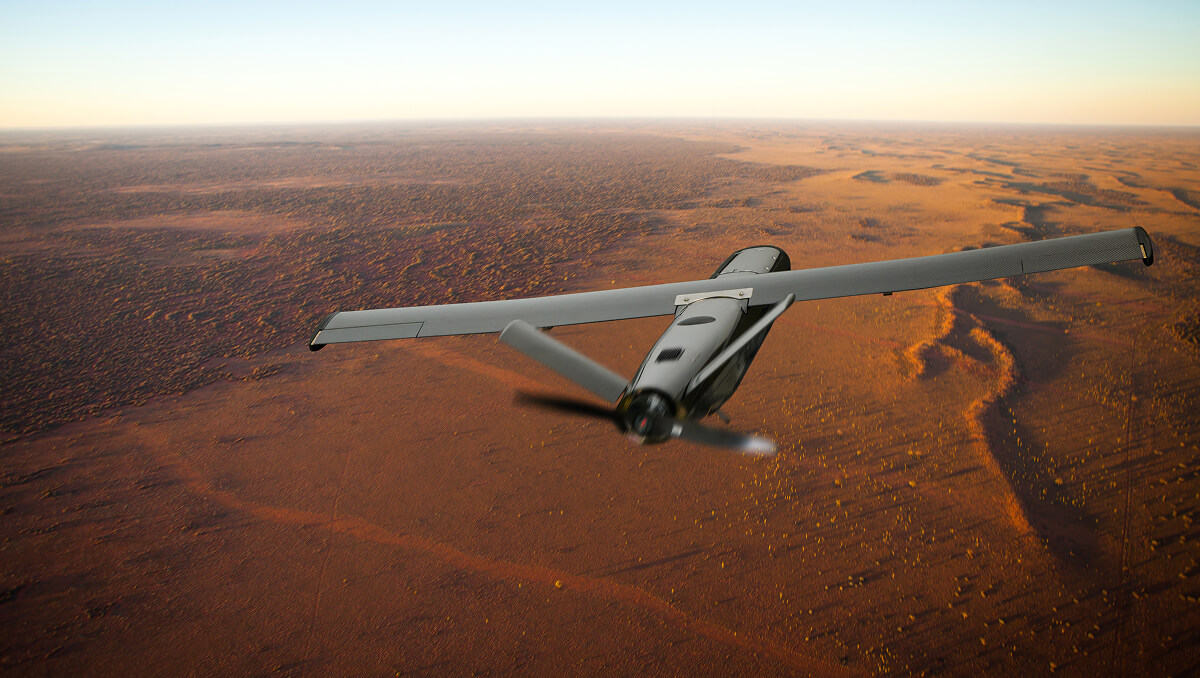
Hanwha has presented the concept employing a vertical take-off and landing fire-guidance drone capable of detecting and tracking targets, generating target coordinates and transmitting them directly to the fire-direction system for K9 fire missions. The drone remains over the target area throughout the engagement, supports target acquisition before firing, observes impacts during the mission and conducts battle damage assessment after engagement.
The company has also outlined new wheeled artillery concepts such as a K9A2 fully automated turret to create a scalable and adaptable artillery platform capable of supporting multiple configurations.
Another consideration is Hanwha Aerospace’s Total Operation & Maintenance Management System (TOMMS) Sustainment Portal designed to enhance fleet readiness and long-term sustainment by digitised spare parts procurement and logistics. TOMMS integrates requests for quotation, quotations, purchase orders and delivery tracking into a single platform as well as a digital catalogue covering 700 to 800 frequently requested spare parts.
Australia is set to host the next K9 User Club next year.
<