

Navantia Australia is helping lead this shift by treating digital twins as a critical sovereign Defence capability, one that connects engineering knowledge, live asset data, predictive insight and sustainment expertise to improve maritime readiness and turn complex fleet information into trusted operational decisions.
“Digital twins give Defence the ability to move from reactive sustainment to predictive, mission-informed fleet management. The real value is not the model itself; it is the ability to connect engineering knowledge, live data and operational decision making in a way that improves readiness and mission confidence,” said Ross Yannatos, chief innovation and technology officer, Navantia Australia.
Picture a future maritime commander overseeing a dispersed force of crewed ships, autonomous surface vessels, uncrewed aircraft and subsurface systems operating across contested waters. The decisive question will not be whether each platform can perform its task in isolation. It will be whether the force can be understood, coordinated, sustained and trusted as one connected system.
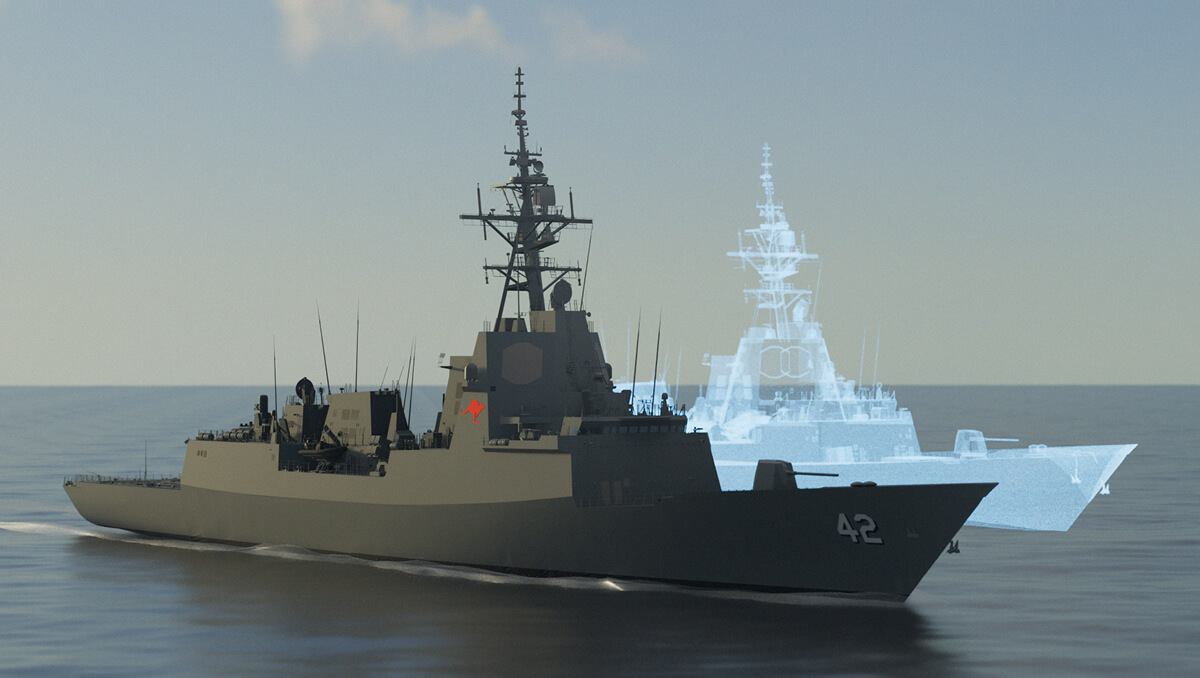
In the defence maritime environment, that level of confidence is increasingly being enabled by digital twins: continuously updated digital representations of vessels, systems, fleets and operating environments that combine engineering knowledge, live data, historical performance and predictive models to support better decisions.
The digital twin is no longer simply a design artefact. It is becoming the trusted operating layer between engineering truth, operational reality and mission assurance.”
The digital twin is no longer simply a design artefact. It is becoming the trusted operating layer between engineering truth, operational reality and mission assurance.
Digital twins move beyond engineering
Digital twins were once viewed mainly as engineering tools for design assurance, simulation, configuration management and maintenance planning. Those functions remain essential, but their role is expanding. As navies integrate crewed and uncrewed systems across distributed operations, the digital twin is becoming operational infrastructure.
The challenge for future maritime forces is no longer simply whether an autonomous vessel can navigate, collect information or complete a task. It is whether commanders, operators, engineers and sustainment organisations can maintain a shared, trusted and predictive understanding of the force as a whole.
Digital twins provide the connective layer for that understanding, linking the physical asset, the mission system, the sustainment record and the operational environment into a single evolving picture of readiness, risk and performance.
The next generation of digital twins will do more than describe vessel condition. By combining control-system data, sensors, historical records and predictive models, they can evaluate readiness, endurance, mission suitability, operational risk, maintenance constraints, system degradation and future availability.
This evolution is particularly important as autonomous fleets grow in size and complexity. Without clear insight into fleet health and performance, failures can emerge unexpectedly, subsystem conditions may be poorly understood, and maintenance can remain reactive and costly.
A life cycle approach to maritime digital twins
A practical maritime digital twin requires a life cycle view of the naval asset. It must be more than a visual model or engineering dataset. To be operationally useful, it needs to connect design intent, engineering configuration, onboard systems, operational data, maintenance history, logistics constraints and mission requirements in a way that supports decisions at sea and ashore.
This life cycle perspective is reflected in digital twin capability being developed globally for naval vessels, including ship-system modelling, live data integration, diagnostic analytics, failure prediction, energy and route optimisation, logistics integration and links between onboard and shore-based decision environments.
In Australia, sovereign digital capabilities such as Navantia Australia’s Teleia are applying diagnostic twins, live data, analytics and artificial intelligence to help maritime operators identify emerging risks, understand asset condition and improve availability. The requirement is practical: modern fleets generate vast amounts of data, but advantage depends on converting that data into trusted decisions.
Navantia Australia brings a distinctive advantage to defence digital twins because its capability is anchored in real maritime engineering, sustainment and operational understanding. Through Teleia, Navantia Australia is translating live platform data, diagnostic analytics and artificial intelligence into practical defence outcomes: earlier identification of system degradation, better-informed maintenance planning, improved asset availability and stronger confidence in fleet readiness. This combination of naval domain expertise, sovereign digital capability and life cycle sustainment insight positions Navantia Australia as a leading partner for defence in turning digital twin technology into operational advantage.
The same digital foundation strengthens autonomy. When paired with mission orchestration capabilities such as Navantia Australia’s Omatha, digital twins can inform task allocation, risk assessment, readiness evaluation and sustainment-aware mission planning.
In this context, digital twin capability sits at the intersection of engineering, operations and sustainment. It provides a pathway from static asset visibility to predictive fleet management, trusted autonomy and life cycle-informed decisions.
The missing layer in modern autonomy
Discussion about autonomous systems often focuses on platform-level autonomy: can a vessel navigate safely, avoid obstacles, maintain station or complete a task without direct human intervention?
Future autonomous fleets may include dozens and, eventually, hundreds of interconnected assets across maritime, aerial and subsurface domains. Managing that force platform by platform will not be efficient or scalable. The challenge shifts from automation to orchestration.
Future operators will increasingly direct missions rather than vehicles, supervising outcomes instead of controlling individual assets. This requires artificial intelligence, distributed decision making, human-machine teaming, communications resilience, predictive sustainment and digital engineering to work as an integrated operating model.
Capabilities such as Omatha teaming algorithm are being developed for this environment, enabling a single operator to coordinate multiple autonomous platforms through human-machine and machine-machine collaboration.
By applying advanced algorithms and intelligent automation, Omatha shifts autonomy from platform control to fleet coordination, reducing operator workload while maintaining awareness across distributed assets.
This becomes particularly important in contested or communications-limited environments, where autonomous assets must operate as a coordinated force while remaining aligned with mission objectives.
Why sustainment must become part of autonomy
One of the most important lessons emerging from defence autonomy programs globally is that operational autonomy cannot be separated from sustainment.
Autonomous systems may operate without onboard crews, but they still face maintenance needs, component wear, sensor degradation, fuel and battery limits, environmental stress and communications disruption. Each factor influences mission effectiveness and fleet availability.
Future autonomy architectures must be sustainment-aware — because mission success depends on knowing not only where assets are, but whether they are ready.”
Mission success depends not only on where assets are and what tasks they are performing, but whether they are genuinely ready for deployment, experiencing degradation, able to complete assigned missions or presenting elevated operational risk.
Future autonomy architectures must be sustainment-aware – because mission success depends on knowing not only where assets are, but whether they are ready.
Future autonomy architectures must therefore integrate mission systems, artificial intelligence, digital twins, predictive maintenance, fleet logistics and engineering decision support into a single operational framework.
Teleia represents one example of this approach, using analytics, machine learning and digital modelling to support proactive asset management. Instead of reacting to failures, operators can identify trends, optimise maintenance and make better-informed decisions about resources and mission planning.
The result is a more resilient operating model in which operational control, actionable intelligence and sustainment are connected within a single architecture.
Australia’s opportunity
Australia is well positioned to contribute to the next generation of autonomous maritime capability.
Australia has recognised strengths in maritime operations, systems engineering, robotics, artificial intelligence, defence science, trusted autonomy and digital engineering. Collaboration between industry, Defence, universities and government research organisations is accelerating progress in these areas.
Across the country, partnerships are advancing autonomous decision making, digital twins, resilient mission systems, sensing technologies and human-machine teaming, helping establish sovereign capability while supporting interoperability with allied defence forces.
Australian investment in maritime autonomy, artificial intelligence, digital engineering and sustainment intelligence is supporting more integrated approaches to operational control and predictive fleet management.
The objective is clear: to create the foundations for maritime forces in which autonomous systems can be coordinated, trusted, sustained, assured and continuously evolved throughout their life cycle.
This is no longer solely a technology challenge. It is increasingly an operational and strategic imperative.
For Navantia Australia, this creates a clear opportunity to contribute sovereign digital twin, autonomy and sustainment capability designed around Australia’s maritime geography, Defence readiness needs and allied interoperability requirements.
The fleet operating system of the future
Future naval capability will require more than autonomous vehicles operating independently or maintenance systems reporting faults after they occur. It will need an integrated digital operating model that connects operators, autonomous systems, command networks, digital twins, artificial intelligence, logistics, engineering and sustainment.
In that future, the digital twin becomes a strategic maritime capability: the mechanism through which the fleet can be understood, assured, sustained and improved. It allows commanders to see not only where assets are, but whether they are ready; not only what systems are doing, but how they are performing; and not only what has failed, but what may constrain mission success.
This matters because future maritime advantage will depend on decision superiority. Defence organisations will need to operate larger, more distributed fleets, integrate crewed and uncrewed systems, sustain assets under pressure and make confident decisions in contested, data-rich environments.
In the evolving maritime battlespace, digital twins will be far more than digital replicas. They will become a decision bridge between fleet condition, operational risk and mission confidence. For Defence, trusted digital twin capability will be central to maritime advantage: helping commanders understand readiness, anticipate constraints and make better decisions in contested, data-rich environments. By combining naval engineering depth, sovereign digital capability and autonomy expertise, Navantia Australia is helping Defence turn complex fleet data into predictive insight, operational confidence and mission-ready advantage.