

Australia’s defence establishment has operated within a comfortable strategic assumption: that nations challenging the current order remain constrained by limited access to advanced computing hardware. Export controls on high-end semiconductors have slowed rivals’ AI development.
They have preserved a technology gap that Australia and its partners have relied upon for operational superiority. But this assumption is quietly becoming unsafe. And the mechanism driving that change has nothing to do with chip design.
A fundamental shift in strategic logic
Strategic advantage has never been about a single technology. Quantum is a reminder that competitors rarely follow the path you expect them to.”
AdvertisementAdvertisement
The critical error in most defence commentary on quantum technology is treating it as merely the next iteration of classical computing – a bigger, faster, more capable chip somewhere on the horizon.
It is not.
Quantum systems operate on an entirely different physical substrate, solving fundamentally different problem classes through quantum mechanical principles. And this distinction carries decisive strategic weight.
A nation constrained today in large-scale AI model training faces no equivalent constraint in quantum sensing, quantum-enabled optimisation or quantum-relevant cryptanalysis.
None of these capabilities require participation in the semiconductor supply chain that current export controls are designed to restrict. Each has immediate military consequence. And progress in each is measured in years, not decades.
In concrete terms, the chokepoint Defence has been counting on applies to one pathway towards technological advantage. Quantum technology represents an alternative pathway entirely, one that circumvents rather than navigates through existing constraints.
The near-term operational reality
This is not theoretical. Quantum sensing has already reached operational maturity. It enables navigation and positioning systems independent of GPS – systems that function in contested environments specifically designed to degrade satellite-based infrastructure. It delivers detection capability that does not depend on vulnerable external networks. These are fielded problems with fielded solutions, available now to any defence force willing to invest in their deployment.
Quantum-inspired optimisation presents a parallel opportunity. Running on classical infrastructure today, these systems can evaluate force planning, logistics allocation, and mission scheduling problems at computational scales that traditional computing struggles to address within operationally relevant time frames. Consider the problem: in a distributed maritime operation spanning thousands of square kilometres, with hundreds of assets, dozens of mission parameters and competing constraints on fuel, sensor coverage and strike capability, classical systems often cannot generate optimal solutions fast enough for tactical decision makers.
Simply put, quantum-accelerated optimisation changes that calculus. Neither application requires a fault-tolerant universal quantum computer to deliver value. Both are available to implementation now, to whichever nation invests systematically in their development. The advantage window Australia has been operating inside was never permanent. Quantum technology is the clearest indicator yet of how rapidly it is contracting.
Why the headline metric misleads
The advantage window we’ve become accustomed to was never permanent. Quantum is a reminder that competitive advantages have a shelf life.”
Public commentary remains fixated on qubit counts – the number of quantum bits a system operates. This focus is strategically misleading. A large fleet of unreliable aircraft delivers less capability than a small fleet that flies reliably.
Quantum computing’s military relevance will ultimately be determined by systems that deliver error-resistant, stable performance under operational conditions, not by programs competing for the largest headline qubit figure.
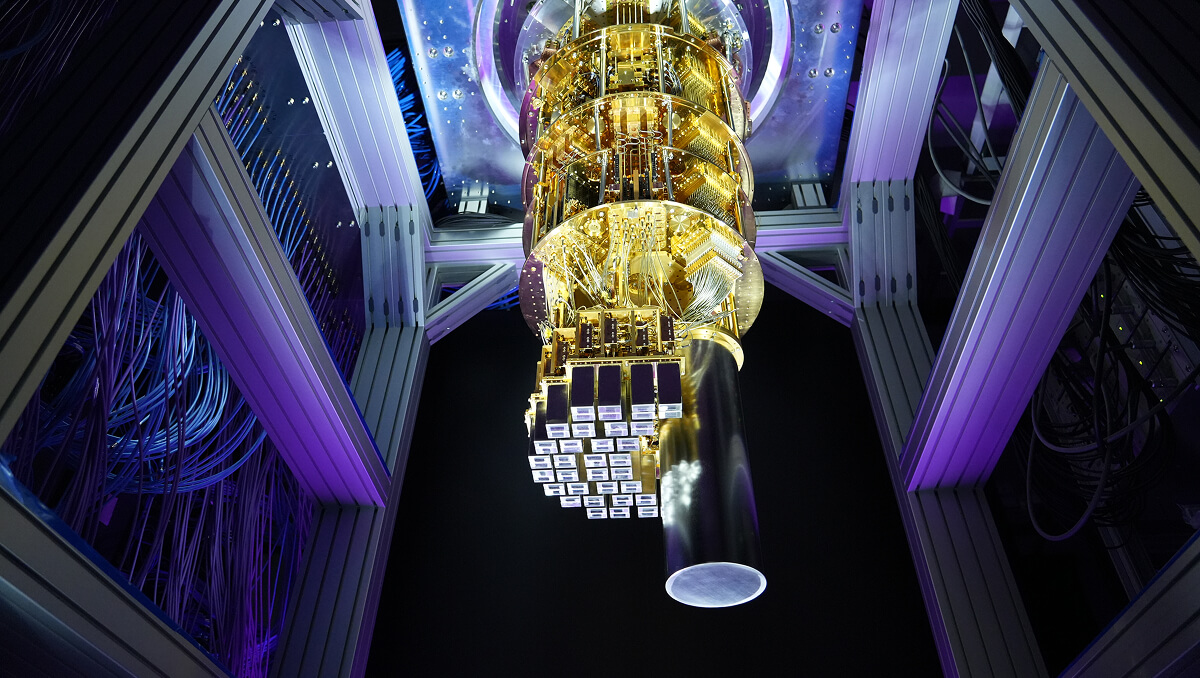
Fujitsu’s trajectory under its STAR architecture, developed with Osaka University, illustrates the actual direction of strategic competition. The company reached 256 qubits in 2025 and maintains a roadmap towards 10,000 qubits by 2030 – but the architectural emphasis is on error correction, not scale for its own sake.
FugakuNEXT, the successor to Fujitsu’s high-performance computing platform, is being designed specifically to operate alongside quantum systems rather than in competition with them. The strategic point is reliability under real operational conditions, which remains the only metric that will matter to a warfighter.
Australia’s sovereignty problem
Australia has never lacked scientific capability. The nation produced the fundamental science underpinning Wi-Fi, photonics technology and solar cells. Yet in each case, commercial advantage migrated elsewhere.
Quantum technology represents an opportunity to break this pattern decisively, but only if the country’s research institutions, Defence, industry and small and medium-sized enterprises are genuinely integrated into a single sovereign ecosystem rather than operating in parallel silos.
The defence organisations that will matter most in this contest are not those claiming ownership of the largest quantum computer. They are the organisations capable of translating quantum research into fielded capability fastest, on sovereign terms, without strategic dependence on a single external supplier for the complete pipeline. This is primarily a capability problem, not a science problem. And Australia is still deciding whether to answer it.
The distinction matters enormously. Outsourcing quantum capability to a partner nation creates a dependency relationship incompatible with true strategic autonomy. In a conflict scenario, foreign-controlled quantum sensing or optimisation systems cannot be trusted. Building sovereign capability means investing across the entire translation chain: from research through to prototype development, through to operational deployment and sustainment.
This is expensive. It is also non-negotiable for a defence force serious about independence.
The cryptographic imperative
A fourth quantum application deserves particular emphasis: cryptanalysis. Large fault-tolerant quantum computers pose a theoretical threat to current encryption standards, but the timeline to that threat has always been uncertain.
What is certain is that adversary nations are already investing in quantum sensing and quantum-accelerated cryptanalysis, and these investments are happening now.
For Defence, this means the security classification of communications conducted today could be compromised by adversary cryptanalytic capability deployed within five to 10 years.
This is not a future problem to be solved by future policy. It is a present security question. Transitioning to quantum-safe cryptography across Defence’s entire communications infrastructure is an active urgency, not a scheduled future project.
The policy inflection point
Defence does not need to solve quantum computing to act decisively on this challenge. It needs to do three things immediately.
First, establish priority investment in the applications that deliver operational value now: quantum sensing, quantum-accelerated optimisation and quantum-safe security systems.
Second, build sovereign partnerships that ensure Australia is translating research into fielded capability rather than watching allies develop systems Australia must subsequently adopt on their terms.
Third, integrate quantum research capacity into Defence’s capability planning and resource allocation at the strategic level, not as a future consideration or technology horizon study.
The nations that treat quantum as a long-term curiosity will discover, likely without sufficient warning, that the strategic timeline was significantly shorter than assumed.
The advantage window Australia has been depending on is not closing gradually. It is contracting in response to technological developments already underway in competitor nations.
Australia’s strategic planners have never been wrong to focus on the importance of technological superiority. They are wrong only if they assume the current sources of that superiority will remain relevant.
Quantum technology is the mechanism by which that assumption becomes outdated.
The timeline for response is not measured in decades. It is measured in years.