

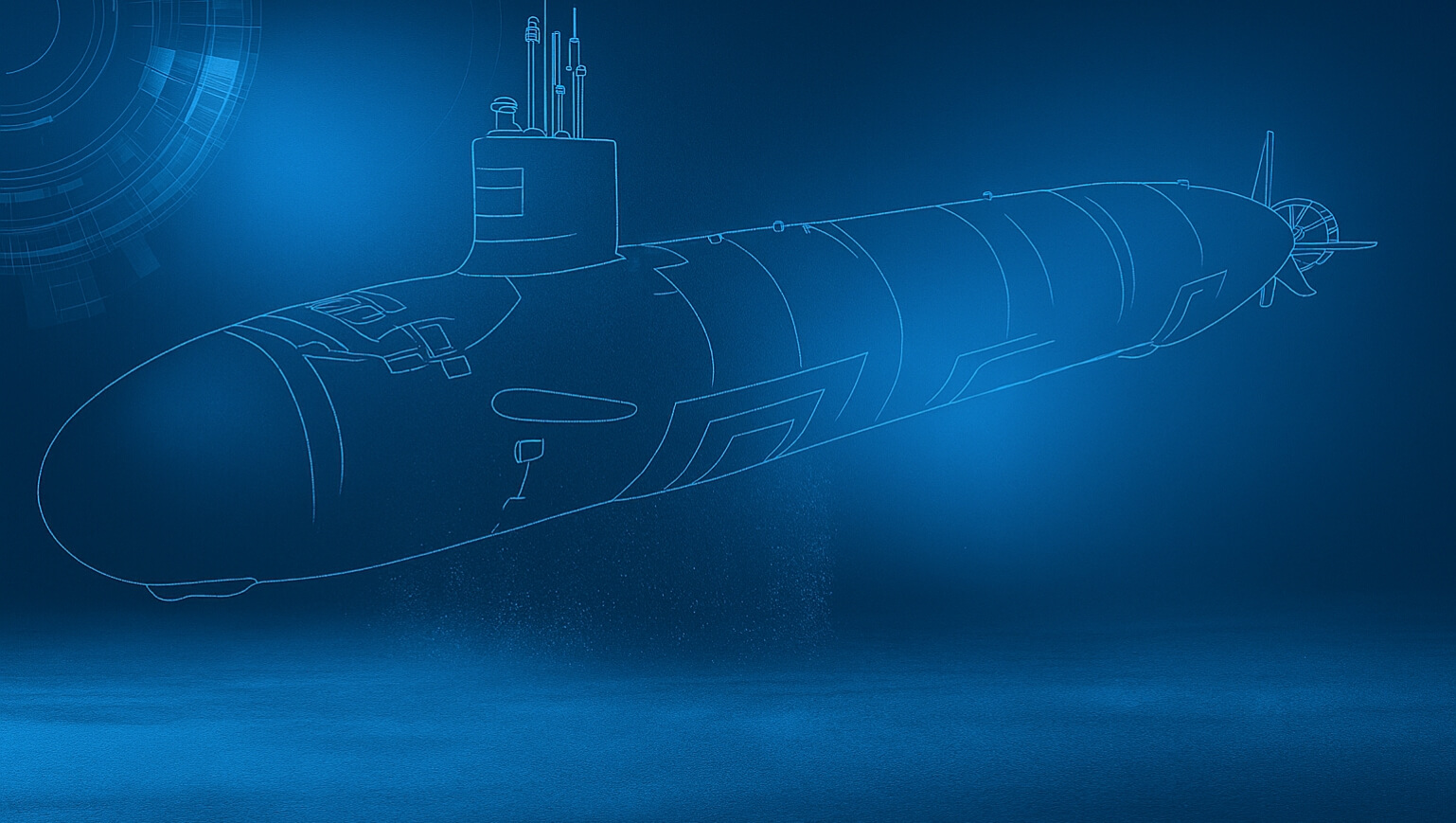
The partnership rests on mutually reinforcing capabilities – the US and the UK will provide advanced submarine designs, nuclear propulsion systems and know-how, while Australia develops domestic shipbuilding, maintenance and workforce capacity to sustain nuclear‑powered submarines.
An official analysis notes this will be “the most transformative industrial endeavour in Australian history”, surpassing the scale of the Snowy Scheme or automotive manufacturing.
To achieve this, Australia is investing heavily in infrastructure (new shipyards, nuclear support facilities) and skills (training, STEM pipelines, defence workforce programs).
Honeywell’s Lee Davis stresses that local firms must be integrated: the “ultimate goal [is] to make the maximum benefit for Australian SMEs” so that “we can pull Australian SMEs into our supply chain”.
The US and the UK will open their supply chains and share proprietary technology under new “licence-free” export reforms, ensuring rapid tech transfer while the partners maintain sovereign oversight (nuclear safety regulation, IP protections). Over the next 30 years, tens of thousands of jobs will be created (peaking at ~8,500 in construction).
The timeline is urgent: Australia aims to train crews and sustain Virginia Class boats in the 2020s, with first domestic SSNs by the late 2030s.
This report examines the strategic rationale for interdependence, Australia’s target capabilities (design, shipbuilding, reactor support, maintenance, workforce), the roles of the US/UK, technology transfer and export policy, investment scales and training, regional security implications, policy levers, risks (supply bottlenecks, security, politics) and the governance mechanisms under AUKUS.
The strategic rationale for interdependence
The AUKUS nuclear submarine plan is driven by strategic necessity in the Indo‑Pacific. A nuclear SSN capability will greatly enhance deterrence and undersea dominance.
As the 2023 Defence Strategic Review emphasises, urgent international cooperation is needed to counter rapidly evolving threats (e.g. advanced peer navies).
By tightly coupling US, UK and Australian industries, AUKUS creates a unified production and innovation ecosystem that is faster and more resilient than any nation could achieve alone.”
Integrating the industrial bases of the three partners provides resilience and efficiency. An official joint communiqué notes that new export and cooperation mechanisms will enable “billions of dollars in secure licence-free defence trade” and “unparalleled levels of defence cooperation” through the “continued integration of their defence industrial bases”.
In other words, by tightly coupling US, UK and Australian industries, AUKUS creates a unified production and innovation ecosystem that is faster and more resilient than any nation could achieve alone.
This industrial interdependence has multiple rationales. First, sharing development reduces duplication.
The US and the UK have decades of SSN design experience (e.g. Virginia Class, Astute Class submarines), so pooling their know-how with Australia’s emerging design teams accelerates progress. Second, joint supply chains hedge risk: if one nation faces a bottleneck or political change, the partners can reroute production.
Third, interoperability requires common standards. As one analysis notes, AUKUS “partners are poised to take advantage of unparalleled levels of defence cooperation and the continued integration of their defence industrial bases” to gain a technological edge.
Finally, integrating industries supports allied strategy: shared production means shared stakes, making conflict among AUKUS members virtually unthinkable, and freeing them to focus on external threats.
Australia’s key priorities
Australia has recognised that it must rapidly develop virtually a full submarine industrial base.
Key capabilities include submarine design and engineering, shipyard construction and assembly, nuclear propulsion plant support, maintenance/sustainment facilities, supply chain expansion, and a skilled workforce with strong STEM pipelines.
It also requires robust regulatory and safety frameworks to handle nuclear material.
Each of these industrial pillars presents not only a significant level of industrial uplift but also an unprecedented level of industrial collaboration and interdependency between the trilateral partners, including the following:
• Submarine design and integration: Australian engineers will work jointly with US/UK designers to adapt and possibly co-develop the SSN-AUKUS class. This includes integrating advanced combat systems, sensors and non-nuclear subsystems. (Australia has limited prior experience here, so technology transfer and training are essential.)
• Nuclear propulsion support: Australia’s industrial base will be “just the second in history” (after the UK) to gain access to US naval reactor technology. Australia must develop the capability to handle reactor cores (fuel loading, removal, disposal), to manufacture or refuel cores under licence, and to maintain reactor control systems. That means building nuclear-qualified facilities and a nuclear safety regulator at civilian grade.
It also implies strict International Atomic Energy Agency (IAEA) safeguards: AUKUS formally commits Australia to “the highest non-proliferation standard” and to robust IAEA oversight. Establishing such frameworks (new laws, nuclear safety authorities, security zones) is a major task even before the first reactor.
• Sustainment and maintenance:** A sovereign fleet needs local overhaul facilities. Australia plans to create sustainment hubs (including at HMAS Stirling, Western Australia) for nuclear submarines. Over the decades, Australian industry will perform maintenance, upgrades and eventual refits on both Australian and allied subs. Embedding maintenance in-country reduces turnaround time and increases security of supply.
• Supply chain and SMEs: Thousands of components and subsystems are needed (valves, electronics, forgings, composites, etc). Australia’s goal is to insert its companies into global AUKUS supply chains wherever possible.
Honeywell’s Lee Davis notes that firms are finding “cases where we can pull Australian SMEs into our supply chain”. Australian suppliers from precision machining through to electronics will be invited into US and UK programs (e.g. Astute/Virginia Class) and vice versa.
The government has initiatives (like the Global Supply Chain Program) to identify local SMEs and qualify them for partner contracts.
Davis stresses that every program should be structured so “the ultimate goal [is] to make the maximum benefit for Australian SMEs” and that “we really need to get the Australian SMEs in for that opportunity”.
This reflects a policy priority: sovereign capability is not just the final boats, but the entire ecosystem of innovation.
• Workforce and STEM pipeline: Australia must train tens of thousands of workers. Defence officials estimate ~20,000 direct jobs over 30 years.
In the short term, emphasis is on training programs: as of 2023, Australia has begun sending sailors and engineers to US and UK nuclear subs, and it is establishing an expanded submarine rotational force in Western Australia (2027–32) that will generate ~500 sustainment jobs.
Universities and TAFEs are launching nuclear engineering and advanced naval courses; for example, a new nuclear engineering course at UNSW and a nuclear science program at ANU have begun.
The first cohorts of submarine apprenticeships have been recruited (74 apprentices under the Sovereign Shipbuilding Talent Pool) and dozens of Australians are already studying submarine-related engineering in the US/UK.
Davis points out that once a clear demand signal is given, industry will “start to ramp up capability and production output” to meet that need. In other words, government contracts and budgets drive the scale-up: as planned builds are confirmed, firms will invest in workforce training and facilities.
• Regulation, safety and security: In parallel, Australia is building a nuclear regulatory framework (with IAEA safeguards) and cyber security measures for sensitive technologies. Handling nuclear propulsion requires new laws and tight safety protocols.
This effort is guided by existing UK and US standards (for example, AUKUS partners have committed to upholding IAEA norms). Security vetting of personnel and facilities will be extreme, comparable to handling nuclear weapons information.
• Infrastructure and investment: The government has already earmarked massive funding, though exact figures remain unspecified. Defence ministers note that building a submarine base “exceeds in scale, complexity and economic significance” even the historic Snowy Mountains Scheme.
By peak build, ~$170–200 billion is often cited in public discourse (including sustainment) though no official figure is released. Key projects include a new construction yard design (land transfer negotiations and civil works have begun), expansion of Adelaide’s Osborne shipyard, nuclear support facilities (possibly new sites for reactor maintenance), and upgrades to ports like HMAS Stirling.
These investments will be phased through the 2020s and 2030s to match the industrial timetable.
Australia’s future submarine enterprise will rely on both new and existing facilities (e.g. defence factories, shipyards).
Building sovereign capacity means expanding and certifying sites like these for nuclear and naval use. Over time, Australia’s shipbuilding precincts and engineering hubs will be the core of a connected AUKUS industry.
Building complementarity among industrial bases
The US and the UK each bring distinctive strengths to the table, which Australia will leverage.
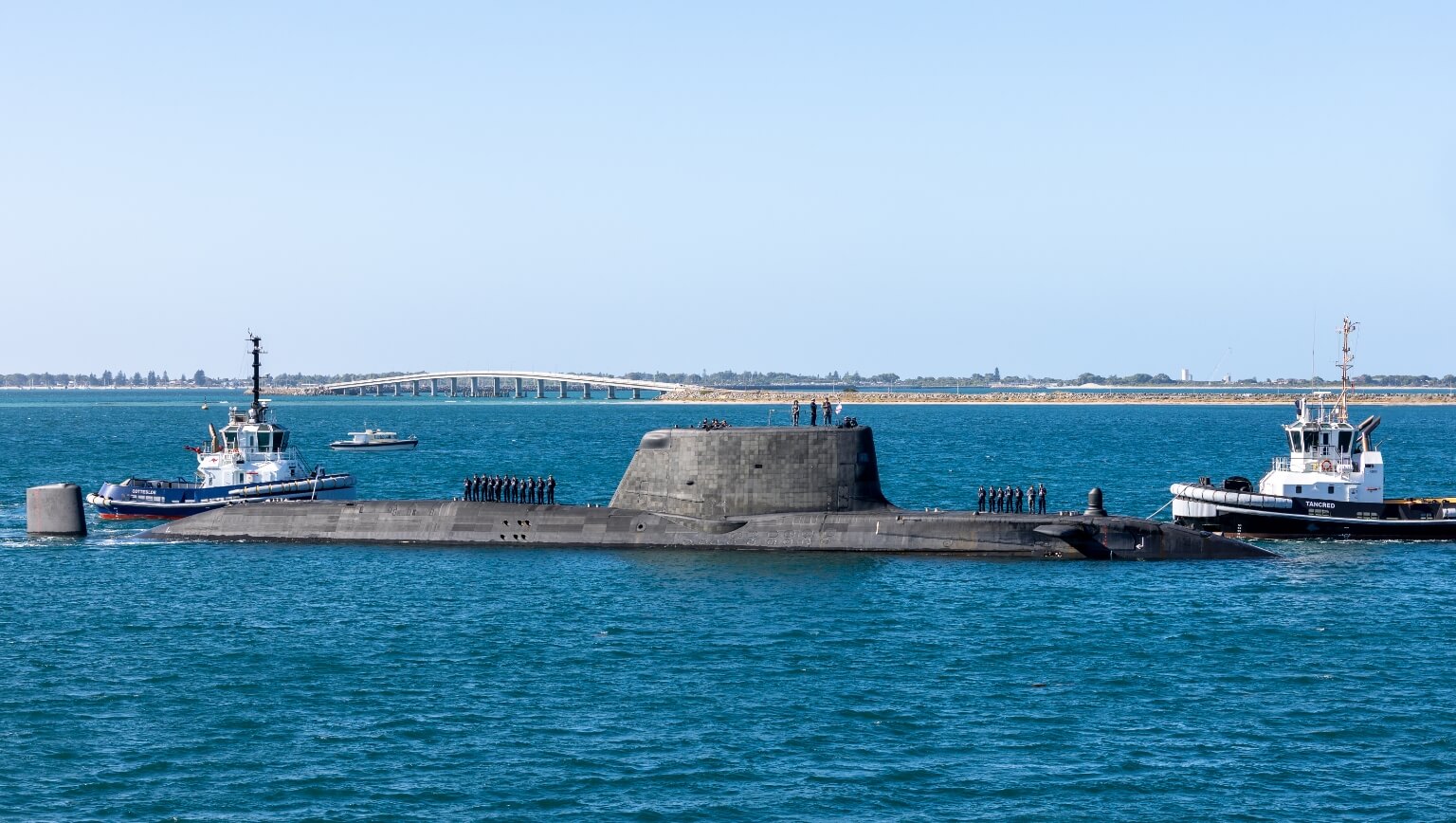
In broad terms, the US provides the submarine design (Virginia Class and significant components of the next-gen SSN-AUKUS), reactor cores, and large-scale systems, while the UK offers expertise from its Astute and Dreadnought nuclear programs and serves as the design authority for the SSN-AUKUS along with experience with nuclear safety frameworks.
Critically, both will embed Australian industry in their supply chains. AUKUS is explicitly a partnership: key subassemblies, sensors, navigation, combat and weapons systems will be jointly sourced.
United States: The US Naval Nuclear Propulsion Program will be the backbone of AUKUS. The US will transfer reactor designs, nuclear fuel arrangements and training syllabus to Australia. American shipbuilders and defence primes (e.g. General Dynamics Electric Boat, Huntington Ingalls) will lead submarine design, with subcontracts out to partners, including Australian firms under licence.
Australia already supports US fleets (e.g. Collins Class subs use US sonar); under AUKUS, many Australian-made components (like advanced composite materials or control hardware) will flow into US subs. The US will also host more Australian trainees and facilitate joint research and development (e.g. propulsion research).
United Kingdom: The UK contributed the Collins Class hull design and now contributes its Astute Class know-how. UK shipyards (BAE Systems) may play roles in joint design and in manufacturing specialised gear (e.g. pumps, emergency systems) for AUKUS boats.
Australia will likely partner with UK institutions on nuclear safety and reactor design and will send personnel to train on UK subs (Australia has already conducted rotations with British units). The UK may also manufacture some submarine parts in concert with Australia.
Supply chains and export reforms: Critically, the partners have reformed export controls to enable this integration.
An official AUSMIN statement notes that the US, the UK and Australia have “created new mechanisms” to allow billions in licence-free defence trade across borders. This unprecedented regime means critical components (some previously restricted) can flow more easily among the three countries.
In practice, it will allow US and UK primes to subcontract work to Australian factories, and vice versa, without lengthy export clearances. As one industry leader has observed, the finalisation of this export licence‑free environment (September 2024) “certainly makes the process more efficient”.
Thus, each country’s industries will complement the others’ rather than duplicate. For example, Australia’s growing composite and electronics industries will feed into allied programs, while the US/UK will reciprocate by opening their supply chains and sharing critical IP.
Tech transfer, IP and the sovereign balance
Effective tech transfer is vital but not without its challenge.
AUKUS has deliberately created an architecture to transfer cutting-edge technology while protecting security.
The above licence‑free export regime is part of this: it streamlines transfer of hardware and technical data. The partners also establish liaison offices and industrial fora to coordinate IP sharing.
For example, the US Defense Innovation Unit is linking with Australia’s Advanced Strategic Capabilities Accelerator to promote joint projects. Internally, Australia is increasing funding for domestic R&D (nuclear engineering, advanced materials) to eventually generate its own IP.
At the same time, Australia insists on maintaining sovereign control over the nuclear propulsion.
While US and UK firms provide the design and technical assistance, Australian authorities will oversee the supply chain and handle any classified elements. AUKUS explicitly reaffirms that Australia will adhere to top-tier non-proliferation norms and IAEA oversight, a recognition that political governance (e.g. treaty arrangements) is part of industrial strategy.
In practice, this means technology-sharing agreements will include strict protections and audit rights, and certain components (e.g. reactor cores) may remain under allied guard until safely handled.
The export reforms themselves illustrate balance: one industry leader notes that the new rules “make the process more efficient” by removing red tape. But this efficiency is calibrated: some very sensitive technologies (like nuclear warhead tech or cryptography) remain controlled.
The key is openness within a secure framework.
Timelines, workforce and investment
Timing is crucial. Under current plans, the first Virginia Class submarine is expected to arrive in Australia in the early 2030s, well before Australia’s own SSNs are built.
From the mid-2020s to 2030, effort focuses on training and infrastructure. The government has set specific targets: for example, adding 500 jobs by 2027–32 in Western Australia to support rotating US and UK submarines.
By 2030–35, construction of the new Osborne yard and civil works should be largely complete. The first AUKUS boats to be assembled in Australia could start in the late 2030s or early 2040s, with overall submarine production extending into the 2050s.
These dates are indicative, but industry understands that any further delay would break the carefully staged investment.
The workforce pipeline is already being developed. Australia’s strategy focuses on early skilling: for instance, over 50 Australians are currently attending specialised nuclear courses in the UK/US, and new university programs have been launched.
Apprenticeship schemes are drawing in high school graduates into shipbuilding trades and engineering. Industry (including Honeywell, Moog, BAE, etc) is hiring and cross-training staff, sometimes seconding them to partners’ facilities for hands-on experience.
Lee Davis of Honeywell notes that once the government issues a clear contract (“demand signal”), companies will “ramp up capability and production output” in lockstep in other words, confirming budgets triggers industry investment in people and plants.
In terms of scale, the peak labour force will be enormous. The official industry strategy projects up to 20,000 direct jobs over 30 years. At peak construction, ~8,500 workers will be building subs and infrastructure.
By comparison, the previous Collins Class program employed about 3,000 people at its peak. Such large numbers imply major spending: while Australia has not published a final cost, defence analyses suggest industrial investment on the order of hundreds of billions of dollars.
Regional implications
The AUKUS industrial effort must be seen in context: it is as much about security policy as economic policy.
Embedding submarine production at home means Australia can sustain continuous regional submarine patrols (a known requirement of deterrence). It also signals to allies and adversaries that Australia is a dependable long-term partner.
The trilateral nature of AUKUS ties the US and UK more closely to Australia’s fate in the Indo-Pacific. For example, official statements repeatedly link AUKUS to supporting the rules-based order in Asia and deterring coercion.
Underlying this is the assumption that an Australian-owned submarine fleet, built with allied support, will allow more persistent forward deployments (e.g. paired patrols with US/UK boats).
At home, AUKUS has prompted new national policies. The Defence Strategic Review and associated reforms put nuclear propulsion at the centre of Australia’s defence posture. The government has proclaimed a “whole-of-nation” approach, coordinating federal, state and private sectors.
Significant policy levers include domestic funding (shared between defence and industry budgets), sovereign manufacturing incentives, education reforms (to feed STEM talent), and export control liberalisation (notably the AUKUS licence-free framework).
Risks mitigation
This enterprise is not without risks. Supply chain bottlenecks are a prime concern: global demand for skilled welders, electrical engineers and technologists is intense, and any shortage could delay projects.
The partners plan mitigations such as fast-track visa programs and training cadences. On the technology side, complex subs rely on high-tech components (chipsets, rare-earth magnets, advanced alloys) that may be scarce; Australia is exploring domestic manufacturing of some critical parts to reduce dependence.
Security risks arise from handling highly sensitive tech. Robust counterintelligence is required to protect intellectual property and nuclear secrets. Both government and industry must enforce strict vetting and cyber security on all joint projects.
The export licence reforms ease business but also necessitate strong oversight to ensure that transferred technology isn’t diverted or leaked; this is managed through joint AUKUS committees and existing security agreements.
Political constraints could also emerge. Domestic opinions might shift if costs overrun or if there are environmental/regulatory issues (e.g. nuclear public concerns).
Internationally, any deterioration in relations (e.g. a future UK or US government less committed to AUKUS) could strain collaboration. However, institutional commitments – like the AUSMIN and UKMOD dialogues, and legal safeguards (IAEA arrangements) – provide a stabilising framework.
Coordinating governance
Managing a trilateral industrial base requires novel governance. AUKUS partners have set up ministerial and senior-official working groups specifically for workforce and industry issues.
Australia’s defence minister leads a national Submarine Agency to coordinate projects. Bilaterally, joint program offices (for munitions, missile and torpedo co-production) are emerging, and similar structures will govern SSN programs.
The AUSMIN joint statement emphasises that the partners will “explore options to harness these generational reforms” and integrate innovation systems.
In practical terms, this means joint projects (e.g. co-developing submarine components), co-funded R&D, shared oversight bodies, and legal agreements on IP and export controls.
In summary, the AUKUS submarine industrial strategy is an exercise in deep collaboration: it blends national sovereignty with allied integration. As Honeywell’s Davis notes, success depends on planning every program for Australian advantage and fully engaging local industry.
By investing now in facilities, skills and supply chains and by aligning with US/UK capabilities and institutional frameworks, Australia is building a symbiotic industrial base with its partners.
If executed effectively, this approach will yield not only a world‑class submarine fleet but also a resilient defence economy for decades to come.