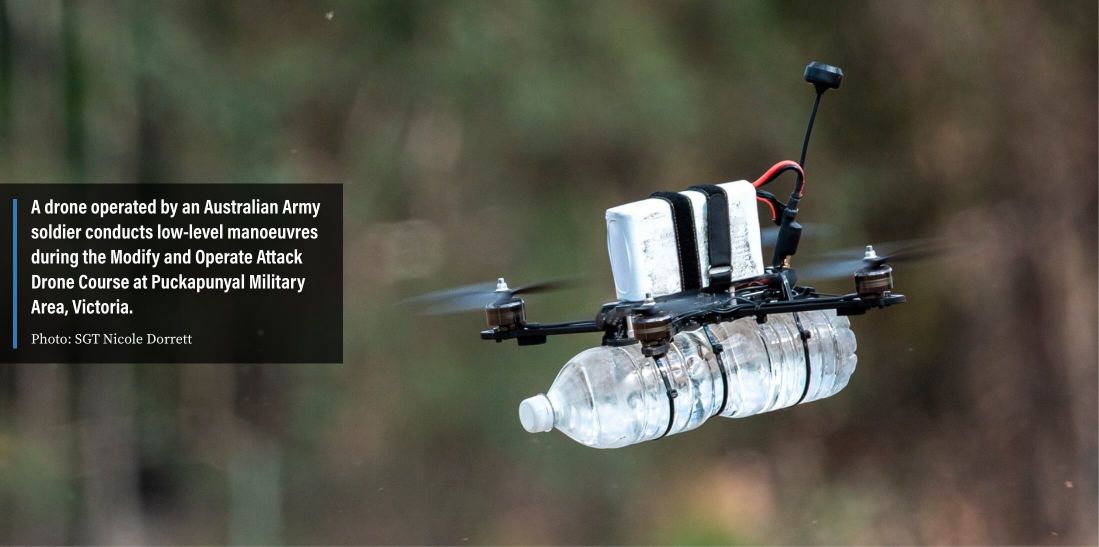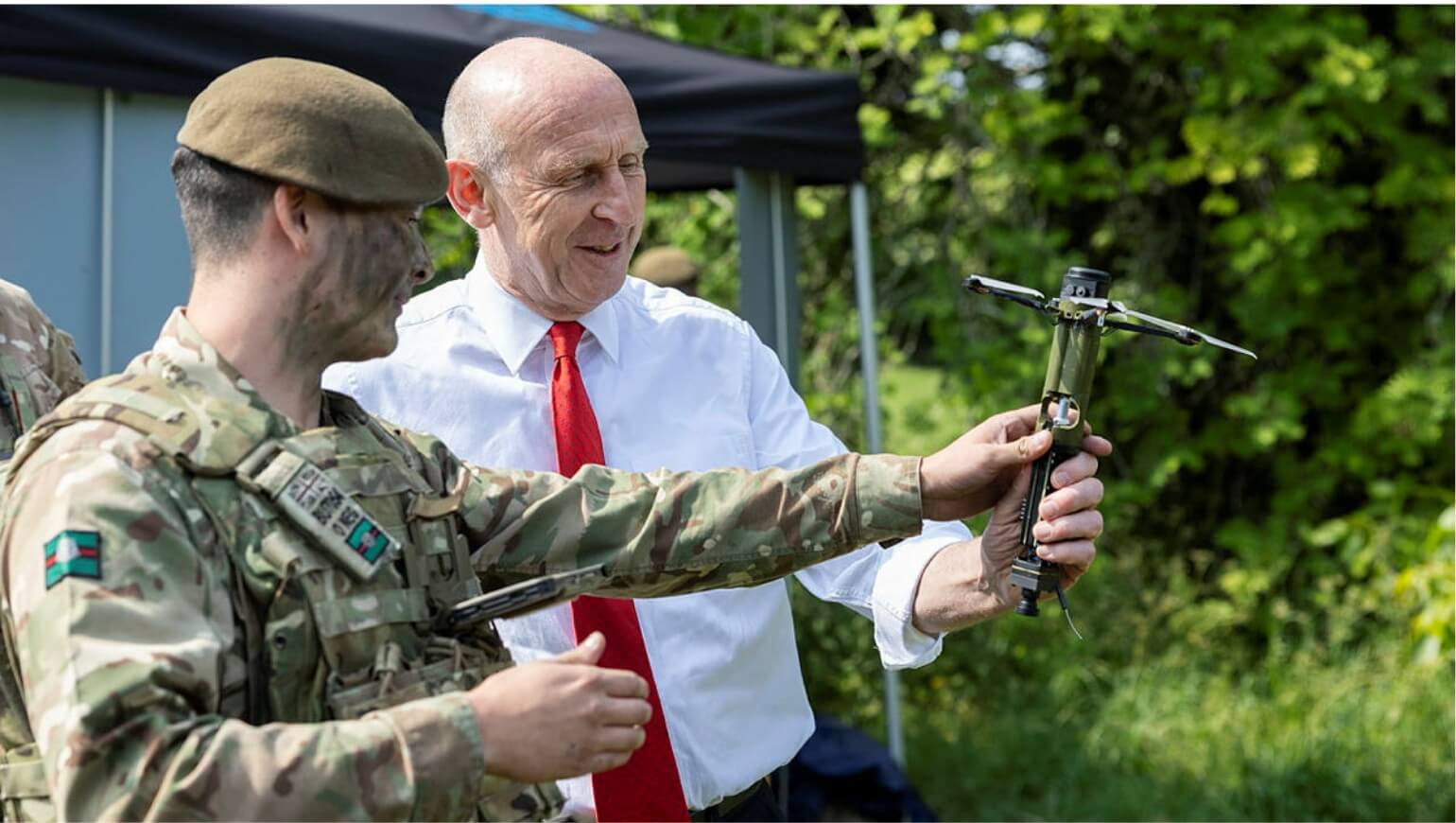


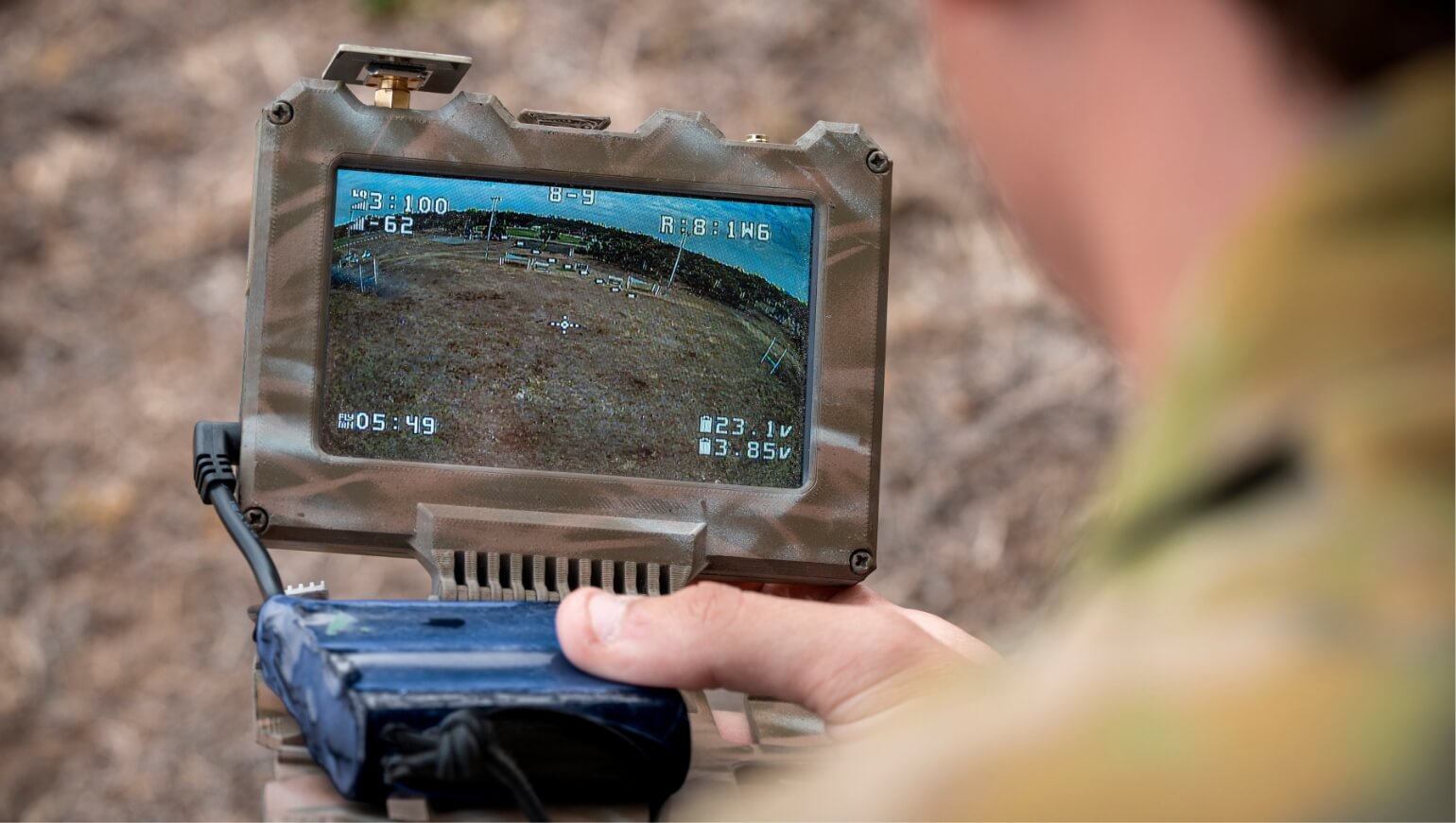
The Australian Defence Force announced in March this year that first-person-view (FPV) drones with simulated lethal payloads were being targeted for integration across the Australian Army. The comprehensive training continuum is reportedly designed to get soldiers ready to take the capability back to their home units and across the wider Army.
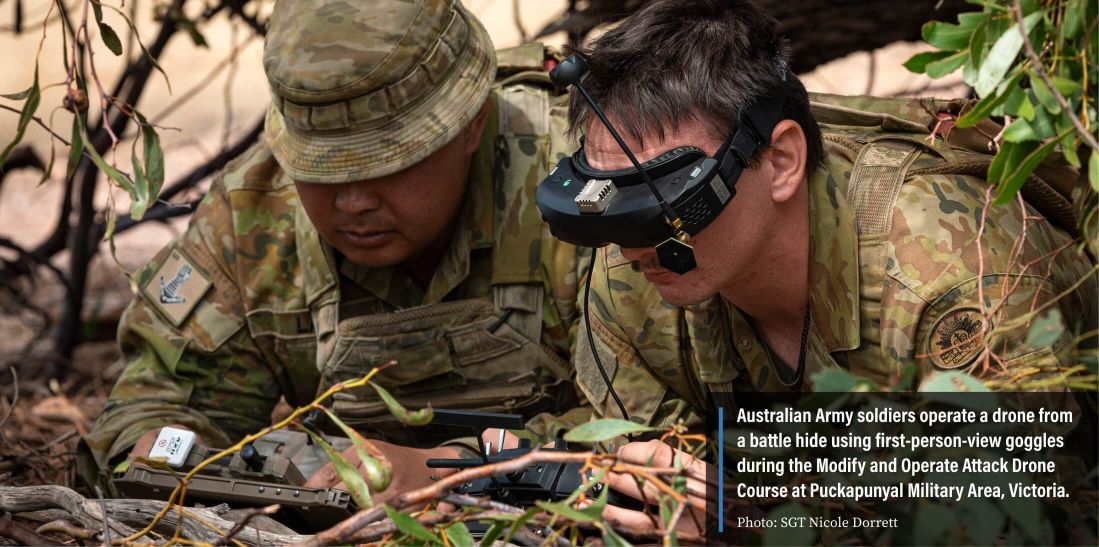
Soldiers initially operated uncrewed aerial systems (UAS) through first-person-view goggles at Puckapunyal Military Area field range in Victoria for reconnaissance, to drop munitions, carry payloads and directly strike targets.
“I think it’s a specialised tool that is a silver bullet at the moment for Ukraine and Russia. And the reason it’s a silver bullet at the moment is because both sides are running short on artillery equipment, artillery ammunition and they are static,” says Wing Commander Kieran Joyce, deputy director of disruptive experimentation with the Royal Australian Air Force Headquarters and president of the ADF Drone Racing Association.
“When you’re static, your intelligence, surveillance and reconnaissance (ISR) drones find the enemy really easily. And if you can find the enemy easily, you can target them easily.
When you’re static, your intelligence, surveillance and reconnaissance drones find the enemy really easily. And if you can find the enemy easily, you can target them easily.
- Wing Commander Kieran Joyce
“One of the reasons that ISR drones are proliferating is because there is no air dominance. Neither of their air forces own the air due to the proliferation of ground-based air defence. So, it does get very complicated. It is multi-variable. But for the last three years, drones have become a significant part of Ukraine versus Russia because of the tactical situation that they are confronted with.
“That’s not always going to be the case for countries like Australia or for other countries in our alliance network. So, I consider that they are one of the available tools. I think that we do need to be doing it and learning about it and knowing about it so that we can use and counter these systems if they are used against us.
“Technology will continue to improve as well. An FPV drone without a fibre optic reel on it is about 500 bucks’ worth of equipment. That also makes it really appetising for an armed force because it is a cheap way to engage the enemy.
“One day I do think that that level of electronics that can automatically do the flying, automatically do the sensing, target identification and confirmation and then guidance onto the target that will come down ultimately to a price point where an FPV drone won’t be an FPV drone anymore. It will be a highly automated or semi-autonomous drone that you won’t need a pilot to fly it anymore … I think that time is coming somewhere in our technology future.
“But for the moment, if you want a $500 engagement at 5km to 10km, an FPV drone is a really good option. And it’s an option that many defence forces are investing in.”
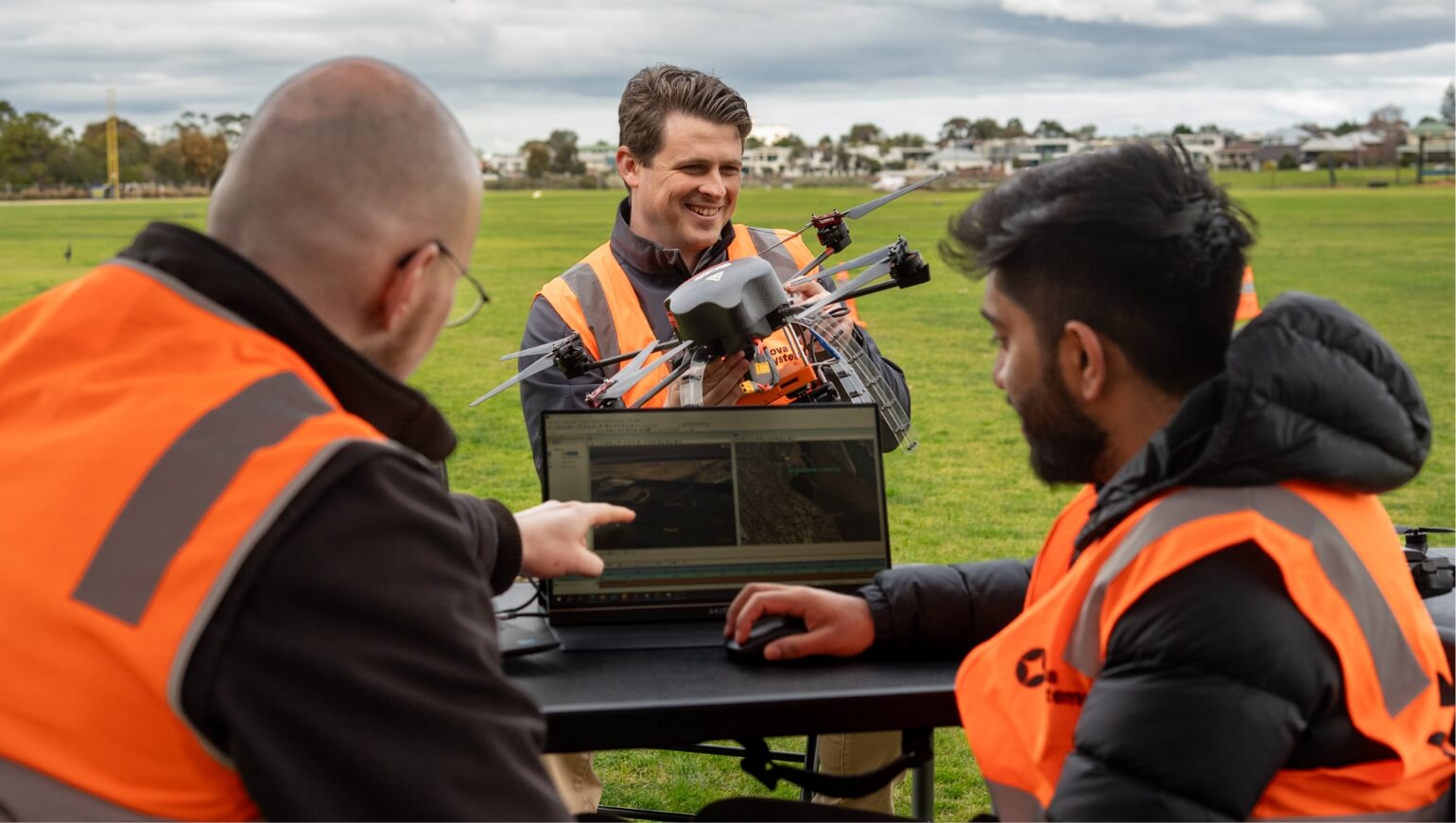
Additional uncrewed aerial systems have already been delivered to Australian soldiers in March this year for testing as a part of the DEF 129 UAS project, including SYPAQ CorvoX and Quantum Vector drones for defensive capabilities.
The CorvoX drone features electro optical/infrared payload and thermal imaging, making it operable and efficient in dark, fog and smoke environments.
Quantum Vector offers a two-in-one fixed-wing vertical take-off and landing feature, and is effective in delivering intelligence, surveillance and reconnaissance video in real time. These new UAS are expected to be introduced into general service in the Australian Defence Force.
Uncrewed tactical systems have also been allocated $42 million in approved planned investment from 2026–27 to 2035–36, $1.5 billion to $2 billion in unapproved planned investment in the same period and $1.5 billion to $2 billion in total planned investment, according to information released under the government’s multibillion-dollar 2026 National Defence Strategy and a revamped Integrated Investment Program (IIP).
“The government is accelerating the acquisition of cutting-edge drone and counter-drone technologies to protect ADF personnel, equipment, infrastructure, bases and major events,” according to the IIP 2026 documents.
“This work is complemented by ASCA’s Mission Syracuse, which is accelerating the development of capabilities to counter medium-sized drones and drone swarms. Defence is working alongside Australian industry to deliver this technology, demonstrating world-leading innovation while creating Australian jobs.
“In December 2025, Defence and industry partners successfully demonstrated an Australian-designed counter-small uncrewed air systems command and control capability and Australian-designed and manufactured sensors and effectors. The first of these systems and the associated training have already been delivered to Navy, Army and Air Force.
“In addition, in January 2026, the government established a new industry panel to advise Defence and other Commonwealth agencies on counter-small uncrewed air systems services and stay ahead of rapidly evolving drone and counter-drone technology.”
In wider 2026 National Defence Strategy news, the government is committing $425 billion over the next decade to uplift the Australian Defence Force. To get there, the government is allocating an extra $14 billion over the next four years and $53 billion over the decade. This funding will see Australia’s Defence spending climb to 3 per cent of gross domestic product by 2033.
Drone usage doctrine is likewise evolving with the Australian Army recently releasing two key supporting publications, the Drone Tactics Handbook and Unit Guide to sUAS Operations, to speed up integration of drone tactics in April this year.
The two publications, produced by Australian Army Battle Lab, were announced to inform Army units about drone integration and safety.
Army Battle Lab Commander Colonel Matt Hodda, speaking in a public video about the publications, says the Battle Lab is focused on turning lessons, experimentation and innovation into a practical advantage for the Australian Defence Force.
“The Drone Tactics Handbook focuses on how drones can be effectively employed across combat tasks, drawing on our experience and lessons from Army, partner forces and current conflicts,” he says.
“The Unit Guide to sUAS Operations is valuable for units looking to establish a drone capability. It discusses safety, governance and getting the basics right from the outset.
“Together, these two publications will help units move forward faster with drone capability without having to relearn key lessons in isolation.”
It’s understood that the Unit Guide to sUAS Operations was developed with HQ Aviation Command, Forces Command Land Combat College, 3rd Brigade and other units.