

That reality is now accelerating a quiet revolution in unmanned maritime systems, one that industry figures believe will fundamentally reshape the Royal Australian Navy’s order of battle within a decade.
At the centre of that conversation is Michael “Mitch” Mitchell, director of Canberra-based Elysium EPL and a 23-year Royal Australian Navy veteran who spent the majority of his service career in submarines.
With three autonomous surface vessels now operating in Australian waters and a growing portfolio of dual-use maritime technology, Mitch offers a practitioner’s perspective on where unmanned systems are heading, and why the RAN cannot afford to move slowly.
The scale problem no admiral can ignore
Before any discussion of technology can be meaningful, the geographic reality must be confronted plainly. Australia is an island continent responsible for an oceanic domain of staggering dimensions.
As Mitch describes it, the sheer scale of the nation’s maritime obligation makes persistent manned coverage a structural impossibility.
“You think about our land boundaries. All the population is predominantly based on the east coast. Our responsibility from an AMSA perspective is pretty much one to two times the size of the Australian continent itself. So there’s an awful lot of responsibility inside that water space that we actually have to go through and be able to observe and also protect.”
The northern approaches alone, threading through Indonesia, Papua New Guinea, the Torres Strait and out towards the South Pacific represents a sprawling, complex maritime corridor through which virtually all of Australia’s critical imports flow.
For the RAN, this translates into an enduring requirement for what Mitch describes as “persistent maritime awareness”: the ability to maintain continuous awareness across spaces where no single vessel, however capable, can be everywhere at once.
That requirement intersects directly with Australia’s dependence on northern shipping routes. “All of our predominant shipping, fuel, comes from the northern approaches,” Mitch says. “If you look at any marine traffic data, you can observe the fact that there is a bulk single point of failure in those choke points. You cannot operate in normal modes to protect your own shipping. You just have to drive straight through and pass through those waters.”
It is precisely this strategic geography that makes unmanned surface and underwater vessels not merely a desirable capability uplift, but a near-term operational necessity.
Persistence over presence: The unmanned advantage
The core value proposition of autonomous surface vessels is deceptively simple: they can stay on task indefinitely without the human cost, logistical burden or crew welfare constraints that govern every manned hull. Mitch is emphatic on this point and frames it in direct contrast to the Navy’s current patrol assets.
“If you’re going to look at a Cape Class patrol vessel or an Arafura, they have to be manned, they have to have logistics, they have to have someone monitor them 24/7. They have to have all of the hotel services internally, which is actually built to provide support to the crew. Unmanned vessels do not have to have that. You can operate these platforms independently and they can be persistent, depending on the endurance for the task that they’re given.”
The implications are significant. Where a conventional patrol boat must rotate crew, return to port for resupply and balance mission tempo against crew fatigue, an autonomous platform can loiter on station for days or weeks, reporting continuously, consuming dramatically fewer resources and requiring only remote oversight rather than continuous shipboard management.
The RAN’s announced acquisition of 55 Ocius Bluebottle platforms heralds clear institutional recognition of this advantage.
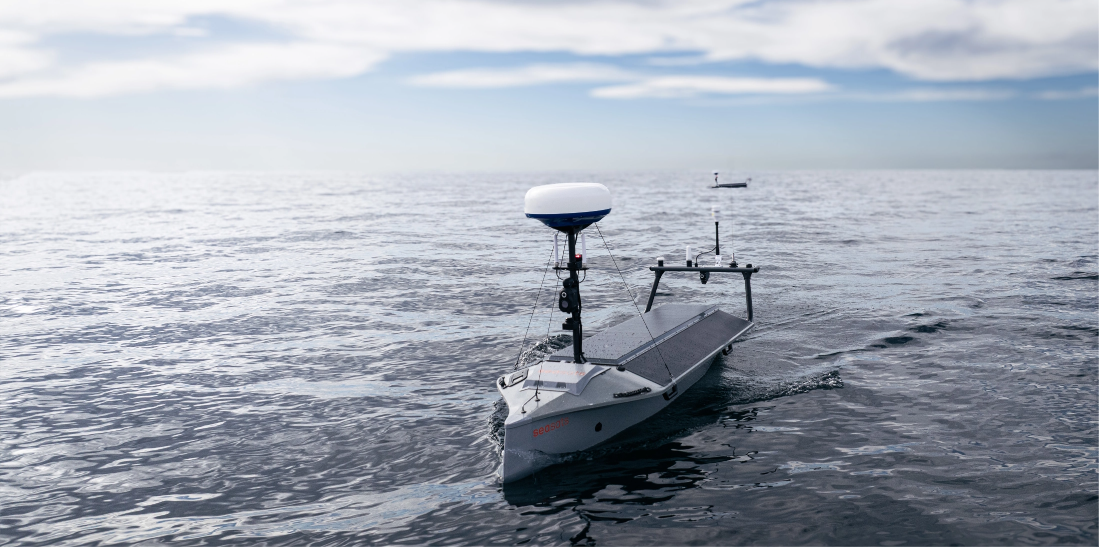
Elysium EPL’s own contribution to this evolving fleet is the Lightfish, a 3.3-metre autonomous surface vessel built by US firm SeaSatellites and operated under Australian Maritime Safety Authority (AMSA) certification.
With a fully loaded payload (27 kilograms), the Lightfish is man-portable at around 170kg. Coupled with an endurance of up to six months rather than hours, the Lightfish is representative of what Mitch describes as the critical design philosophy for this generation of autonomous platforms: low cost, high configurability and attritable by design.
This approach prioritises operational flexibility over platform complexity, allowing payloads, mission systems and operational concepts to evolve without requiring a new vessel for every mission set.
Payloads over platforms: The real competitive advantage
One of the most important conceptual shifts Mitch urges is a move away from fixating on hull form and towards a payload-centric understanding of autonomous capability. The vessel itself, in this framework, is merely a delivery mechanism. What matters is what it carries.
“The exciting bit about all of this isn’t about the platforms – it’s about what payloads you can integrate into those platforms. So, if you’ve got a top end of Australia that goes all the way from Torres Strait to Port Hedland and Dampier, you need an awful lot of boats to go through and actually put a net across there to understand what’s there. But what are the payloads that go onto it that actually give you the effect that you’re after?”
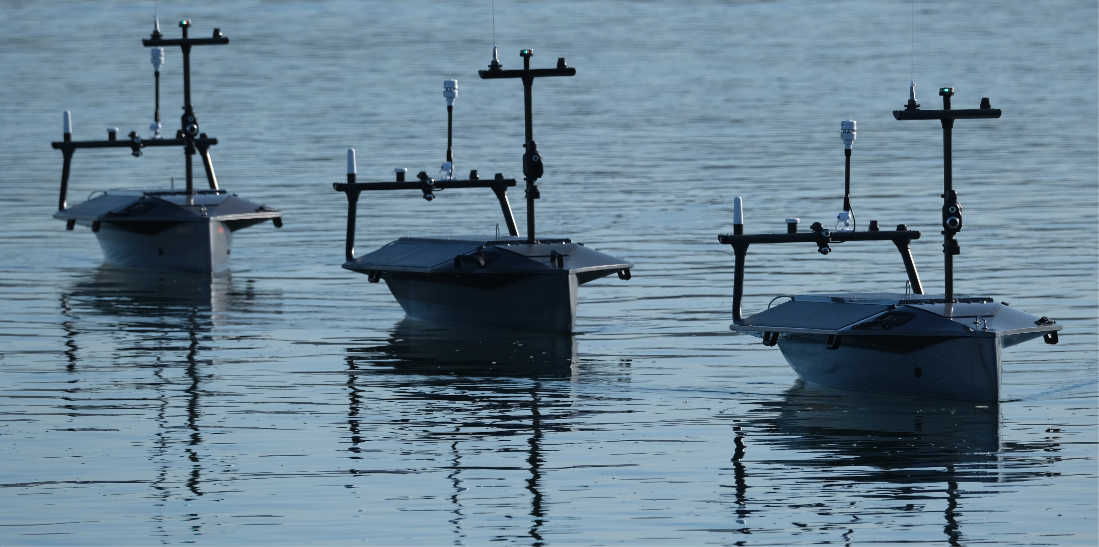
In Elysium EPL’s case, that philosophy has already yielded operationally diverse results. The company’s three Lightfish vessels – Yasi, Tracy and Monica – demonstrate the dual-use potential Mitch champions.
The exciting bit about all of this isn’t about the platforms – it’s about what payloads you can integrate into those platforms … But what are the payloads that go onto it that actually give you the effect that you’re after?”
- Michael “Mitch” Mitchell
Monica, the commercially liveried yellow boat, has been deployed under the Hydroscheme Industry Partnership Program, conducting GNSS tidal gauge monitoring. The military-configured grey boats, Yasi and Tracy, have been configured for harbour security, intelligence collection and Defence experimentation activities, serving as test-and-evaluation platforms for a range of modular payloads.
“I can take out a winchable CTD – which measures conductivity, temperature and depth down to 100 metres – and I can replace that with a radar. Or I can replace that with a deployable sonobuoy capability. Or I can put an acoustic modem onto it to communicate with undersea assets.”
This plug-and-play architecture is not incidental; it was a design requirement from the outset, reflecting the reality that mission requirements evolve far faster than platform acquisition cycles.
Mitch identifies dual-use certification as foundational to Elysium EPL’s acquisition strategy, noting that any platform bound by ITAR restrictions would have been commercially unusable and operationally constrained.
The ability to move between hydrographic survey, environmental monitoring, harbour protection and mine warfare roles using a single certified hull type represents exactly the kind of flexible, cost-effective capability the Australian Defence Force has historically struggled to develop at speed while allowing operators, procedures and technology to mature through routing deployment rather than isolated experimentation.
Mine warfare, northern waters and the sensor gap
Nowhere is the autonomous vessel’s potential more consequential or more urgently needed than in mine countermeasures. The phased reduction of the RAN’s Huon Class minehunter fleet, combined with the demonstrated effectiveness of Iranian smart mines in the Strait of Hormuz, has created a capability gap that Mitch believes autonomous systems are well-placed to address, if the right sensor integration can be achieved.
“If you’re looking at the Strait of Hormuz, you could have a Lightfish out there with an ISR package, but at the same time a sonar on board to say: we’ve detected a fast boat come out, drop something over the side. Imagine if you had a sonar on the side of it which could automatically go and do a quick look and say, ‘Nothing in the water’ – or ‘There’s a 44-gallon drum sitting there’.”
The attraction of autonomous vessels for minehunting lies partly in risk elimination and partly in cost structure.
An affordable autonomous platform can absorb the operational risk of operating in a mine-threat environment without exposing a crew, allowing commanders to accept levels of risk that would be unacceptable for a manned vessel. The challenge, Mitch acknowledges, lies not in the platform but in miniaturised, low-power sonar systems capable of meeting the detection requirement within the weight and power constraints of a small autonomous hull.
“The platforms are fine that are out there. Find me a small power-usage sonar that could actually do it in a lightweight area to actually have those effects – that’s the detective piece.” The honest assessment here is important. Mitch is not overselling autonomous systems as complete solutions.
Manned minehunters are not going away in the near term. What autonomous surface vessels offer, in his framework, is a detect-and-report capability that can extend persistent coverage across vast areas, flagging threats for manned platforms to respond to rather than attempting to replace the full neutralisation cycle. In this model, autonomous systems become part of a layered force structure, improving awareness and reducing risk while higher-end platforms focus on identification, classification and neutralisation.
Attritable by design: Rethinking the economics of maritime power
Perhaps the most culturally significant shift Mitch advocates concerns how the RAN and Australian defence procurement culture, more broadly, conceptualises the value of autonomous platforms.
The instinct to treat every asset as a major system, to be preserved and recovered, is counterproductive when applied to intentionally expendable autonomous vessels.
“Start changing the way we look at these things and say these are attritable assets that we expect to lose. It’s like a Nulka – how much does a Nulka cost per round? The concept is that you can expect to lose these, and therefore you don’t sit there and go, ‘Oh my goodness, I’ve lost one.’ It’s like: how do I fill that gap?”
The Nulka comparison is instructive. Australia’s active missile decoy, fired in large numbers during surface warfare training and operational deployment, is treated as consumable ordnance rather than recoverable capital equipment.
Applying that same logic to small autonomous surface vessels opens the door to deploying them in numbers and postures that would be unconscionable if applied to crewed assets, including in high-threat, mine-seeded or contested littoral environments.
Mitch sees future autonomous fleets becoming increasingly collaborative, with software-driven coordination allowing systems to identify gaps in coverage and dynamically adjust tasking in response to changing conditions. “If you have the machine learning and the AI in place, you can have a self-healing capability. We’ve lost one over here, lost comms – let’s reinforce that coverage by another one. That’s probably five years away, but that’s where this is heading.”
This shift also enables the generation of maritime mass in ways that would be financially and operationally impossible using traditional crewed platforms alone.
Industry collaboration and the silo problem
For all the technological optimism, Mitch is candid about the structural risks facing Australia’s autonomous maritime sector. A small sovereign industry, comprising players like Ocius, Elysium EPL, XOCEAN and EGS Fremantle, is producing genuinely differentiated capability but risks being fragmented by competitive silos at precisely the moment that interoperability matters most.
The call is for common architecture and shared data standards, a common language between platforms built by competing firms, so that tactical data generated by a $230,000 surface vessel can flow seamlessly into the targeting and surveillance networks of Australia’s most sophisticated crewed platforms. In Mitch’s view, the ability to integrate, adapt and sustain those mission systems is becoming as important to sovereign capability as the platforms themselves.
“Australia is a very, very small country in respect to the number of players in this domain. We’re all fantastic capabilities, but we are such a small country that we need to work together. Each boat is going to do something different; each platform will have a different level of capability and a different price tag. But how does my Seasats then go through to actually go and talk to a Bluebottle, which can hand off target data to a P-8 or a Global Hawk?”
Without that integration layer, autonomous surface vessels risk becoming isolated sensors rather than networked force multipliers.
Building the fleet while sailing it
What emerges from Mitch’s analysis is a picture of an industry and a navy genuinely at an inflection point.
The 2026 National Defence Strategy and 2026 Integrated Investment Program have sent unambiguous signals about maritime autonomous systems as a priority capability. The challenge is translating institutional intent into fielded, interoperable, scalable and attritable capability at the speed the strategic environment demands.
Mitch’s counsel is to accept imperfection as the price of progress.
The Ghost Shark and C2 Robotics Speartooth, like the Predator and Global Hawk before them, will not be perfect from day one. What matters is breaking new ground, accumulating operational learning and building the trust – institutional, regulatory and public – that autonomous maritime systems will require to fulfil their potential.
“It’s about going both feet in and evolving as you’re actually learning. Sailing the submarine while you’re building it – or diving.”
For the Royal Australian Navy and more broadly, for Australia’s maritime security and resilience ecosystem, facing a maritime domain that cannot be persistently monitored by crewed assets alone, those are words that carry the weight of genuine strategic urgency.