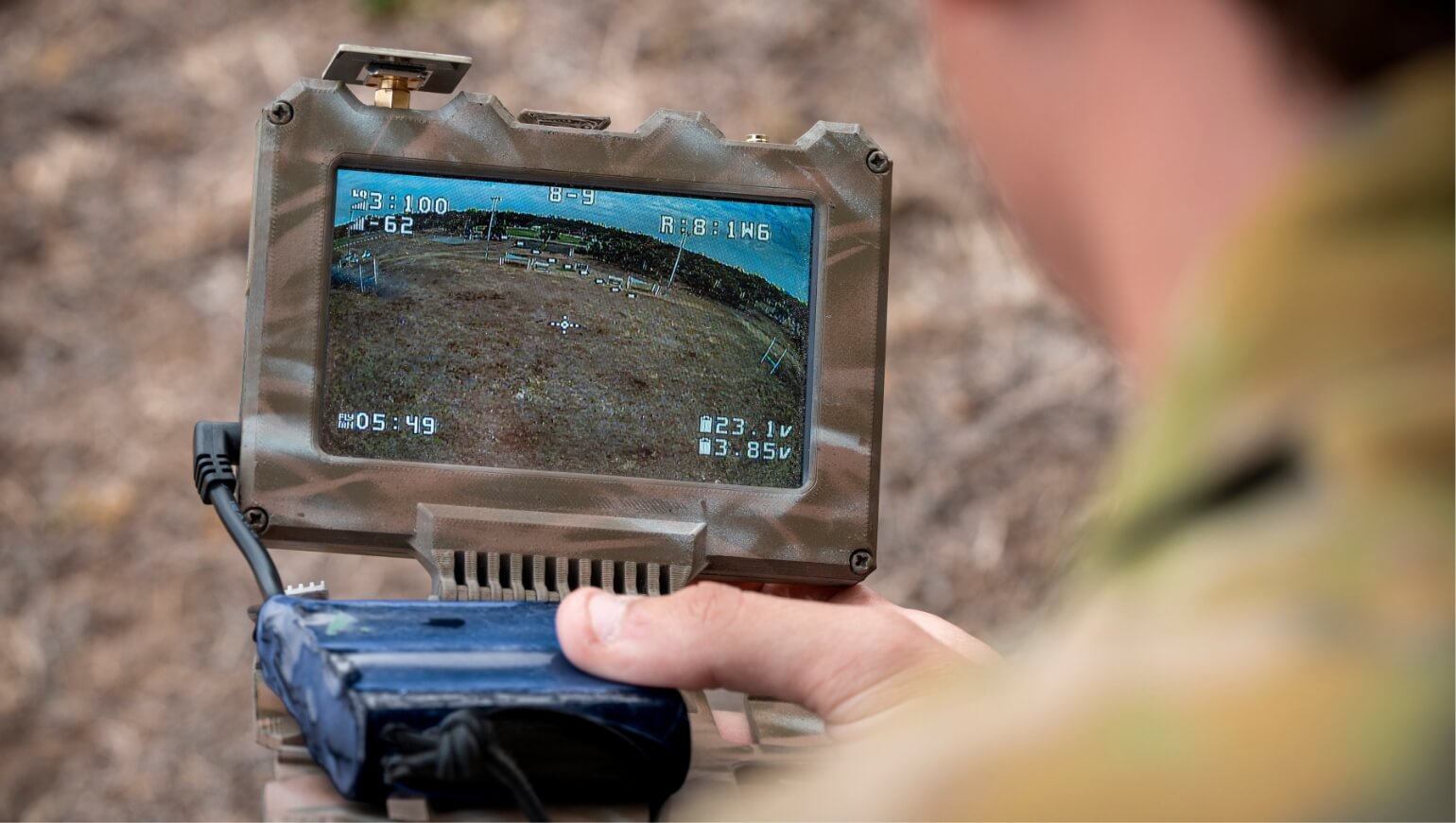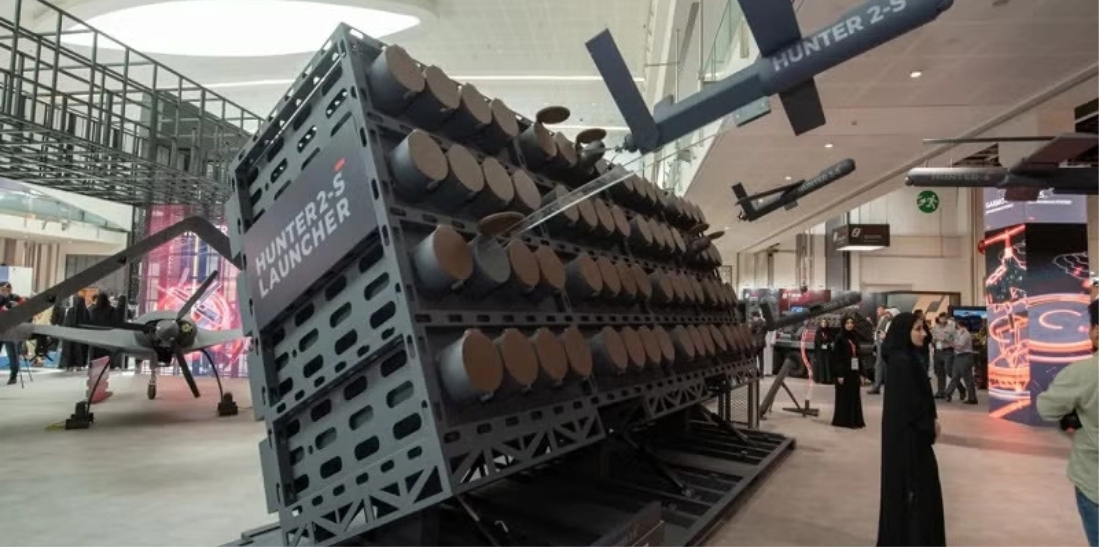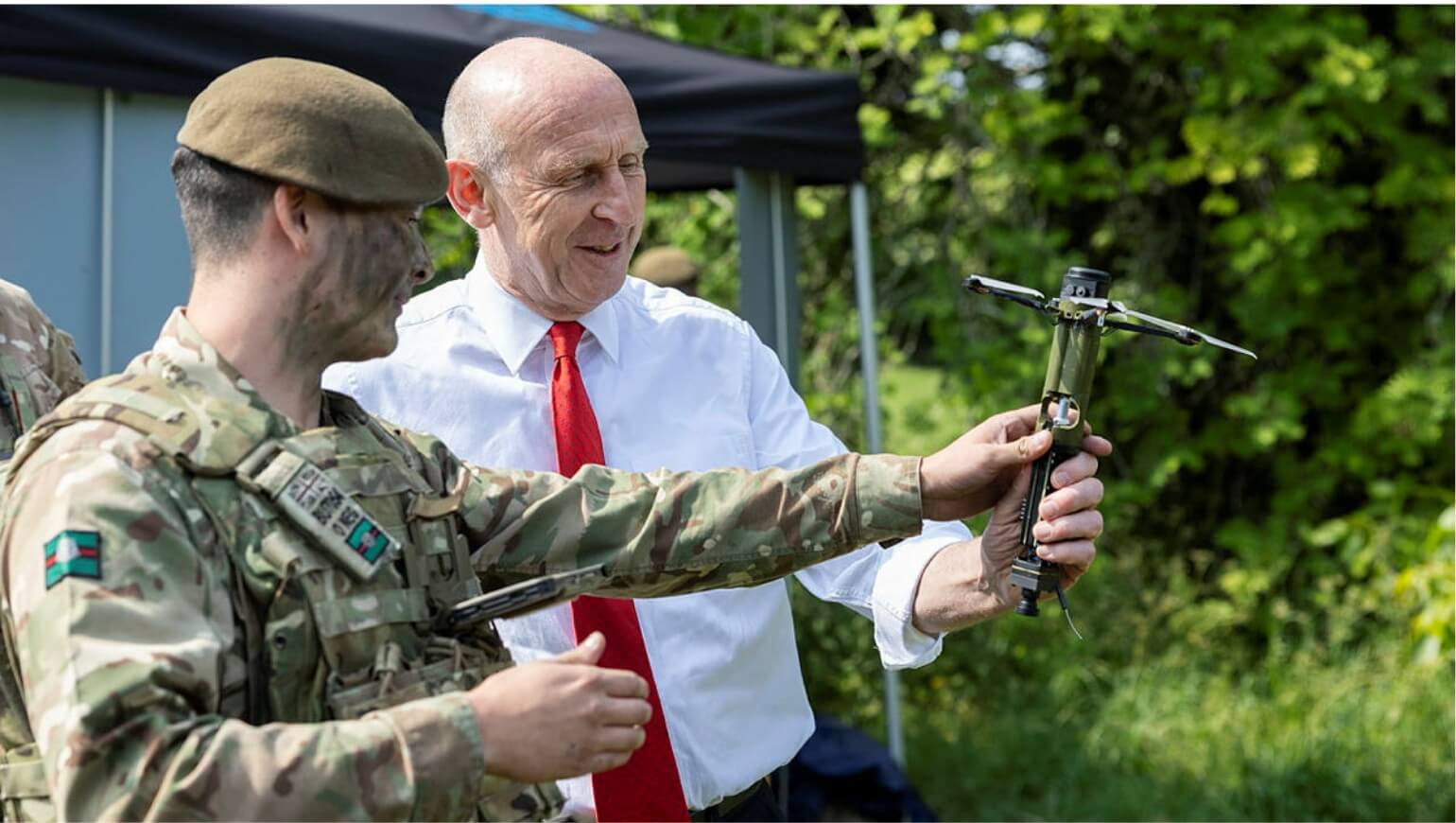


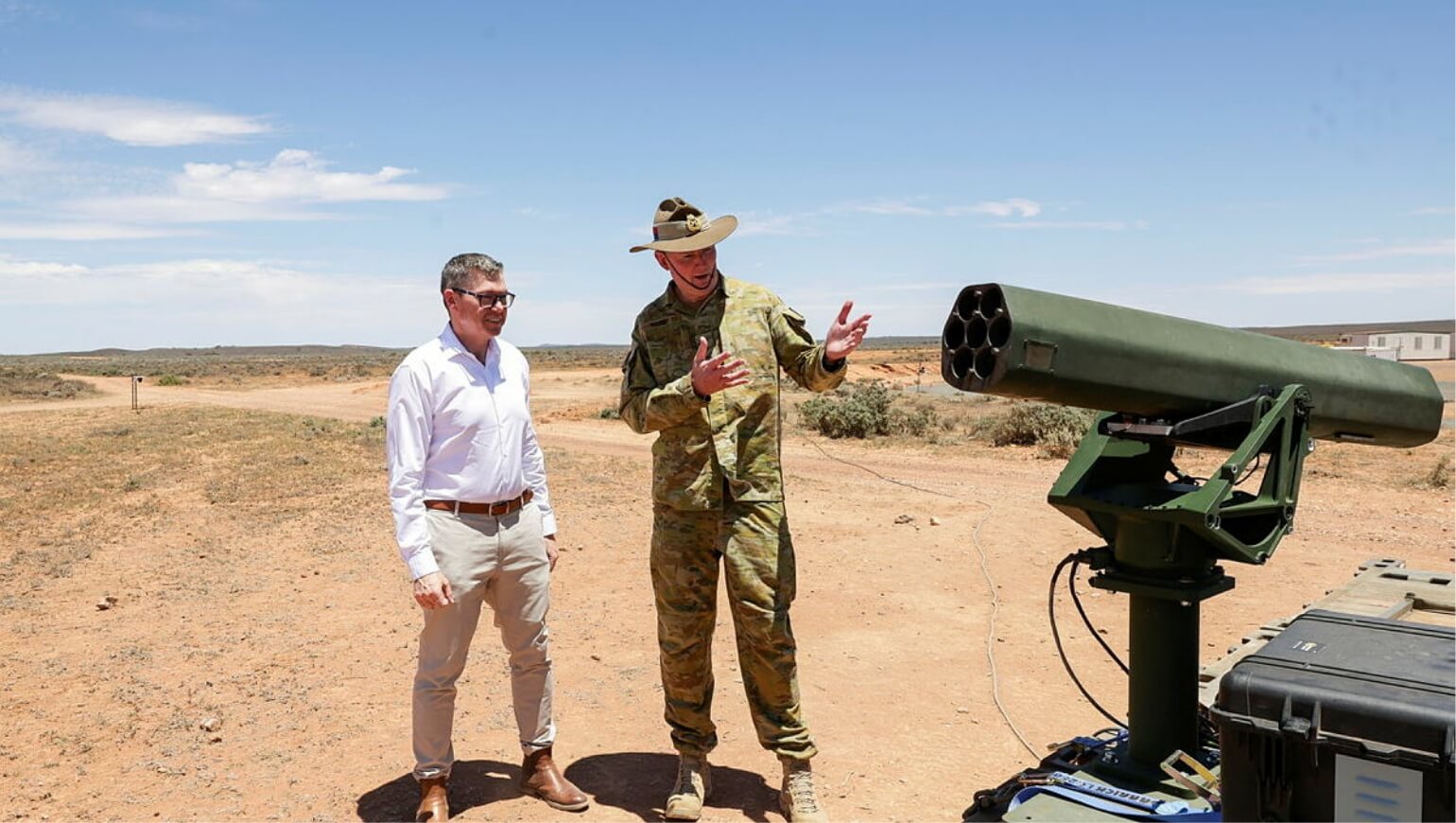
From Ukraine to the Middle East, low-cost drones have evolved from tactical tools into strategic weapons capable of disrupting military operations, threatening critical infrastructure and challenging traditional air defence systems.
For Australia, the implications are significant. The 2026 National Defence Strategy and 2026 Integrated Investment Program place increasing emphasis on autonomous systems, electronic warfare and integrated air and missile defence.
Yet as drones thrive globally, the challenge is not simply acquiring uncrewed platforms, but developing the systems capable of detecting, tracking and defeating them. Ben Westgarth, chief executive officer of Canberra-based Department 13, gives us some insight into the future of counter-drone warfare and the importance of an integrated and layered approach.
Department 13 is an Australian electronic warfare specialist contributing to the Australian Defence Force’s LAND 156 counter-small uncrewed aerial system (C-UAS) program.
Building a system of systems
While public attention often focuses on missiles, lasers or electronic attack systems, Westgarth believes LAND 156’s significance lies in its broader architecture.
“LAND 156 was conceived to address the growing threat of drones in the battlefield,” he says.
“Both as a counter and offensively it recognises a need beyond just procuring a specific weapon or capability. It’s about building a system of systems.”
Department 13 forms part of that wider ecosystem, providing radiofrequency detection technology capable of identifying and tracking drones, including encrypted systems, before passing that information to other elements within the network.
“Our role is as a radio frequency detection system that is able to detect the presence of drones and track those drones whether they’re encrypted or not … We provide that intelligence to a connect system of other systems.
Networked capability is increasingly important as drone threats become more diverse. Modern battlefields now feature everything, from commercial quadcopters conducting intelligence, surveillance and reconnaissance missions to long-range, one-way attack drones capable of striking targets hundreds of kilometres away.
As a result, Westgarth argues that no single sensor or effector will be sufficient.
“If you look at the make-up of any drone that you’re likely to encounter on the battlefield, you are going to have some drones that are almost completely autonomously guided by GPS or some form of artificial intelligence using image recognition. You might have cable-connected drones which don’t require a remote feed. They’re all going to be there in some kind of mix.”
The solution, he says, is a layered detection and response architecture capable of addressing multiple threats simultaneously.
Lessons from Ukraine
Few conflicts have demonstrated the disruptive power of drones more clearly than the war in Ukraine.
For Westgarth, the scale of the transformation remains underappreciated by many outside the defence sector.
“If you get a chance to spend some time with Ukrainian soldiers who live and breathe it every day, you realise just the impact that it currently has on the battlefield,” he says.
“It is so ubiquitous and so ever-present that it has transformed the way everyone does everything.”
A key challenge is the growing imbalance between the cost of drones and the cost of defeating them.
“The offensive capability of a drone is still far greater than the defensive equivalent that is required to remove that drone,” Westgarth says.
The offensive capability of a drone is still far greater than the defensive equivalent that is required to remove that drone.”
- Ben Westgarth
He points to the examples of Chinese mass-produced Mavic drones and Iranian-designed Shahed attack drones, which can cost tens of thousands of dollars to produce but are often intercepted using missiles worth millions.
“The US has been using $2 million missiles to shoot them down. It’s two magnitudes of cost greater to take the drone out.
“(In addition) you can almost just rubber-stamp those things on a production line, whereas missiles take an incredibly complex and long lead time.”
This economic asymmetry is driving militaries worldwide to seek more scalable and affordable counter-drone solutions.
Escaping the cat-and-mouse game
The speed at which drone technology evolves further compounds the challenge.
Unlike traditional military platforms that can take decades to develop, drones are relatively inexpensive, software-driven and easy to modify.
“They’re so easy to build, they’re so easy to redesign … Minor changes can be produced with relatively small effort but have a major effect on capability,” Westgarth says.
Rather than chasing individual drone models or specific vulnerabilities, Department 13 has adopted a different approach.
“We recognised very early that the cat-and-mouse game is a bit futile.”
Instead, the company focuses on the underlying characteristics that all drones share.
“Every drone has sensors in order to know about its world. Every drone relies on certain technologies to be effective.”
By targeting those fundamental dependencies rather than individual platforms, Westgarth believes counter-drone systems can remain effective even as threats evolve.
Protecting critical infrastructure
The drone challenge extends far beyond the battlefield.
Recent attacks against energy infrastructure, industrial facilities and government assets have highlighted the vulnerability of critical national infrastructure to low-cost aerial threats.
For Australia, that includes everything, from military bases and government buildings to power stations, ports and resource projects.
“The protection of those assets becomes a critical element of warfare,” Westgarth says.
“You need early warning, you need processes in place and you probably need enhanced physical security.”
Rather than relying on a single technology, future protection systems will require a layered defence network of integrated sensors, procedures and response options capable of adapting to a rapidly changing threat environment.
Australia’s opportunity
While the drone threat continues to grow, Westgarth believes Australia possesses several advantages that position it well to become a leader in autonomous and counter-autonomous technologies, chief among them is geography.
“Our geography and sparsely populated environment offer an incredible testing range,” he says.
“There are few countries on earth that have that kind of space to completely build and test new drones and new counter systems.”
Australia’s diverse operating environments, ranging from dense urban centres to remote deserts and coastlines provide valuable opportunities for capability development and validation that can be marketed to similar environments across the globe.
Final thoughts
It’s likely that the future of counter-drone warfare will not be defined by a single sensor, weapon or platform. Success will most likely depend on layered systems capable of detecting, understanding and responding to increasingly autonomous threats.
For Australia, programs such as LAND 156 represent an important step towards that future. The challenge now is ensuring industry, Defence and research institutions can innovate quickly enough to keep pace in an age of autonomous warfare.
The race is no longer simply about building drones fast and cheaply; it’s about building the systems capable of defeating them.