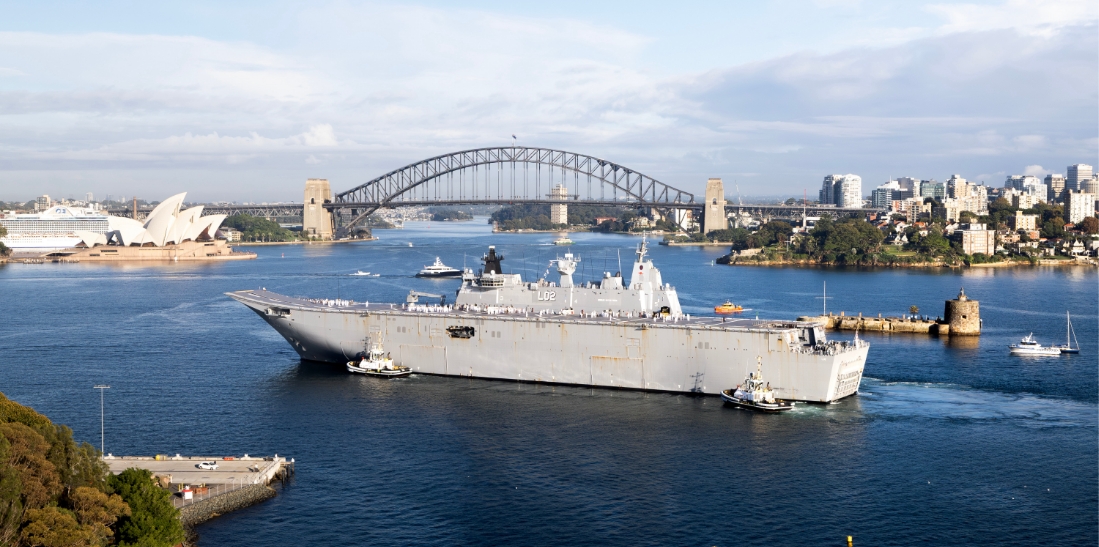


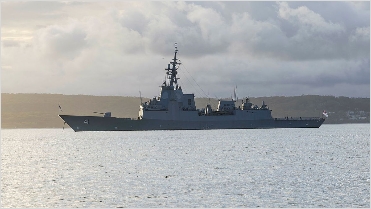
The Royal Australian Navy sits at the centre of Canberra’s response to that challenge, and at the centre of a genuine strategic debate about whether the fleet being planned is the right one for the task.
The 2026 Integrated Investment Program (IIP) commits between $94 billion and $130 billion over the decade to undersea warfare alone, and a further $52 billion to $65 billion to an enhanced surface combatant fleet. These are not modest sums. They represent a generational wager on a particular theory of how Australia should defend itself and deter adversaries.
Whether that wager is the right one or whether the Navy is being sized correctly or merely ambitiously is a question that deserves serious examination from both sides.
The case for the current approach: Bigger, deeper, more lethal
The logic underpinning the 2026 strategy is coherent and has genuine strategic weight. China continues what the NDS calls “the largest military build-up in the world today”, and the People’s Liberation Army Navy now operates a fleet larger than the United States Navy by hull count, with qualitative improvements accelerating year on year.
In this environment, a small and lightly armed RAN built for constabulary duties and regional reassurance missions is, to put it bluntly, a liability rather than a deterrent.
The strategy of denial – the cornerstone of Australian defence planning since 2024 –demands that the ADF be capable of holding adversaries at risk before they can project power into Australia’s near region.
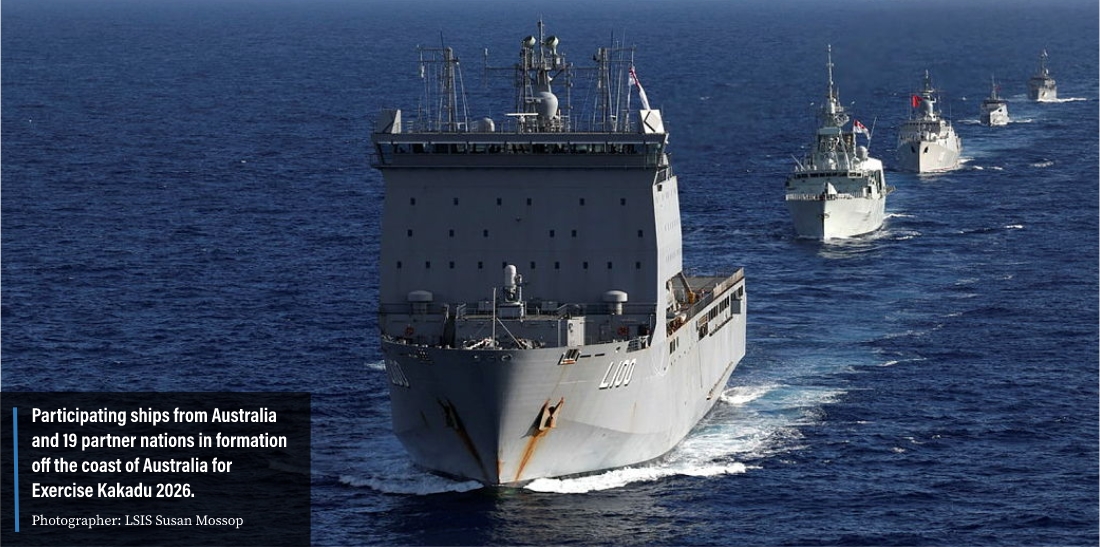
For a maritime nation with the world’s third-largest exclusive economic zone and trade routes that traverse some of the most contested waters on earth, that requirement is necessarily naval in character. An adversary contemplating coercion of Australia must factor in the prospect of encountering a fleet capable of contesting sea control, threatening surface and subsurface assets, and contributing meaningfully to coalition operations. The fleet outlined in the 2026 IIP is sized to create that calculus.
The surface combatant fleet, as confirmed in the IIP, is built around a layered structure. The three Hobart Class air warfare destroyers, now undergoing upgrades, provide the high-end integrated air and missile defence capability that an increasingly missile-saturated threat environment demands.
Six Hunter Class anti-submarine frigates – expensive and highly contentious but genuinely capable platforms – will provide the kind of blue-water anti-submarine warfare (ASW) coverage that the Indo-Pacific’s vast oceanic spaces require, particularly as Chinese submarine activity in the region intensifies.
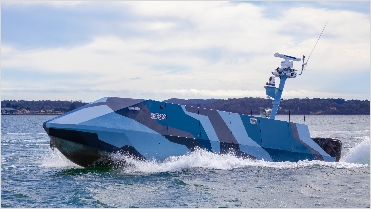
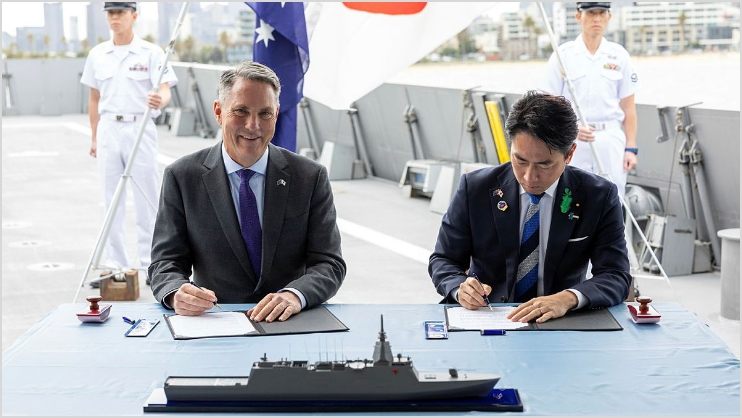
Eleven evolved Mogami Class frigates will replace the ageing Anzac Class in the multi-role surface combatant role, adding numbers and flexibility. Supporting these will be six large optionally crewed surface vessels, six Arafura Class offshore patrol vessels, and 10 evolved Cape Class patrol boats.
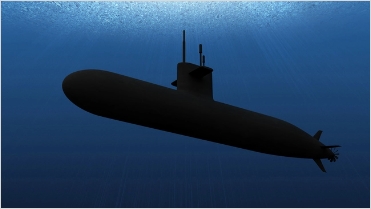
Beneath the surface, the IIP’s most consequential commitment is the pursuit of conventionally armed, nuclear-powered submarines (SSN) under the AUKUS optimal pathway. The Collins Class boats will be sustained and upgraded at a cost of between $7.8 billion and $11 billion over the decade to remain viable strike assets while the SSN transition proceeds.
The Ghost Shark extra-large autonomous underwater vehicle and the C2 Robotics Speartooth large uncrewed underwater vehicle add uncrewed undersea mass to the force, allowing the RAN to extend its reach and complicate an adversary’s anti-submarine calculus at a fraction of the cost of additional crewed platforms.
The IIP’s emphasis on autonomous and uncrewed systems is not incidental. Lessons drawn from Ukraine where drone warfare has reshaped ground combat and from conflicts in the Middle East have made clear that mass matters, that platforms need not be crewed to impose costs, and that the proliferation of cheap munitions can saturate expensive air defences. The expansion of the Bluebottle uncrewed surface vessel fleet from 15 to 55 boats reflects this thinking applied to the maritime domain.
Taken together, the fleet represents not mere aspiration but a considered industrial and strategic commitment.
The IIP explicitly connects capability investment to the development of a sovereign defence industrial base shipbuilding in Western Australia, sustainment capacity in South Australia, and supply chains that reduce Australia’s dependence on external sources in a crisis. This is industrial policy as strategic hedge, and it has genuine long-term merit.
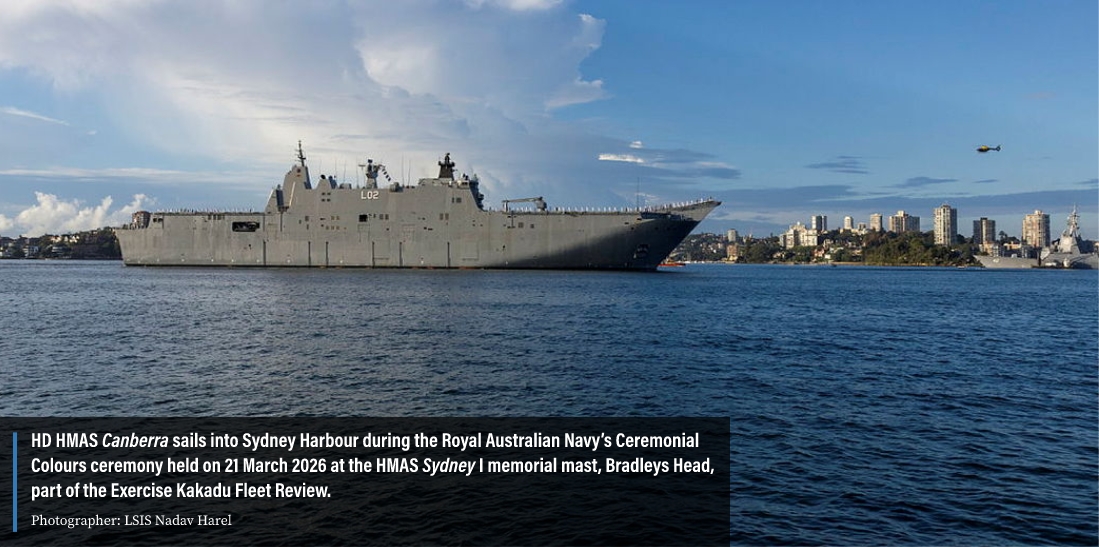
The case against: Overreach, opportunity cost and operational reality
The counterargument is not that Australia should do nothing. It is that the fleet being planned may be the wrong fleet, at the wrong cost, on the wrong timeline and that the very ambition of the program creates risks that its architects have not fully reckoned with.
Start with affordability and opportunity cost. The IIP commits $425 billion over the decade to defence, rising to 3 per cent of gross domestic product (GDP) by 2033.
The naval component alone – undersea and surface combatants combined – accounts for well over $200 billion of that. Australia is a country of 27 million people with a defence industry that, despite genuine growth, remains constrained by workforce shortages, limited shipbuilding throughput, and supply chain vulnerabilities that cannot be wished away.
The Hunter Class program has already been the subject of significant scrutiny over cost growth and schedule delays. Building more complex warships faster does not automatically become easier simply because the strategic environment demands it.
Opportunity cost is the most underappreciated dimension of this debate. Every dollar committed to a Hunter Class frigate is a dollar not spent on hardening northern bases, which the 2026 IIP analysts at the Australian Strategic Policy Institute have noted receives declining investment, falling from 4 per cent to 3 per cent of total defence spending. It is a dollar not spent on fuel security, on logistics resilience or on the kind of theatre-level sustainment infrastructure that determines whether a force can actually fight and keep fighting.
A beautiful ship that cannot be fuelled, maintained or resupplied in a contested environment is of questionable military utility. The IIP’s own critics have observed that the investment signal on northern infrastructure and theatre logistics has not kept pace with the strategic logic that demands it.
There is also a serious question about fleet structure and threat relevance. The Hunter Class frigates, weighing in at approximately 10,000 tonnes and optimised for blue-water ASW, are extraordinarily capable platforms, but they are also large, expensive and relatively few in number.
In the era of precision-guided munitions, hypersonic missiles and saturation strike tactics, large surface combatants operating within the first and second island chains face acute survivability questions.
The war in Ukraine has demonstrated that even the most capable surface vessels are vulnerable when they operate within range of modern anti-ship missiles – a lesson the Russian Black Sea Fleet learned catastrophically. A fleet built around a handful of expensive frigates and destroyers may present an adversary with a tractable targeting problem rather than an intractable deterrence dilemma.
An alternative conception of the RAN’s future force might prioritise quantity over quality in the surface combatant role, trading expensive frigates for larger numbers of smaller, cheaper and more numerous platforms – corvettes, missile-armed fast attack craft and expanded unmanned surface and subsurface fleets – capable of distributed lethality across Australia’s vast maritime approaches. The Bluebottle expansion is a gesture in this direction, but the core of the fleet remains built around crewed, capital-intensive platforms whose survivability in a high-end conflict is not guaranteed.
The SSN commitment, meanwhile, is the most consequential and the most debated element of the entire program. Nuclear-powered submarines are extraordinarily capable. Their endurance, speed and stealth are unmatched in undersea warfare.
But the AUKUS optimal pathway remains dependent on the United States and the United Kingdom industrial bases at a time when both are already struggling to meet their own submarine production targets.
The delivery timelines for Australian SSNs remain extended, and the interim period during which the Collins fleet ages and the SSN force has not yet materialised represents a genuine capability gap.
Critics have argued that a larger fleet of conventionally powered submarines, available sooner and built in Australian yards, might provide more immediate and reliable undersea capability than a smaller fleet of SSNs that may not arrive on schedule.
Navigating the tension
As with every complicated matter, the honest answer is that both sides of this debate are partly right, and the strategic environment offers no clean resolution.
Australia genuinely faces its most challenging security outlook since the Second World War. China’s military build-up is real, the risk of miscalculation or coercion is elevated, and a Navy optimised for the post-Cold War strategic holiday is manifestly inadequate for what is coming.
The 2026 NDS and IIP reflect a serious attempt to grapple with that reality, and the commitment to increasing defence spending to 3 per cent of GDP, if sustained across governments, represents a meaningful change in Australia’s strategic posture.
But ambition must be tested against execution. The challenge for the RAN is not simply acquiring the right platforms; it is acquiring them on time, sustaining them in service, manning them with a workforce that is itself in short supply, and integrating them into a joint and coalition force that can operate in contested environments.
The challenge for the RAN is not simply acquiring the right platforms; it is acquiring them on time, sustaining them in service, manning them with a workforce that is itself in short supply, and integrating them into a joint and coalition force that can operate in contested environments.”
The IIP’s emphasis on autonomous systems, long-range strike and integrated air and missile defence reflects an emerging understanding that the character of future conflict demands more than traditional surface and subsurface platforms, but that understanding needs to translate more fully into force structure choices.
Australia’s regional partnerships, with Japan, South Korea, India, the United States and the United Kingdom are not a substitute for sovereign capability, but they are a genuine force multiplier. A RAN that operates seamlessly within allied frameworks, that can plug into coalition maritime operations from day one, and that contributes niche but genuine capabilities to collective deterrence is more valuable than its platform count alone suggests.
The 2026 NDS makes the right noises on this front, but the deeper integration of industrial partnerships and interoperability standards remains work in progress.
Rightsizing the RAN, in the end, is less a question of how many ships and more a question of what choices about platform type, investment balance, industrial strategy, and alliance integration best serve a strategy of denial in a contested Indo-Pacific.
The 2026 IIP sets a direction. Whether that direction is vindicated will depend on execution, and execution in Australian defence procurement has historically been the harder problem.