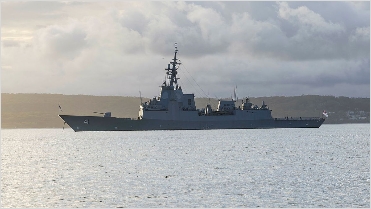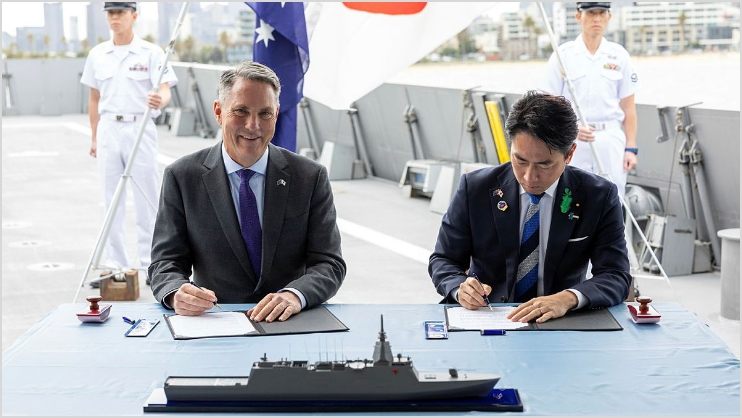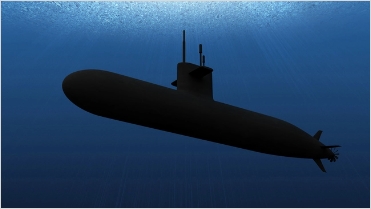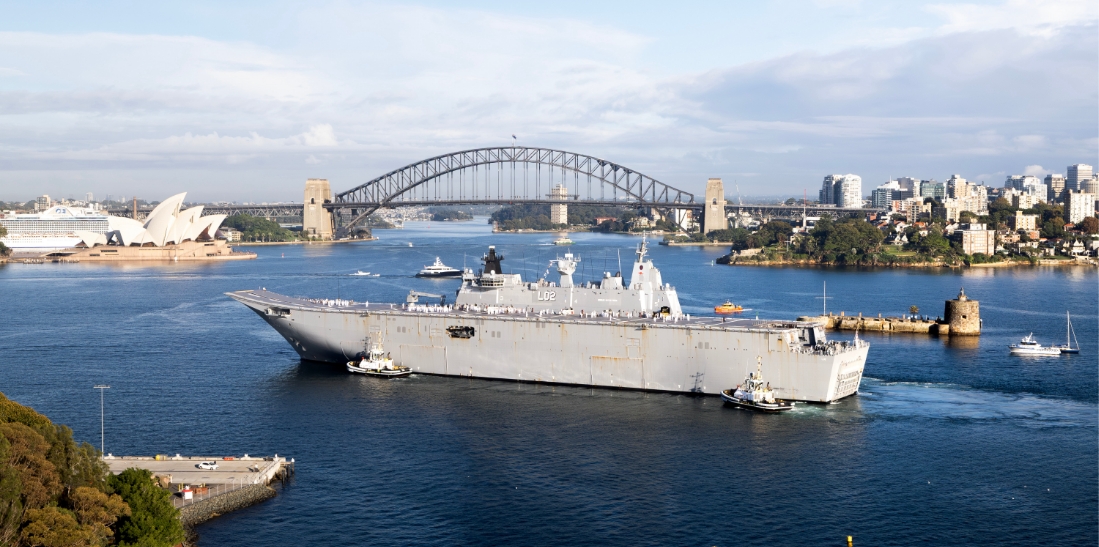


The strategy’s emphasis on a “resilient fleet” and sovereign capability, paired with AUKUS Pillar 1’s nuclear-powered submarine program, will dramatically expand both the surface and undersea fleet. Hunter Class frigates, evolved Arafura Class offshore patrol vessels and a rotational Virginia Class submarine presence in Western Australia will place unprecedented pressure on maintenance, sustainment and workforce capacity.
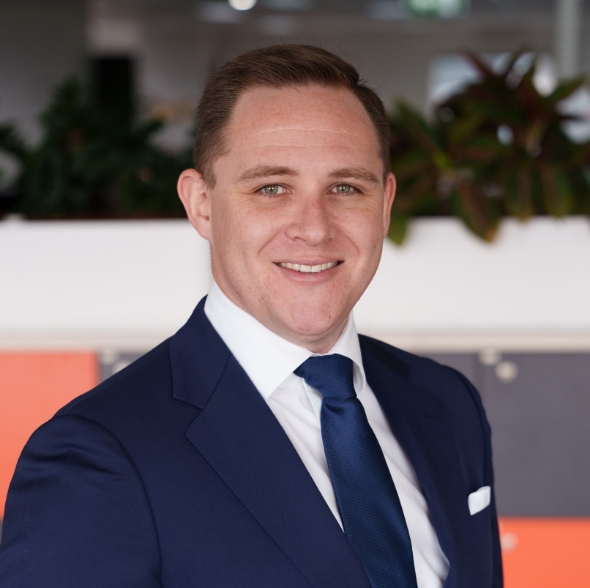
Big-ticket acquisitions grab headlines, but the unglamorous reality of keeping warships at sea is where operational sovereignty will be won or lost. David Astbury, Serco Asia-Pacific general manager for defence, underscores why trusted industry partners are indispensable to delivering the strategy’s ambitions.
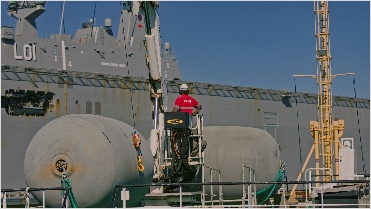
With 30 years in complex engineering and sustainment, including work on Royal Australian Navy landing helicopter docks in Spain, Canadian Coast Guard icebreakers in Vancouver, and now overseeing Serco’s waterfront operations across every major Australian Navy base, Astbury offers a clear-eyed view from the dockside.
“Governments are really interested in a resilient fleet,” Astbury says. “The sovereign capability seems to be really key at the moment … and really the long-term asset performance.” That focus, he argues, extends far beyond new hulls to the training systems, in-port services and sustainment models that keep them fighting-fit.
The sustainment imperative in a constrained budget environment
The scale of the challenge is daunting. The RAN’s future fleet will be larger, more technologically complex and more geographically dispersed than ever before.
AUKUS Pillar 1 will introduce nuclear-powered submarines that demand entirely new sustainment disciplines, while the Hunter program and autonomous surface vessels will test traditional maintenance paradigms. Yet defence budgets remain constrained across the Western alliance.
Every dollar spent on sustainment is one less available for acquisition, and the 2026 Integrated Investment Program will require careful balancing.
Astbury notes that cost pressure is not unique to Australia. “Every customer we’ve spoken to across the Asia-Pacific region and in fact through our Serco global maritime community … it’s the sustainment costs that people are really focused on,” he says. From the United States to the United Kingdom, Europe, the Middle East and across the Asia-Pacific, navies are confronting the same reality. The solution cannot simply be to squeeze existing models harder. Instead, industry partners like Serco are being asked to reimagine sustainment entirely.
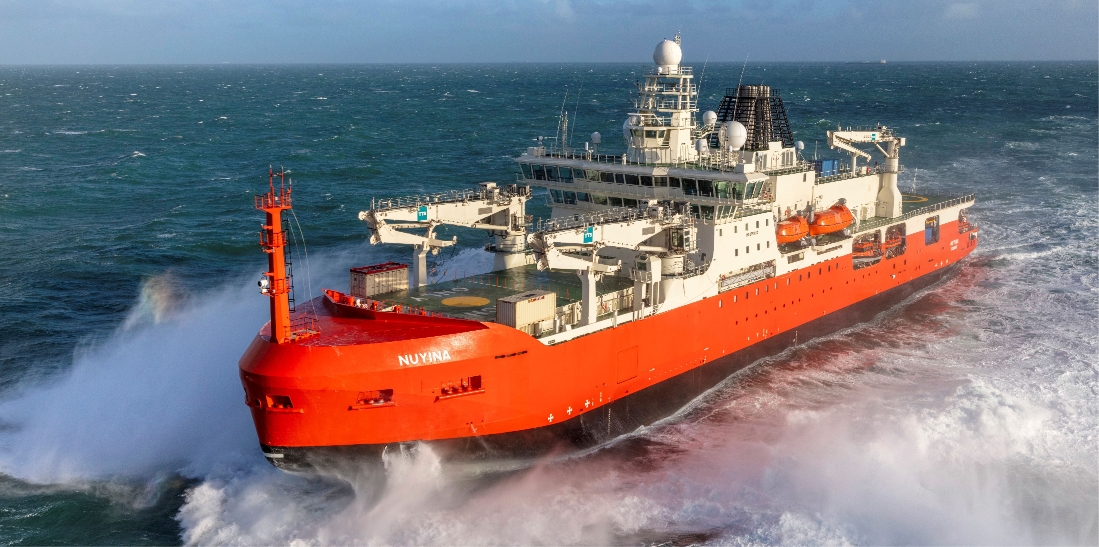
Serco’s role illustrates the breadth of what “sustainment” now means. Through its Defence Maritime Services Support (DMSS) contract and in-port services, the company maintains a physical presence at every Navy base. It also operates vessels for the Australian Antarctic Division, including the RSV Nuyina icebreaker, a 160-metre vessel that shares many logistical and engineering commonalities with naval platforms. This creates natural opportunities for cross-pollination of skills and logistics.
“We can bring the cost down because we’re offering … continuity across not just Navy, but also into the other sectors of the government maritime sector,” Astbury says.
Such whole-of-government synergies are quietly becoming a force multiplier. By pooling expertise across agencies, Serco reduces the need for hyper-specialised subject-matter experts on every platform, allowing a more flexible and cost-effective workforce model. This approach directly supports the 2026 strategy’s goal of sovereign capability without ballooning through-life costs.
Autonomous vessels: A game changer for sustainment
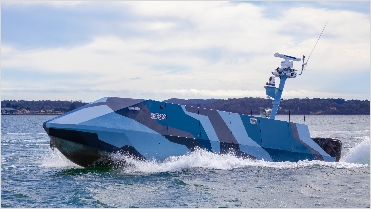
One of the most significant shifts underway is the introduction of autonomous vessels. Serco’s “Defiant” unmanned surface vessel, which has been designed and built under the Defense Advanced Research Projects Agency’s No Mariner Required Ship program and previously featured in Defence Connect discussions, represents a step change in maritime operations.
These platforms require far less onboard crewing but demand a radically different sustainment model – one built around shore-based monitoring, predictive maintenance and rapid reconfiguration.
“The introduction of the autonomous vessels is going to be a big game changer, particularly with the sustainment side of things,” Astbury says. “As we look at vessels coming online, it’s a different sustainable model, it’s a different maintenance model. You know, people would argue that there’s less personnel required. I think that’s probably not the case. I think with the new technologies, if anything, we’re going to need more specialised personnel to support our everyday waterfront activities.”
Contrary to popular assumptions, autonomy is not a simple labour-saving device. It shifts demand towards highly skilled roles that blend traditional marine engineering with software programming, sensor integration, navigation autonomy, collision-avoidance systems and remote diagnostics. “It’s going to be an interaction of multiple SMEs from what we would traditionally call the sustainment model … really a collaborative approach to maintenance,” Astbury says.
This evolution is particularly relevant for AUKUS Pillar 1. While nuclear-powered submarines remain crewed, the broader naval enterprise will increasingly incorporate autonomous systems for tasks ranging from intelligence, surveillance and reconnaissance to target towing and logistics support.
Serco is already exploring fully autonomous targets to eliminate dangerous manned towing operations, directly addressing occupational health and safety imperatives while reducing costs.
Engineering resilience through self-maintenance and redundancy
Central to the autonomous sustainment model is the concept of “self-maintenance” achieved through engineered redundancy. Autonomous platforms like Defiant incorporate multiple layers of back-up systems, far beyond the dual redundancy common in manned warships, so that a vessel can return to base even after multiple failures.
“It’s making sure that we don’t just have a secondary redundancy, we have a third and a fourth and a capability to be able to return the vessel to base,” Astbury says. The goal is not to eliminate human oversight but to empower shore-based teams with real-time data so they can act decisively.
Serco is also examining 3D printing for rapid spares manufacture, further reducing dependency on lengthy supply chains. These innovations emerge from close collaboration with end users. “We’ve spoken to our operators who are really the … end user … and then we’ve looked at new technologies,” Astbury says. The result is multi-role vessels capable of performing several traditional tasks, lowering overall fleet numbers while increasing flexibility.
For autonomous platforms, Astbury advocates a shorter operational horizon: “I’d actually suggest that really these are more short-term platforms that can be made redundant relatively quickly as the new technologies come on board … almost like the IKEA approach. When that furniture’s done, you throw it out and get some new stuff in with the latest ideas and designs.” This philosophy aligns neatly with the 2026 strategy’s likely emphasis on spiral development and rapid capability insertion – hallmarks of AUKUS Pillar 1.
Managing the accelerated pace of technological change
Technology insertion rates have accelerated dramatically. Traditional 30-year hull lives once assumed a single mid-life upgrade at around 15 years. Today, communications, navigation and autonomous systems can become obsolete within five years.
Serco’s long-term modelling therefore assumes regular technology refreshes baked into platform design from the outset.
Astbury highlights two elements: “Of course the longevity of a vessel, a vessel hull and the machinery is one thing, but the advancement of technology far outweighs that. And the speed at which that is introduced into a platform has increased dramatically.”
For existing platforms designed well before these technologies, backward engineering is essential, ensuring easily accessible maintenance points, software-upgradable systems and shore-based monitoring capabilities.
This forward-looking approach is critical as the RAN integrates AUKUS submarines alongside conventional surface combatants. Industry partners must not only maintain ageing assets but also prepare the waterfront for hybrid fleets where manned, unmanned and autonomous systems operate side by side.
Serco’s innovative approach to cost reduction and sovereign capability
From Serco’s perspective, innovation is not an abstract goal but a daily practice. The company is actively developing solutions that address customer pain points while delivering “shiny new toys” that improve capability.
“By Serco thinking of innovative ways to solve customer issues … it’s a win-win,” Astbury says. “We get to get the shiny new toys … and, of course, the customer gets something great as well. They get a really new innovative solution to a current problem that they’ve got.”
Serco’s global reach amplifies this capability. Solutions developed in the US, the UK and Europe are adapted for Australian conditions, while local insights flow back into the international network.
The company positions itself as a “vessel integrator” – not merely a maintainer but an integrator of technologies and an original equipment manufacturer (OEM) that solves complex problems. “We integrate the technologies, we integrate the OEMs of the great technology that we’ve got, but really it’s about solving customer problems,” Astbury says.
This customer intimacy is a key differentiator. Rather than Defence approaching industry with problems, Serco is increasingly invited to propose solutions proactively.
Harnessing artificial intelligence for predictive sustainment
Artificial intelligence is already delivering tangible gains in sustainment. Serco has used AI for several years to support maintenance diagnostics, drawing on vast internal datasets to provide first-cut fault analysis.
“We’re able to use AI to quickly respond to what we think the problem may be or the solution may be … rather than requiring necessarily an SME from an OEM to jump on a plane and fly halfway around the world,” Astbury says.
The company maintains strict control over inputs to avoid “garbage in, garbage out” outcomes, ensuring responses remain tailored, secure and relevant to Serco’s intellectual property.
AI does not replace humans; it augments them by surfacing background knowledge for expert analysis. “It’s given us the ability to really focus on some of those issues that we’ve traditionally had to throw into SMEs or OEMs,” Astbury says. Defence’s appetite for these technologies varies. Designers and builders embrace AI enthusiastically, while traditional maintenance organisations remain cautious because short-term results can be harder to measure against legacy plans. Yet forward-thinking leaders are receptive: “Every time we come up with a solution to something, we get great engagement.”
Training the next generation: HMAS Watson and HMAS Stirling
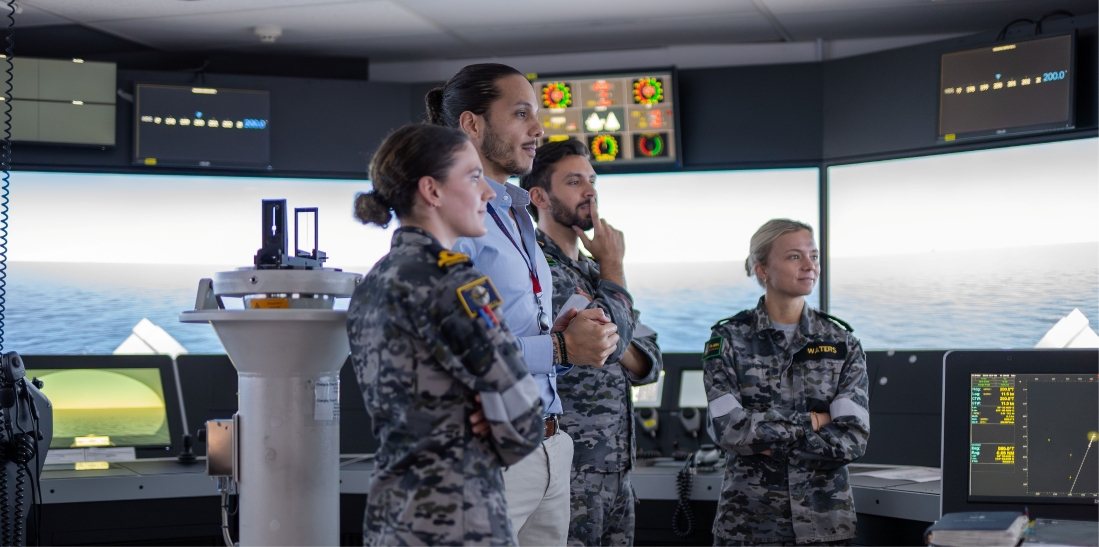
Nowhere is the fusion of technology and human expertise more visible than in Serco’s long-running training contract at HMAS Watson in Sydney and HMAS Stirling in Western Australia.
Since 2012, the company has delivered maritime warfare officer training, recently enhanced by upgraded facilities incorporating augmented reality and advanced simulation.
“We know how to train people, we’ve got the skill set, we’ve got the people; now with our partners, we’ve now got the technology as well,” Astbury says. The new classrooms and bridge simulators provide a “brand new refresh every time we step into the classroom or onto the bridge navigation.”
We know how to train people, we’ve got the skill set, we’ve got the people; now with our partners, we’ve now got the technology as well.”
- David Astbury
Yet technology alone is insufficient: “It still comes down to needing people and Serco provide the best of the best. They’re all ex-service personnel … experienced in bridge warfare and navigation.”
This perfect match of technology and seasoned instructors ensures the RAN can train officers ready for the autonomous and AI-augmented fleets of the future – directly supporting AUKUS Pillar 1’s workforce demands.
The untapped potential of cross-functional integration
The one under-discussed element, in Astbury’s view, is the power of cross-functional integration across the entire maritime enterprise. Silos still exist between equipment types, logistics, maintenance planning, workforce development and training partners.
“I think it’s the cross pollination … the ability for really smart engineers, really smart SMEs, the transfer of equipment, of the logistics associated with it, the maintenance planning, the workforce capability, all of these … I think there’s an ability to pull all of that together in one environment,” he says. AI, he believes, can help by synthesising data from disparate sources into actionable intelligence.
For Australian taxpayers, the stakes could not be higher. The 2026 National Defence Strategy and Integrated Investment Program will commit tens of billions of dollars to naval expansion. Without robust sustainment partners, those platforms risk becoming expensive assets tied to the wharf.
Trusted industry players like Serco – deeply embedded in the waterfront, agile in adopting new technologies and experienced in delivering across government agencies – provide the quiet assurance that Australia can maintain a resilient, sovereign fleet.
Forging enduring partnerships for a resilient fleet
As AUKUS Pillar 1 moves from concept to operational reality, the relationship between Defence and industry must evolve from transactional to genuinely collaborative.
Serco’s model, combining global best practice with local innovation, cost discipline with capability uplift, and human expertise with emerging technology, offers a template for how that partnership can succeed.
The coming decade will test whether Australia can translate strategic ambition into seagoing reality. The evidence from the waterfront suggests that with the right industry partners, the answer is yes.
The resilient fleet envisaged in the 2026 strategy is not built solely in shipyards; it is sustained, day after day, by the people and organisations that keep the Navy ready to fight.